

Across the globe, something as simple as a daily shower tells a deeper story about culture, climate, and lifestyle. From tropical Southeast Asia to the warm coasts of Latin America, bathing habits reflect how people adapt to their environment—and how they value personal hygiene in everyday life.
A World Shaped by Climate and Culture
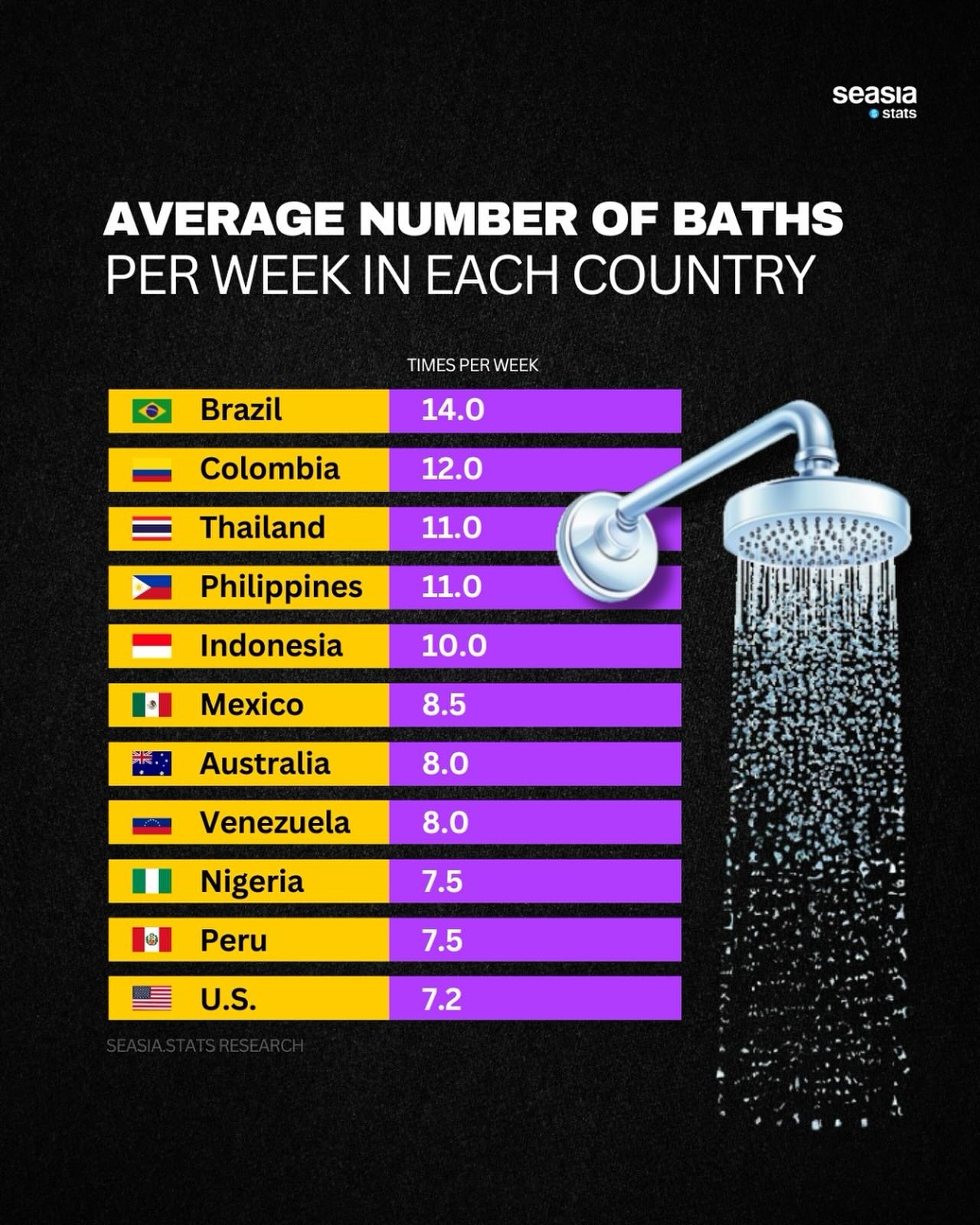
According to Seasia Stats research, countries with hot and humid climates dominate the rankings for the most frequent bathing habits. Brazil tops the list with an impressive 14 baths per week, meaning many people shower twice a day. Colombia follows closely at 12 times per week, reinforcing a strong regional culture that prioritizes cleanliness and comfort in tropical heat.
These patterns are echoed in many equatorial regions, where high temperatures and humidity make frequent bathing a necessity rather than a luxury. In these environments, showers provide relief from the heat and help maintain personal hygiene amid intense weather conditions.
Southeast Asia’s Clean Living Culture
Southeast Asia ranks prominently among the world’s most frequent bathers, and for good reason. Countries like Thailand and the Philippines average 11 baths per week, while Indonesia follows closely with 10.0. In major urban centers such as Bangkok, Manila, and Jakarta, residents often shower multiple times daily to stay refreshed and comfortable in the humid climate.
The region’s bathing culture is deeply embedded in daily routines. Morning showers are often complemented by a second rinse in the evening after work or commuting. In countries like Vietnam and Malaysia—though not listed in the top global rankings—similar habits are common, especially in coastal and urban areas where temperatures remain high year-round.
Even in smaller Southeast Asian countries such as Cambodia and Laos, frequent bathing is widely practiced, particularly during the hot season. Meanwhile, Singapore’s dense urban lifestyle and tropical weather also encourage daily or twice-daily showers among residents.
Contrasting Habits in Temperate Regions
Outside of tropical climates, bathing frequency tends to be lower and more aligned with once-a-day routines. The United States, for example, averages 7.2 baths per week, while Peru and Nigeria both average 7.5. Countries such as Australia and Venezuela sit slightly higher at around 8.0 baths weekly.
These differences are largely driven by climate and seasonal variation. Cooler temperatures reduce the need for frequent showers, while water conservation practices and lifestyle patterns also play a role in shaping hygiene routines.
Urbanization and Lifestyle Trends
Urban density is another major factor influencing bathing habits. In Southeast Asian megacities like Jakarta, Bangkok, and Ho Chi Minh City, heavy traffic, pollution, and long commutes often lead people to shower more frequently.
Meanwhile, rising middle-class incomes and improved access to water infrastructure across ASEAN nations have also contributed to higher bathing frequency in recent decades. As living standards improve, so too does access to modern bathrooms and sanitation systems, further reinforcing hygiene practices.
Cleanliness as a Cultural Value
Ultimately, bathing habits are not just about weather—they also reflect cultural attitudes toward cleanliness, health, and social norms. In many Southeast Asian societies, personal hygiene is closely linked to respectability, hospitality, and religious practices.
From the twice-daily routines of Brazil to the refreshing showers of Southeast Asia’s tropical cities, bathing remains a universal ritual—one that reveals how people across the world stay clean, comfortable, and connected to their environments.


