

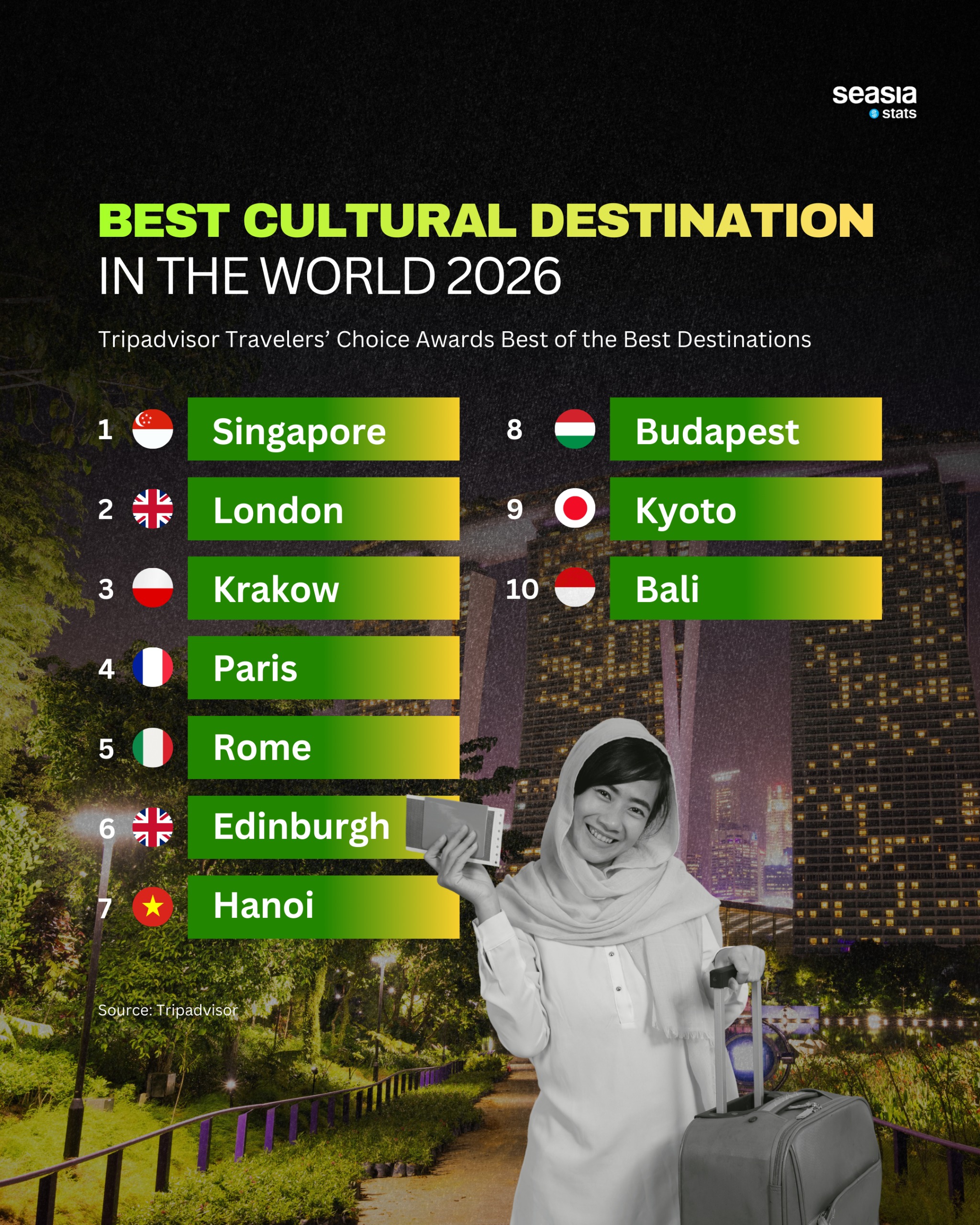
In a world where travelers increasingly seek experiences that blend heritage, identity, and innovation, one city has captured global attention. In 2026, Singapore has been named the world’s best cultural destination by the Tripadvisor Travelers’ Choice Awards—marking a milestone moment for Southeast Asia and redefining how culture is experienced in a modern urban setting.
A City Where Heritage Meets the Future
Singapore’s rise to the top reflects its ability to harmonize tradition and modernity. From the colorful shophouses of Chinatown, Little India, and Kampong Glam to futuristic icons like Gardens by the Bay and Marina Bay Sands, the city offers a layered cultural experience unlike anywhere else.
Visitors can explore centuries-old temples and mosques in the morning, enjoy world-class museums and art galleries in the afternoon, and dine at Michelin-star hawker stalls by evening. This seamless blend of old and new has positioned Singapore as a model of how cultural identity can evolve without losing its roots.
Europe’s Timeless Cultural Giants
While Singapore leads the rankings, Europe continues to dominate the global cultural map. London secured second place thanks to its world-renowned museums, theater scene, and royal heritage, while Krakow impressed travelers with its well-preserved medieval architecture and vibrant artistic traditions.
Classic cultural capitals such as Paris and Rome maintained strong positions in the top five, offering visitors their signature mix of historic landmarks, art, cuisine, and timeless charm. These cities continue to set the benchmark for heritage tourism, proving that centuries-old history still resonates with modern travelers.
Southeast Asia’s Cultural Renaissance
This year’s rankings highlight a growing global fascination with Southeast Asia’s rich cultural diversity. Beyond Singapore’s top spot, Hanoi (7th) and Bali (10th) also secured places in the top ten—marking a powerful showing for the region.
Hanoi’s appeal lies in its layered identity, from French colonial architecture to bustling street food culture that reflects generations of culinary tradition. Bali, which topped the list in 2025, remains a global icon for its spiritual heritage, traditional dance, and temple rituals that continue to define daily life on the island.
Across Southeast Asia, other destinations are also gaining attention. Cities like Bangkok, Yogyakarta, Penang, and Luang Prabang are increasingly recognized for their heritage districts, festivals, and unique local identities. These places showcase how Southeast Asia’s cultural richness extends far beyond its most famous hotspots.
A Shift in How We Travel
The 2026 rankings reflect a broader shift in travel trends. Modern travelers are no longer seeking just scenic views—they want meaningful experiences, authentic traditions, and a sense of place. Cultural tourism has become a key driver of global travel, and destinations that offer immersive, community-rooted experiences are rising to the top.
Singapore’s win symbolizes this evolution. Its success shows that cultural depth doesn’t have to be confined to ancient cities—it can thrive in modern, forward-looking societies as well.
The Future of Cultural Travel
As global travel continues to rebound and evolve, Southeast Asia is poised to play an even bigger role on the cultural tourism stage. With its dynamic mix of history, religion, cuisine, art, and community traditions, the region offers one of the richest cultural landscapes in the world.
From the lantern-lit streets of Hoi An to the heritage quarters of George Town and the royal palaces of Yogyakarta, Southeast Asia’s cultural story is still unfolding—and travelers are eager to be part of it.
In 2026, Singapore stands proudly at the top—but the entire region is rising alongside it, inviting the world to explore its stories, traditions, and living cultures.


