

The shockwaves of geopolitical conflict rarely stay confined to borders. In 2026, the ripple effects of tensions involving Iran have traveled far beyond the Middle East, landing directly at fuel pumps around the world. From Southeast Asia to Europe and North America, motorists are feeling the pressure—some far more than others.
A surge led by Southeast Asia
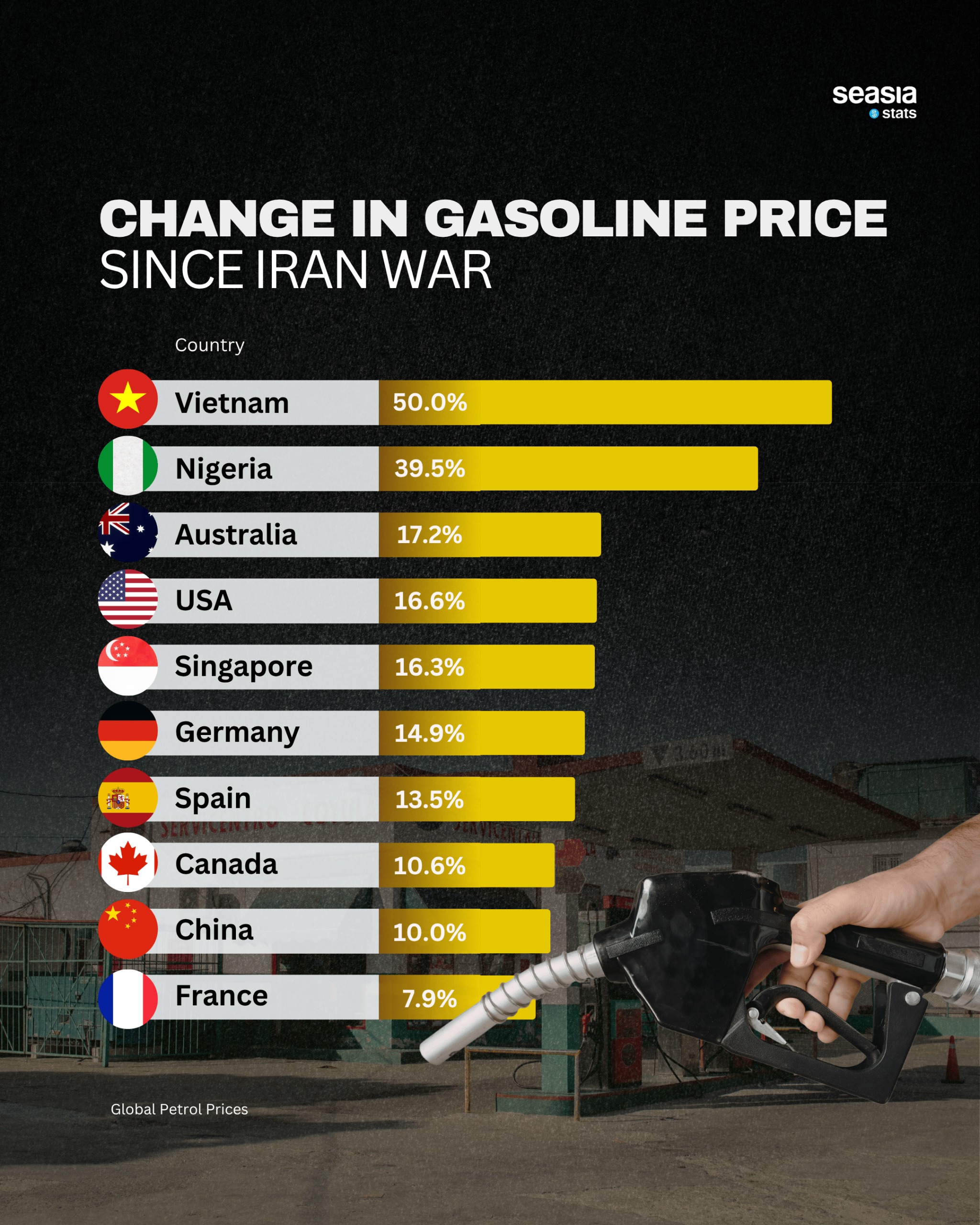
Vietnam stands out dramatically in the latest data, recording a staggering 50.0% increase in gasoline prices. It is the sharpest rise among all countries listed, placing the Southeast Asian nation at the center of this global energy story. While Vietnam has long been one of the region’s fastest-growing economies, its dependence on imported refined fuel leaves it particularly exposed to global oil price shocks.
The situation reflects a broader vulnerability across Southeast Asia. Many countries in the region—despite being energy producers in some cases—still rely heavily on global supply chains for refined petroleum. When disruptions occur, whether through conflict or supply constraints, the effects are immediate and often severe.
Indonesia, for instance, though not listed among the top ten in this dataset, has historically walked a tightrope between subsidies and market pricing. In times of global price spikes, the government faces difficult decisions: absorb the cost through subsidies or pass it on to consumers. Malaysia, another energy producer, has also had to recalibrate subsidy mechanisms in recent years to manage fiscal pressures.
A global problem with uneven impact
Nigeria follows Vietnam with a 39.5% increase, underscoring how even oil-producing nations are not immune to price volatility. Structural issues, including refining capacity and currency fluctuations, can amplify global shocks domestically.
Further down the list, countries like Australia (17.2%), the United States (16.6%), and Singapore (16.3%) show more moderate but still significant increases. These economies tend to have stronger buffers—whether through strategic reserves, diversified supply chains, or higher average incomes—but the impact is still felt by consumers.
As Reuters recently noted, “global oil markets remain highly sensitive to geopolitical risk, with even the threat of supply disruption capable of pushing prices sharply higher.” That sensitivity explains why price increases have appeared across such a wide range of economies, regardless of geography or income level.
Singapore’s inclusion is particularly telling. As a global energy trading hub with no domestic oil production, it is highly exposed to international price movements. Yet its strong currency and efficient infrastructure help cushion the blow compared to neighboring countries.
Europe and North America feel the pressure
In Europe, Germany (14.9%) and Spain (13.5%) reflect the continent’s ongoing struggle with energy security following years of supply disruptions. While diversification efforts have reduced dependence on certain suppliers, price volatility remains a persistent challenge.
Canada (10.6%) and the United States (16.6%) show that even major energy producers are not insulated. Refining bottlenecks, transportation costs, and market dynamics all contribute to rising prices at the pump.
France, with a 7.9% increase—the lowest on the list—illustrates how policy interventions, including tax adjustments and subsidies, can soften the immediate impact on consumers. However, such measures often come with long-term fiscal trade-offs.
Southeast Asia at a crossroads
For Southeast Asia, this moment is more than just a temporary spike—it is a wake-up call. The region’s rapid economic growth has driven soaring energy demand, but its reliance on imported fuel exposes structural weaknesses.
Countries like Vietnam, Indonesia, and the Philippines are now accelerating discussions around energy diversification, including renewables and electric vehicles. Thailand has already positioned itself as a regional EV hub, while Indonesia is leveraging its nickel resources to build a battery ecosystem.
The lesson is clear: fuel price shocks are not just about economics—they are about resilience. As global uncertainties continue, Southeast Asia’s ability to adapt will determine whether future crises hit just as hard, or whether the region can finally break free from the volatility of global oil markets.


