

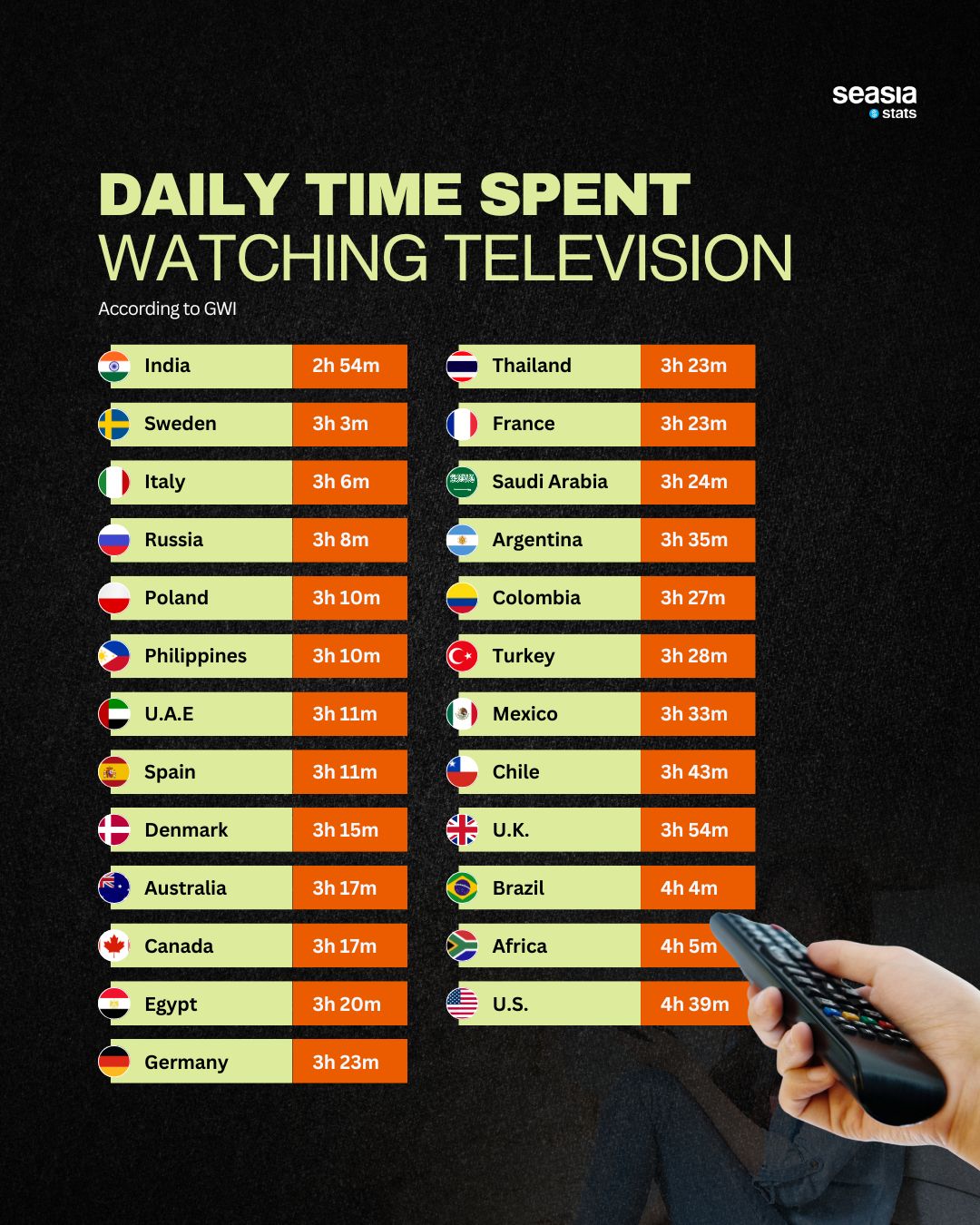
According to recent data from GWI, Brazil takes the top spot for the highest average daily television consumption, with people watching 4 hours and 4 minutes of TV per day. This impressive amount reflects the country’s strong television culture, where TV remains one of the primary sources of entertainment and information.
Brazil’s television industry is known for its engaging content, ranging from local soap operas (novelas) to news and reality shows, which help maintain the country’s strong connection to traditional television viewing. Even as digital content rises globally, television remains a cherished pastime for millions in Brazil.
United States and United Kingdom: Similar Viewing Habits
In second place, both the United States and the United Kingdom clock in at 3 hours and 54 minutes of daily television viewing. While this is significantly lower than Brazil's numbers, it still reflects a considerable amount of time dedicated to watching TV in both countries. The content enjoyed in these nations spans from prime-time television shows and sporting events to cable news and dramas.
Despite the increasing popularity of streaming services like Netflix and Disney+, traditional TV viewing remains popular in both countries. However, it’s important to note that many people in the U.S. and the U.K. also split their screen time between live TV and streaming platforms, signaling a shift in viewing habits toward more on-demand content.
Other Countries with Significant TV Viewing Times
Other countries, such as Chile, Turkey, and Argentina, also report significant television consumption. Chileans watch an average of 3 hours and 43 minutes daily, while Turkish viewers spend 3 hours and 28 minutes, and Argentinians clock in at 3 hours and 35 minutes. These nations show that traditional TV still holds considerable sway in many parts of the world, particularly where television is a major cultural and social activity.
The appeal of television in these countries could be attributed to a combination of factors, including local content, news programs, and the role TV plays in bringing people together around shared cultural experiences. With the growth of digital content and streaming services, it will be interesting to see how these viewing habits evolve in the coming years.
India: A Shift Toward Digital and Streaming Content
Interestingly, India, with its rapidly growing digital population, reports a lower average of 2 hours and 54 minutes of daily television consumption. While this is less compared to some other nations, India’s television industry remains one of the largest in the world, with a vast audience for both regional and national programming.
However, the shift toward streaming platforms and digital videos is evident. India’s younger, tech-savvy audience is increasingly opting for on-demand content on platforms like Netflix, Amazon Prime Video, and local streaming services such as Hotstar. This shift is reflected in the country’s growing digital viewership, which supplements the traditional television consumption time.
The Impact of Streaming on Traditional TV Viewing
The global TV viewing habits are clearly changing, with many countries seeing a rise in streaming services and online content consumption. In the United States, for instance, although people spend 2 hours and 55 minutes watching traditional television daily, more time is devoted to digital videos, including streaming services like YouTube and Netflix.
This growing preference for on-demand content reflects the broader trend of how media consumption is evolving globally. While traditional TV viewing is still an integral part of people’s daily routines, streaming platforms are increasingly becoming the go-to option for entertainment.
Television viewing habits around the world are diverse, with some countries, like Brazil, continuing to embrace TV as a central form of entertainment, while others, like India, are transitioning to digital platforms. As streaming services continue to rise in popularity, it's clear that traditional TV faces challenges in maintaining its dominant role. However, with engaging local content and evolving viewing experiences, TV remains a significant part of the global media landscape.


