

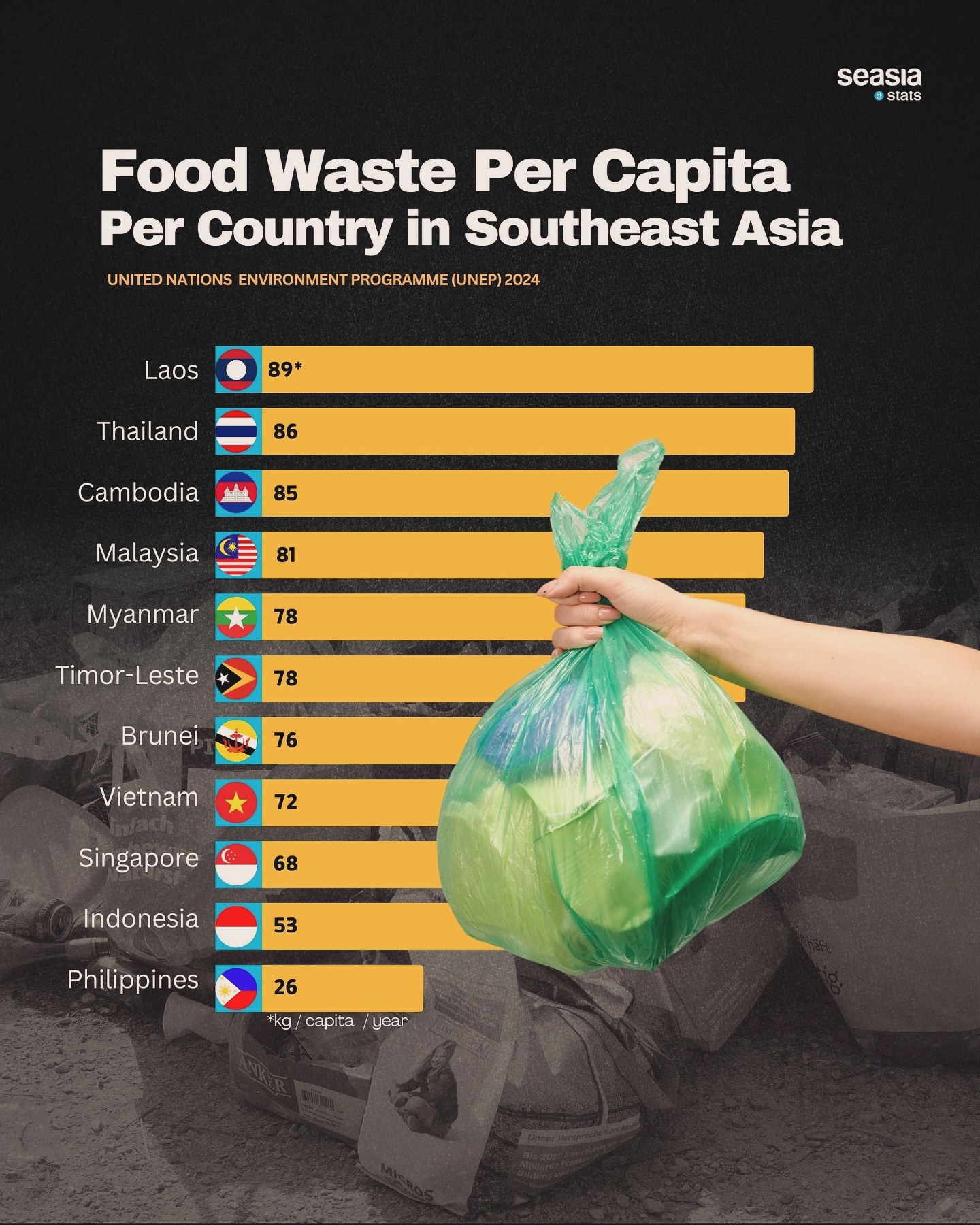
Food waste has become a pressing issue worldwide, and Southeast Asia is no exception. According to data from the United Nations Environment Programme (UNEP) in 2024, countries in this region are grappling with significant levels of household food waste. The Sustainable Development Goals (SDGs) highlight the urgent need to halve food waste per capita by 2030, making it crucial to accurately track and manage food waste across the supply chain.
In Southeast Asia, Laos leads with the highest amount of food waste at 89 kilograms per capita per year. Thailand and Cambodia follow closely, with 86 kg and 85 kg, respectively. These figures highlight the significant challenge these countries face in managing food waste, which has environmental, social, and economic consequences. Addressing food waste requires both policy-driven solutions and changes in individual behavior.
The Regional Landscape of Food Waste
While Laos, Thailand, and Cambodia struggle with high levels of food waste, other countries in the region show lower figures, although the problem remains considerable. Malaysia, with 81 kg per capita annually, and Myanmar, at 78 kg, also rank high in food waste production. The problem is multifaceted, often linked to urbanization, changing consumption habits, and insufficient food management systems.
In contrast, countries like the Philippines and Indonesia produce significantly less food waste per capita, with figures of 26 kg and 53 kg respectively. However, these numbers might not fully reflect the complexity of food waste issues in these nations, where food loss in the agricultural sector and inadequate infrastructure contribute to wastage at different points along the supply chain. While Singapore and Viet Nam show moderate levels of waste at 72 kg and 68 kg per capita, these countries are also actively seeking strategies to reduce food waste through national policies and public awareness campaigns.
Halving Food Waste: An Urgent Goal for 2030
The SDGs set an ambitious target for all countries: halving food waste per capita and reducing food loss by 2030. Achieving this will require cooperation at both governmental and individual levels. Countries like Singapore have already implemented policies aimed at tackling food waste, including educational campaigns and food redistribution programs. Other Southeast Asian nations are also beginning to recognize the importance of addressing food waste as part of their sustainability agendas.
Ultimately, reducing food waste in the region will require better food management systems, heightened public awareness, and strong political commitment. By focusing on more efficient distribution systems, improving food storage facilities, and encouraging responsible consumption, Southeast Asia can take meaningful steps toward meeting the global target of halving food waste by 2030.


