

Across Southeast Asia, mosques are more than places of worship—they are powerful symbols of faith, identity, and national pride. In 2026, the region’s largest mosques by capacity showcase not only the strength of Muslim communities but also the architectural ambition and cultural heritage that define Southeast Asia’s Islamic landscape. Dominating the rankings, Indonesia stands at the forefront, reflecting its position as the world’s most populous Muslim-majority nation.
The Top Three Giants of the Region
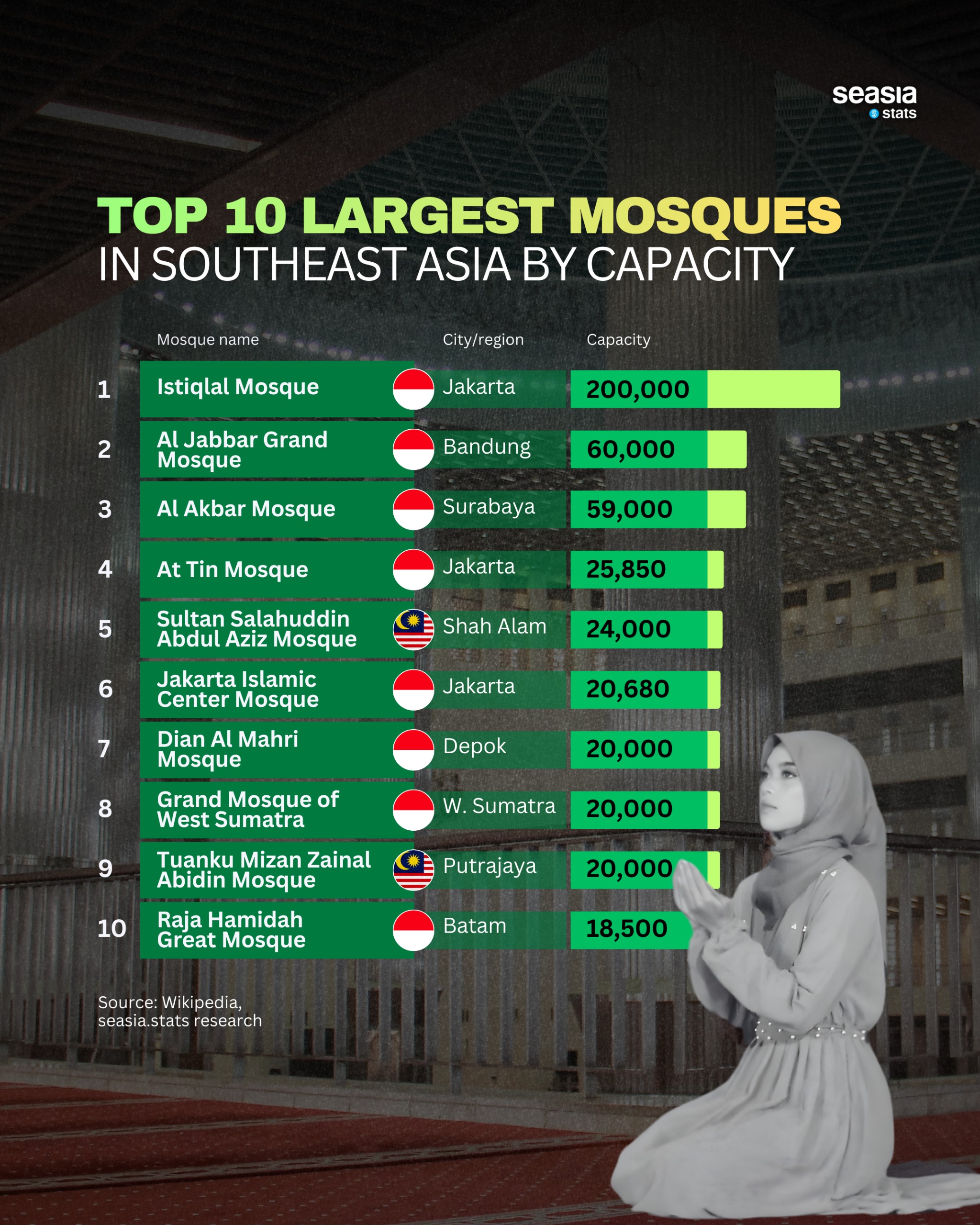
At the pinnacle of Southeast Asia’s mosque landscape stands Jakarta’s Istiqlal Mosque, an architectural giant capable of holding up to 200,000 worshippers. As Indonesia’s national mosque, Istiqlal is not only the largest in Southeast Asia but also among the largest in the world. Its vast prayer halls and symbolic location—across from Jakarta’s cathedral—embody Indonesia’s commitment to religious harmony.
Following in second place is Al Jabbar Grand Mosque in Bandung, with a capacity of 60,000. Known for its futuristic design and serene water features, the mosque blends modern architecture with spiritual symbolism, making it one of Indonesia’s most visually striking landmarks.
In third place, Al Akbar Mosque in Surabaya accommodates 59,000 worshippers. With its towering minaret and grand dome, it serves as one of the most prominent religious landmarks in East Java and a key center for community life.
Urban Icons and National Landmarks
Beyond the top three, several other major mosques highlight the diversity of Southeast Asia’s Islamic architecture.
At Tin Mosque in Jakarta ranks fourth, with space for 25,850 worshippers, reflecting the city’s role as a major religious hub. Malaysia’s Sultan Salahuddin Abdul Aziz Mosque in Shah Alam—widely known as the Blue Mosque—follows closely with a capacity of 24,000, making it Malaysia’s largest and one of the region’s most recognizable structures.
Another significant entry is the Jakarta Islamic Center Mosque, which can host 20,680 worshippers and serves as a key center for religious education and community engagement in Indonesia’s capital.
The Remaining Top 10: Regional Powerhouses
The rest of the top ten reflects Indonesia’s continued dominance, alongside Malaysia’s presence:
-
Dian Al Mahri Mosque (Depok, Indonesia) – 20,000
-
Grand Mosque of West Sumatra (Padang, Indonesia) – 20,000
-
Tuanku Mizan Zainal Abidin Mosque (Putrajaya, Malaysia) – 20,000
-
Raja Hamidah Great Mosque (Batam, Indonesia) – 18,500
These mosques, though slightly smaller, are still monumental structures that serve thousands of worshippers daily and become central gathering points during major Islamic celebrations such as Ramadan and Eid.
Southeast Asia Beyond the Top 10
While Indonesia and Malaysia dominate the list, other Southeast Asian nations also boast significant mosques that play vital cultural roles. In Brunei, the Sultan Omar Ali Saifuddien Mosque remains one of the most iconic in Asia. The Philippines is home to the Sultan Haji Hassanal Bolkiah Mosque in Cotabato, while Thailand’s Songkhla Central Mosque serves as a major spiritual hub in the south. Even smaller Muslim communities in Laos, Vietnam, and Cambodia maintain important mosques that reflect centuries of trade, migration, and cultural exchange.
Monuments of Faith and Community
These grand mosques are not just architectural achievements—they are living centers of spirituality, education, and social life. From Jakarta to Putrajaya, they host prayers, community gatherings, and charitable activities that define everyday life for millions of Southeast Asian Muslims.
In their scale and beauty, Southeast Asia’s largest mosques stand as enduring reminders of the region’s rich Islamic heritage and its vibrant, diverse future.


