

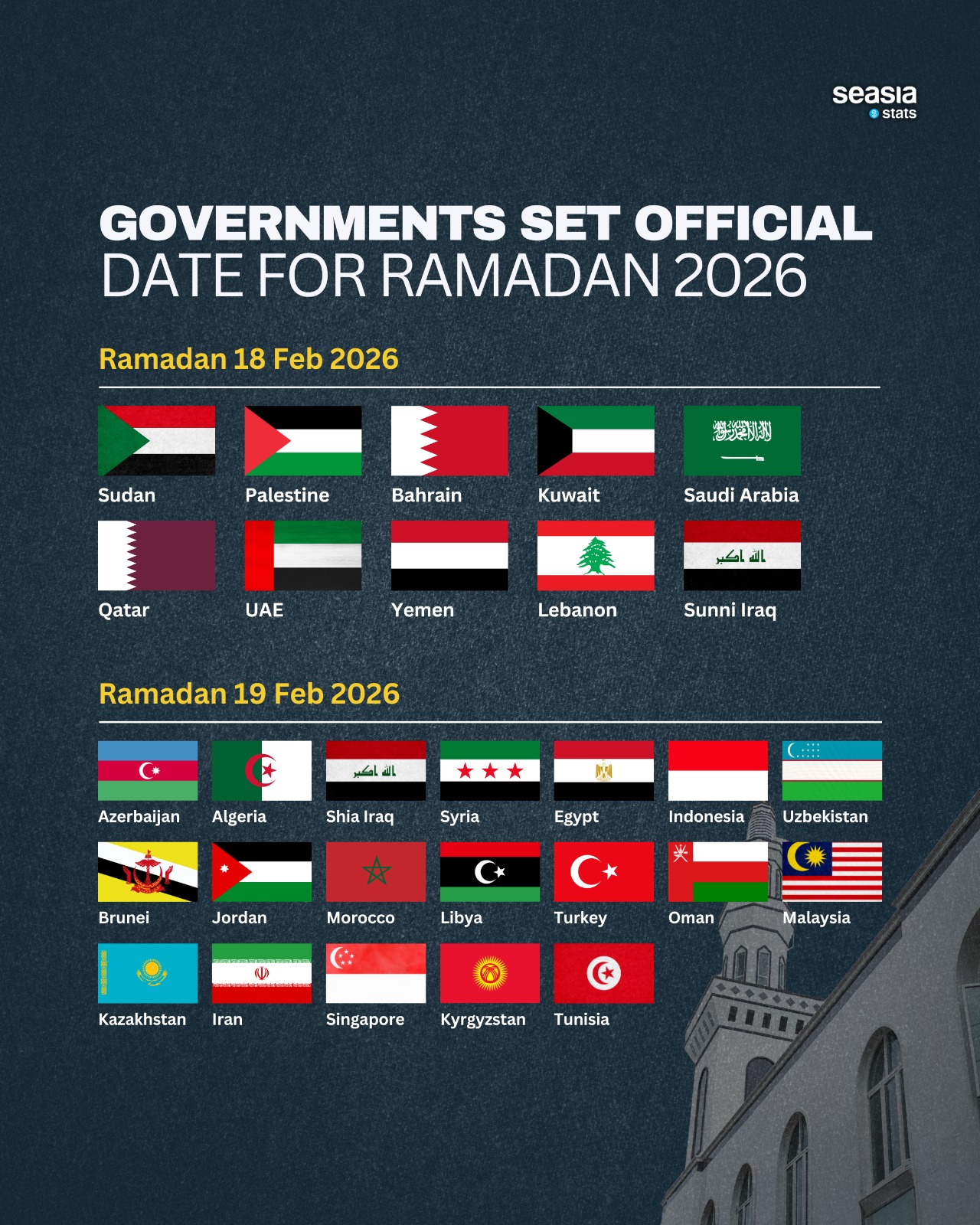
As the Islamic lunar calendar turned toward its most sacred month, millions of Muslims around the world prepared to welcome Ramadan 2026. Yet, as is often the case, the official start date varied across regions—highlighting the rich diversity of traditions and interpretations within the global Muslim community.
Why Ramadan Began on Different Dates
The start of Ramadan depends on the sighting of the new crescent moon, known as the hilal. Some countries rely strictly on physical sightings, while others use astronomical calculations to determine visibility. On the evening of February 17, 2026, these differing methods led to two official start dates across the Muslim world: February 18 and February 19.
In many regions, the moon either set before the sun or was too faint to be seen with the naked eye, prompting authorities to complete 30 days of Sha’aban before declaring the start of Ramadan.
Countries That Began Fasting on February 18
Saudi Arabia was among the first to announce the start of Ramadan on Wednesday, February 18, after its official moon-sighting committee confirmed visibility. This decision was quickly followed by several Gulf and Arab nations.
Countries that began fasting on February 18 included Qatar, the United Arab Emirates, Kuwait, and Bahrain. In the wider Arab world, Yemen, Palestine, Sudan, Lebanon (Sunni authorities), and Iraq (both Sunni and Shia communities) also aligned with this date.
In North America, many Islamic organizations that rely on astronomical calculations also chose February 18, creating alignment with Saudi Arabia’s declaration.
February 19 Start: Southeast Asia and Beyond
Across Southeast Asia, however, the situation was different. Indonesia, Malaysia, Singapore, and Brunei all officially declared Thursday, February 19, as the first day of Ramadan after local moon-sighting committees confirmed the crescent was not visible on February 17.
This regional alignment is a familiar pattern. Southeast Asian nations typically follow their own national observation processes through religious ministries and councils. In Indonesia, the government convenes its sidang isbat (confirmation session), while Malaysia relies on its Conference of Rulers and official astronomy departments. Brunei and Singapore also use a combination of astronomical calculations and local verification.
Beyond Southeast Asia, countries such as Oman, Turkey, Jordan, Egypt, Syria, Azerbaijan, Kazakhstan, Kyrgyzstan, Iran, Tunisia, and Morocco also began fasting on February 19 after similar findings. Nations in Europe and Oceania—including France and Australia—likewise followed the later start date.
A Shared Spirit Across Different Dates
While the calendar dates differed, the essence of Ramadan remains the same everywhere. The holy month is a time of fasting from dawn to sunset, increased prayer, reflection, and generosity. Mosques fill with worshippers, families gather for iftar, and communities organize charity drives to support those in need.
In Southeast Asia, Ramadan is especially vibrant. Cities like Jakarta, Kuala Lumpur, and Bandar Seri Begawan transform with festive night markets, while Singapore’s Geylang Serai bazaar becomes a hub of cultural celebration. In southern Thailand and Mindanao in the Philippines, Muslim communities also observe the month with strong traditions of communal worship and charity.
Unity Beyond the Crescent Moon
The variation in start dates is not a division but a reflection of the global diversity of Islamic practice. Whether beginning on February 18 or 19, Muslims across continents share the same spiritual purpose—seeking forgiveness, practicing self-discipline, and strengthening bonds with family and community.
As the crescent moon ushers in this sacred season, the message remains universal: a time for reflection, compassion, and renewal.
Ramadan Kareem—a blessed and peaceful Ramadan to all who observe.


