

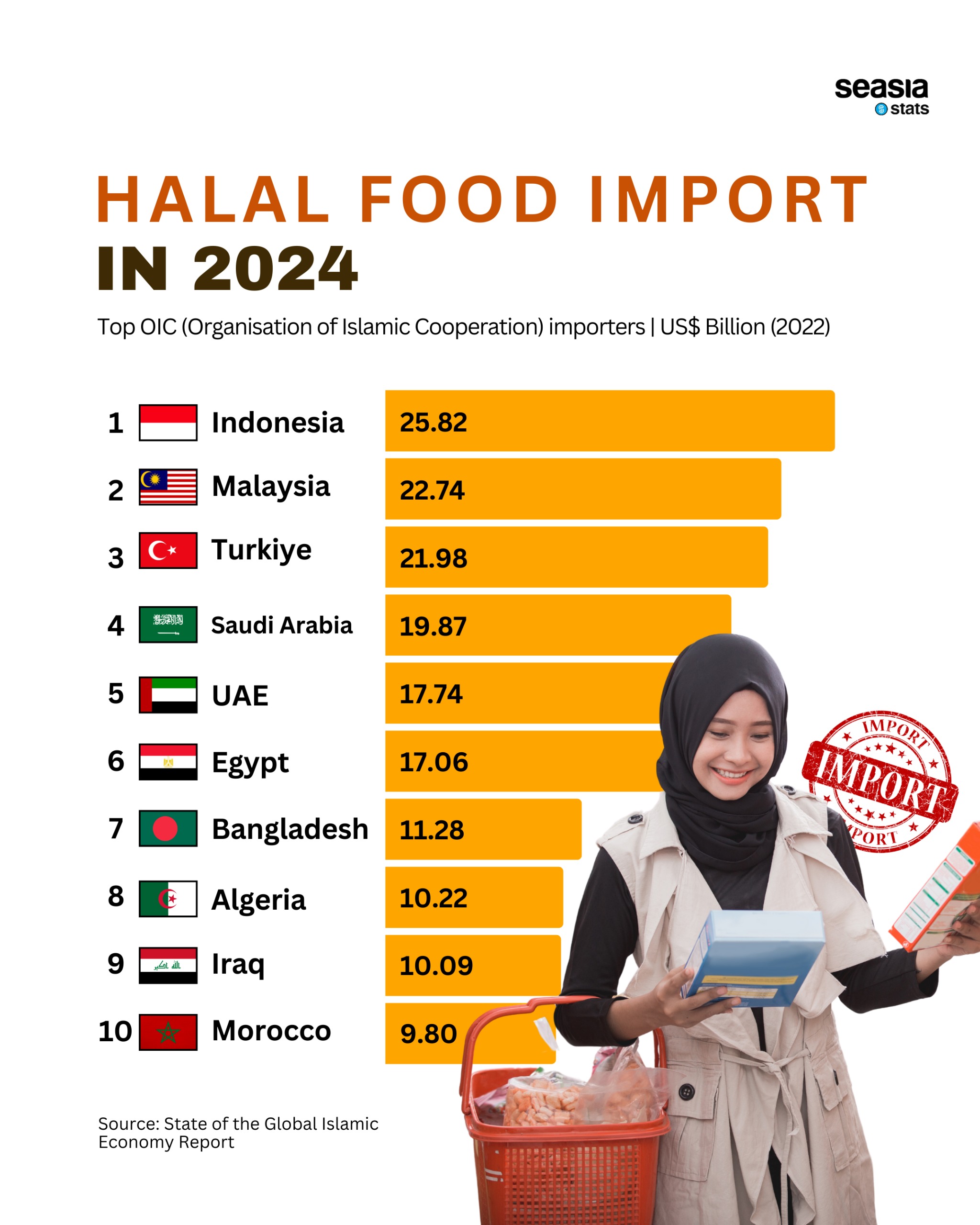
Indonesia has emerged as the largest importer of halal food among Organization of Islamic Cooperation (OIC) member countries in 2024, according to the State of the Global Islamic Economy Report. With imports reaching US$25.82 billion, Indonesia surpassed other major halal food importers such as Malaysia (US$22.74 billion) and Türkiye (US$21.98 billion). This reflects the country’s strong domestic demand for halal-certified products, driven by its large Muslim population and a growing consumer market.
Strong Domestic Demand Fuels Indonesia’s Imports
Indonesia's position as the top halal food importer highlights the increasing demand for diverse and high-quality halal products. As the country continues to develop, urbanization and rising incomes have fueled the need for processed, packaged, and imported halal foods, making Indonesia a key market for global halal food exporters.
Other Leading Halal Food Importers in the OIC
Besides Indonesia, several other OIC nations play a crucial role in the global halal food trade. Malaysia, Türkiye, Saudi Arabia, the UAE, Egypt, Bangladesh, Algeria, Iraq, and Morocco are among the top importers, collectively contributing to the growing halal food economy. These countries rely on halal-certified imports to meet local demand, strengthen food security, and cater to diverse consumer preferences.
The Expanding Global Halal Food Market
The substantial value of halal food imports across OIC member states underscores the growing significance of the global halal food sector. With the Muslim population projected to increase, demand for halal products is expected to rise, presenting opportunities for both Muslim-majority and non-Muslim-majority food-exporting countries.
Future Outlook: Strengthening Halal Food Trade
As Indonesia and other OIC countries continue to import large volumes of halal food, governments and businesses are expected to invest further in halal certification, supply chain efficiency, and food security policies. The halal food sector will remain a key driver of economic growth, shaping trade partnerships and fostering innovation in the global food industry.


