

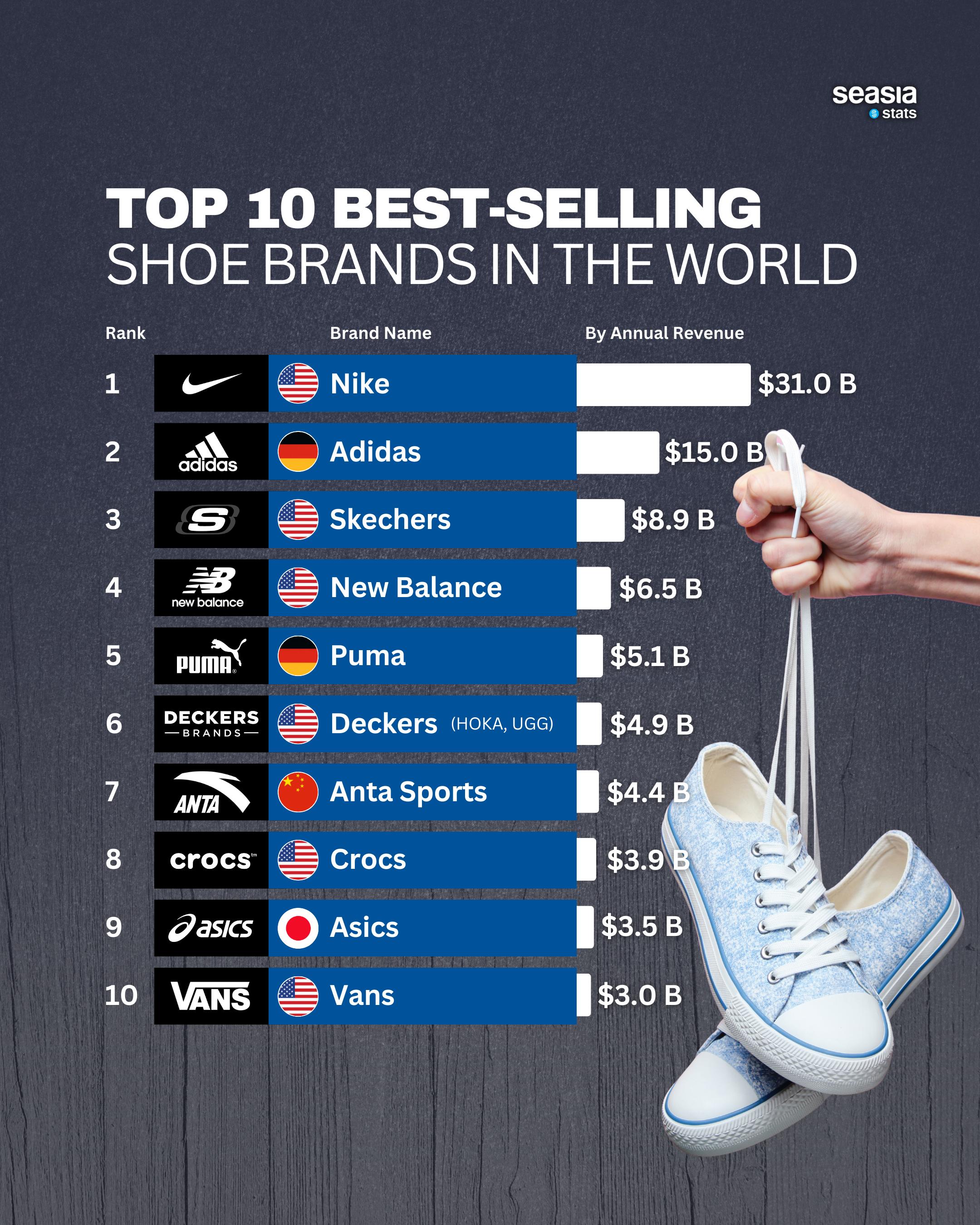
From city streets to sports arenas, footwear has become a defining symbol of modern lifestyle and identity. Sneakers are no longer just about function—they represent fashion, culture, and global influence. According to Seasia Stats, a handful of powerhouse brands dominate the global footwear industry, generating tens of billions of dollars annually while shaping trends from New York to Jakarta.
Nike’s Unrivaled Global Dominance
At the top of the global rankings stands Nike, generating a staggering $31.0 billion in annual revenue. The American giant has long been the benchmark for innovation in athletic footwear, combining performance technology with strong branding and cultural influence. From basketball courts to streetwear culture, Nike’s reach is unmatched.
In Southeast Asia, Nike holds a commanding presence across major markets such as Indonesia, the Philippines, and Thailand. Its popularity is fueled by youth culture, basketball fandom, and the region’s growing fitness and lifestyle sectors. The brand’s collaborations and celebrity endorsements have made it a staple for urban consumers across the region.
Adidas and the Power of Global Competition
Close behind Nike is Adidas, which generates $15.0 billion in annual revenue. The German brand has built its reputation on performance engineering and strong ties to football culture, making it particularly popular in countries such as Vietnam and Malaysia where the sport dominates.
Adidas has also embraced lifestyle fashion, blending sportswear with streetwear in a way that resonates strongly with Southeast Asian youth. Its presence in major retail hubs like Singapore and Bangkok highlights the region’s importance as a growing consumer market.
The Strong Middle Tier of Global Brands
The top five is rounded out by Skechers, New Balance, and Puma—three brands that combine performance with accessibility. Skechers, with $8.9 billion in revenue, has grown rapidly through its comfort-focused designs and mass-market appeal. It is especially popular in countries like Indonesia and the Philippines where affordability and durability are key buying factors.
New Balance, generating $6.5 billion, has carved a niche with premium running shoes and retro-inspired designs that appeal to fashion-conscious consumers in urban Southeast Asia. Puma, with $5.1 billion, blends sports and lifestyle branding, making it a favorite among younger demographics in Thailand, Malaysia, and Singapore.
Emerging and Specialized Footwear Leaders
The lower half of the top ten highlights the diversity of today’s global footwear market. Deckers Brands, which owns HOKA and UGG, brings in $4.9 billion and is known for its specialized performance and lifestyle footwear. HOKA’s running shoes have gained popularity among fitness communities across Southeast Asia.
China’s Anta Sports, with $4.4 billion in revenue, represents the rise of Asian sports brands. As China expands its global footprint, Anta is increasingly visible in regional markets like Vietnam and Indonesia.
Meanwhile, Crocs continues to dominate casual footwear with $3.9 billion in revenue, finding a strong fan base among young consumers in Southeast Asia’s tropical climates. Japan’s Asics ($3.5 billion) remains a trusted name in running and performance gear, while Vans ($3.0 billion) maintains its cultural relevance through skate and street fashion.
Southeast Asia: A Key Growth Market
Southeast Asia has become one of the most dynamic growth regions for global footwear brands. Rising middle-class populations, expanding e-commerce platforms, and a youth-driven fashion culture have transformed the region into a key battleground for market share.
Countries like Indonesia, Vietnam, and the Philippines are seeing rapid growth in sneaker culture, while Singapore and Malaysia continue to serve as premium retail hubs. Local collaborations, influencer marketing, and sports sponsorships have all helped global brands strengthen their foothold.
The Future of Footwear
As the global footwear industry evolves, brands must continue to balance innovation, sustainability, and cultural relevance. Southeast Asia will play an increasingly important role in shaping global demand, with its young, digitally connected population driving the next wave of sneaker culture.
From performance athletes to everyday consumers, footwear remains more than just a product—it is a global language of style, identity, and movement.


