

Across Southeast Asia, mosques are more than places of worship—they are architectural masterpieces, cultural landmarks, and living symbols of faith woven into the region’s identity. From majestic golden domes to modern urban complexes, each country’s largest mosque tells a unique story about its people, its history, and its devotion.
Below is a journey across Southeast Asia’s most prominent mosques—each representing the spiritual heartbeat of its nation.
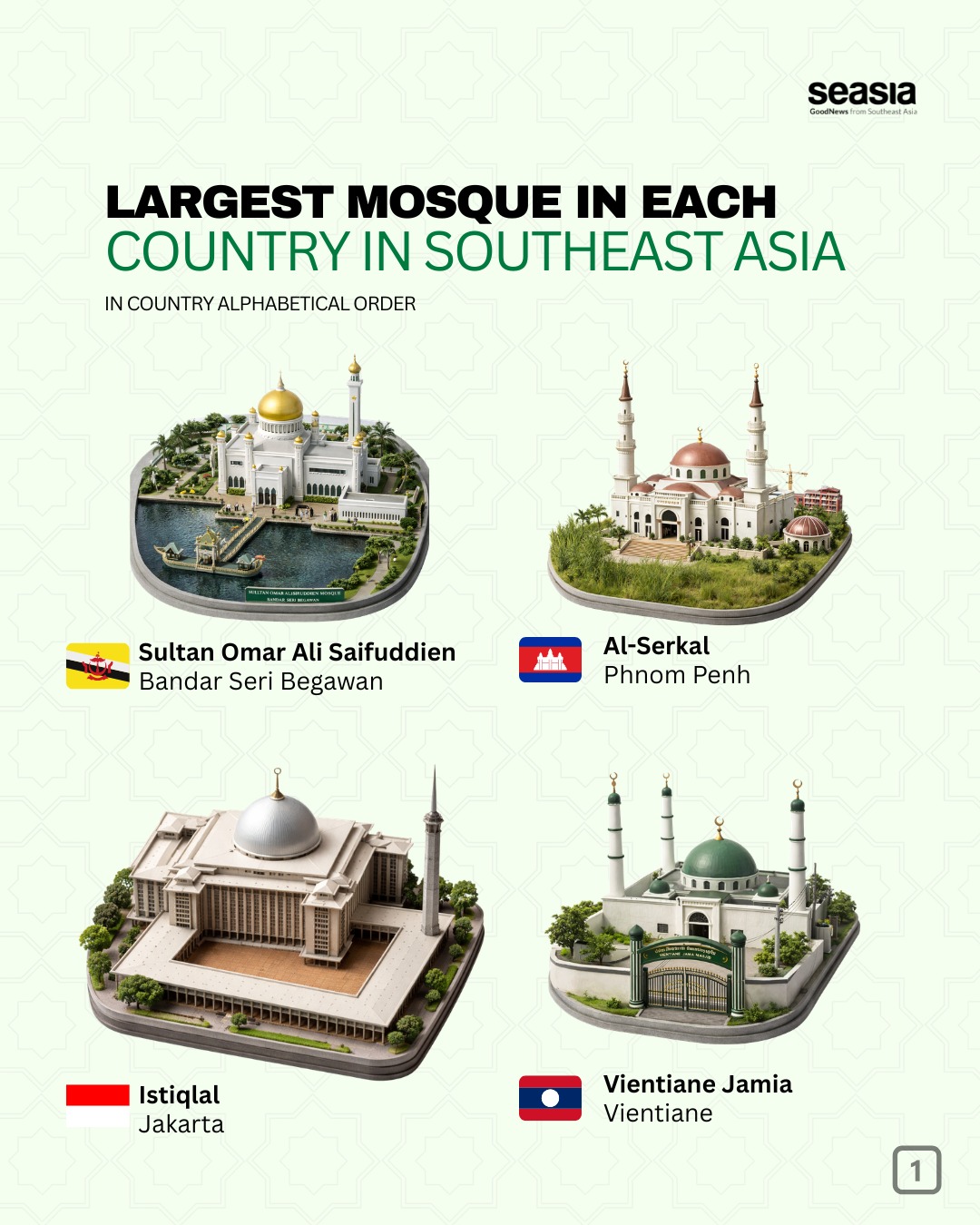
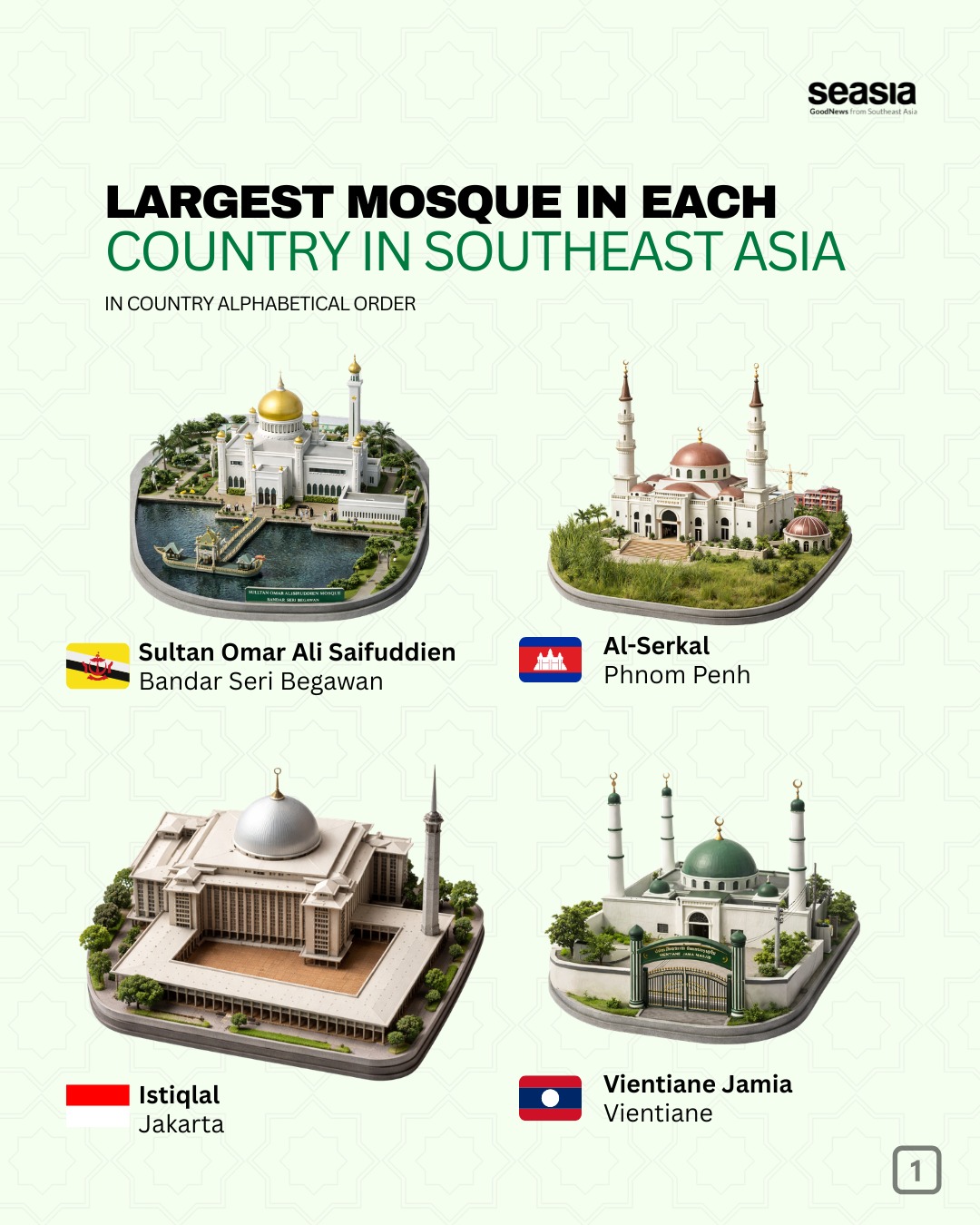
Brunei: Sultan Omar Ali Saifuddien Mosque, Bandar Seri Begawan
Perhaps one of the most iconic mosques in Asia, the Sultan Omar Ali Saifuddien Mosque rises gracefully above a lagoon in Brunei’s capital. Built in 1958, it is famed for its gleaming golden dome, marble minarets, and serene setting. The mosque reflects Brunei’s identity as a deeply Islamic nation and serves as a symbol of national pride and royal heritage.
Cambodia: Al-Serkal Mosque, Phnom Penh
Al-Serkal Mosque stands as the largest Islamic house of worship in Cambodia. It serves as a vital religious center for the Cham Muslim community. Though modest compared to its regional counterparts, its significance lies in its role as a cultural anchor for Cambodia’s Muslim minority.
Indonesia: Istiqlal Mosque, Jakarta
As the largest mosque in Southeast Asia—and one of the largest in the world—Istiqlal Mosque is a monumental symbol of Indonesia’s independence and religious diversity. Built opposite Jakarta’s Catholic cathedral, the mosque represents harmony between faiths. Its modernist design, massive prayer halls, and capacity for over 120,000 worshippers make it a national icon.
Laos: Vientiane Jamia Mosque, Vientiane
Located in the capital city, Vientiane Jamia Mosque is the largest mosque in Laos and serves a small but vibrant Muslim community. It is both a place of worship and a community center, reflecting the presence of traders and migrants who brought Islam into Laos over generations.
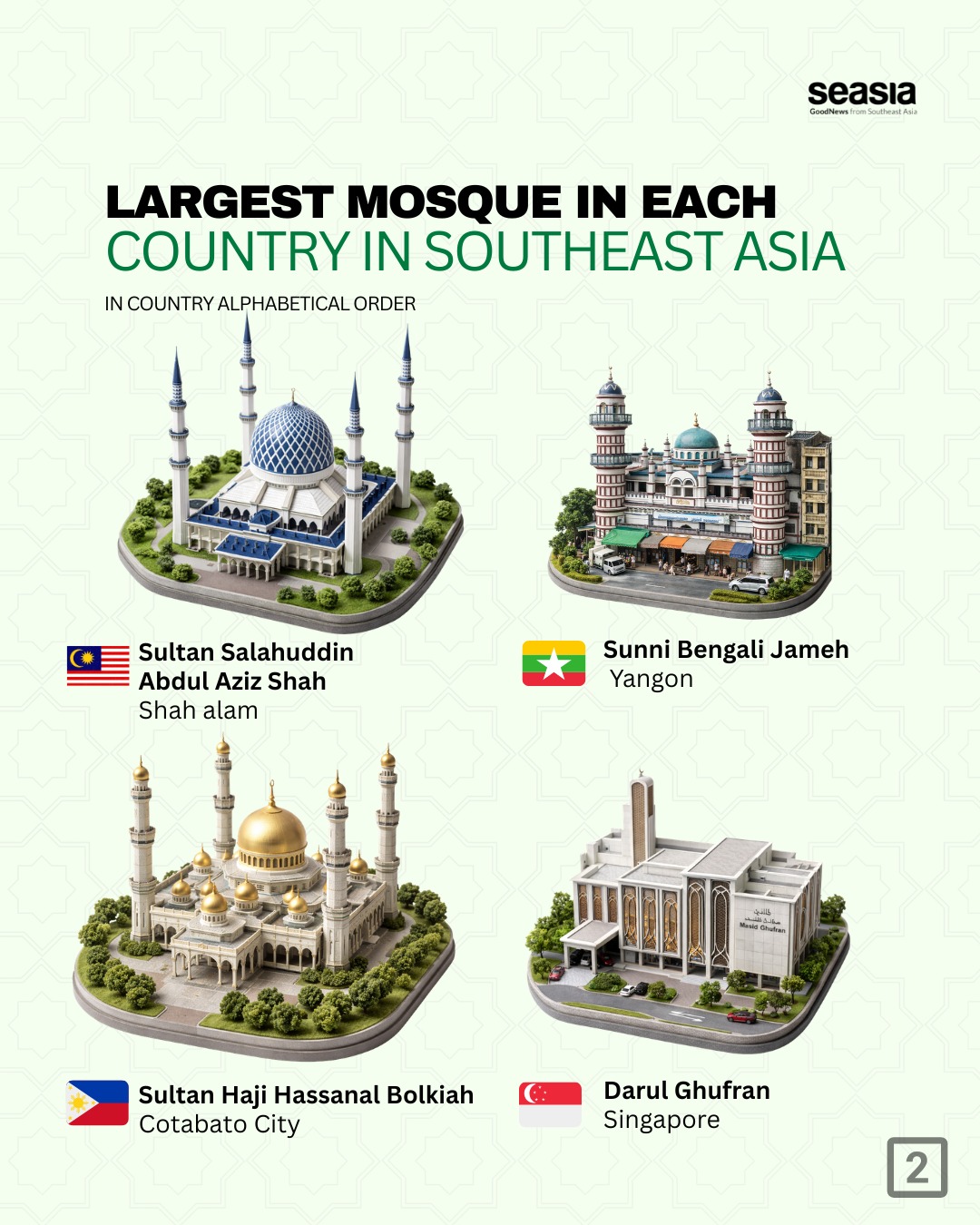
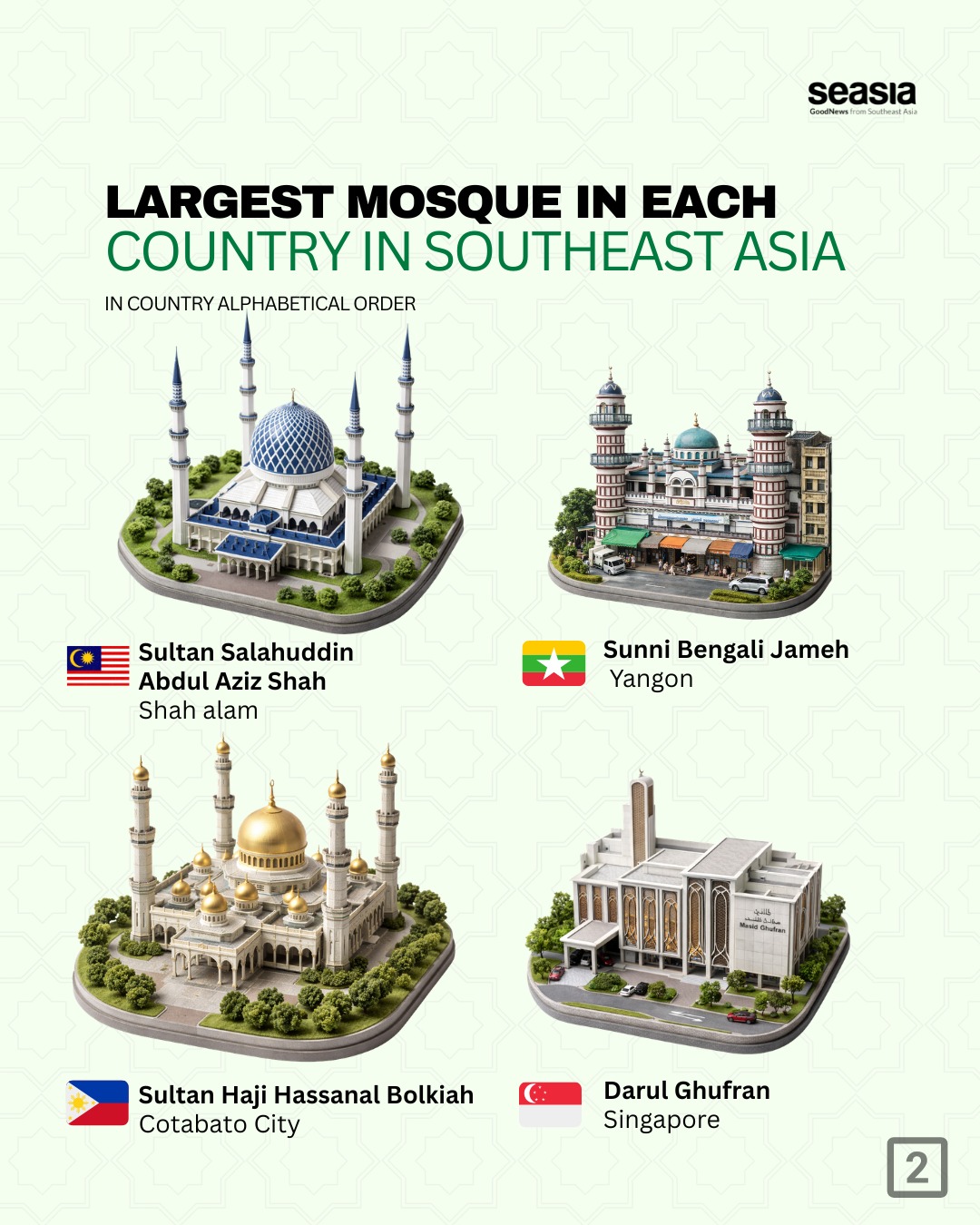
Malaysia: Sultan Salahuddin Abdul Aziz Shah Mosque, Shah Alam
Known as the “Blue Mosque,” this is Malaysia’s largest mosque and one of the most visually stunning in the world. Its massive blue-and-silver dome and towering minarets dominate the skyline of Shah Alam. The mosque blends Malay and Islamic architectural styles and can accommodate more than 24,000 worshippers at once.
Myanmar: Sunni Bengali Jameh Mosque, Yangon
In Yangon, the Sunni Bengali Jameh Mosque reflects the historical presence of South Asian Muslim communities in Myanmar. Its ornate design and central location make it a key religious landmark despite the country’s complex social dynamics.
Philippines: Sultan Haji Hassanal Bolkiah Mosque, Cotabato City
Also known as the Grand Mosque of Cotabato, this mosque is the largest in the Philippines and a major symbol of Islamic identity in Mindanao. With golden domes and minarets inspired by Middle Eastern design, it highlights the deep cultural ties between the Philippines’ Muslim south and the broader Islamic world.
Singapore: Darul Ghufran Mosque
Situated in Tampines, Darul Ghufran Mosque is Singapore’s largest mosque and a key community hub. Designed with sustainability in mind, it reflects the country’s modern, forward-looking approach while serving thousands of worshippers each week.
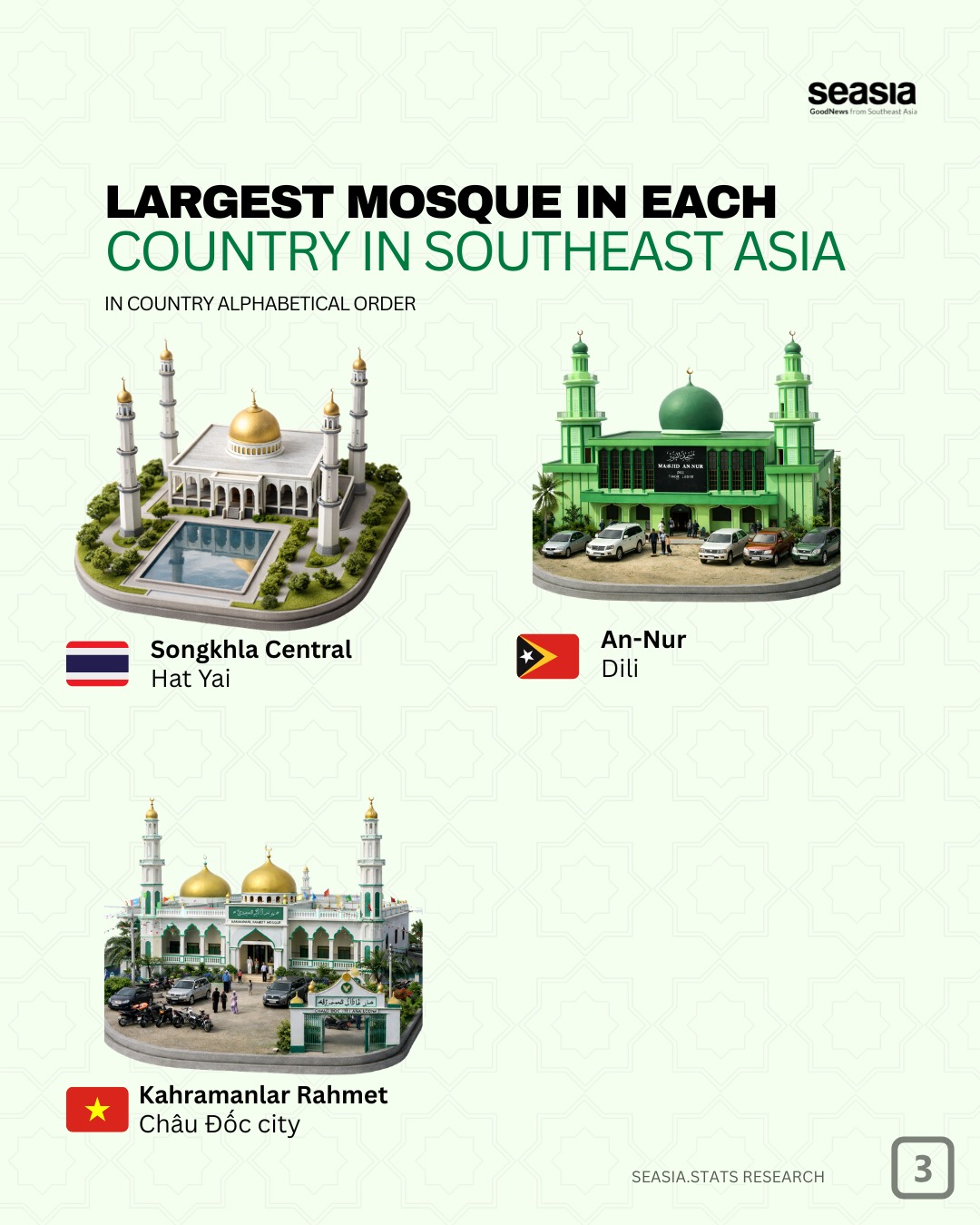
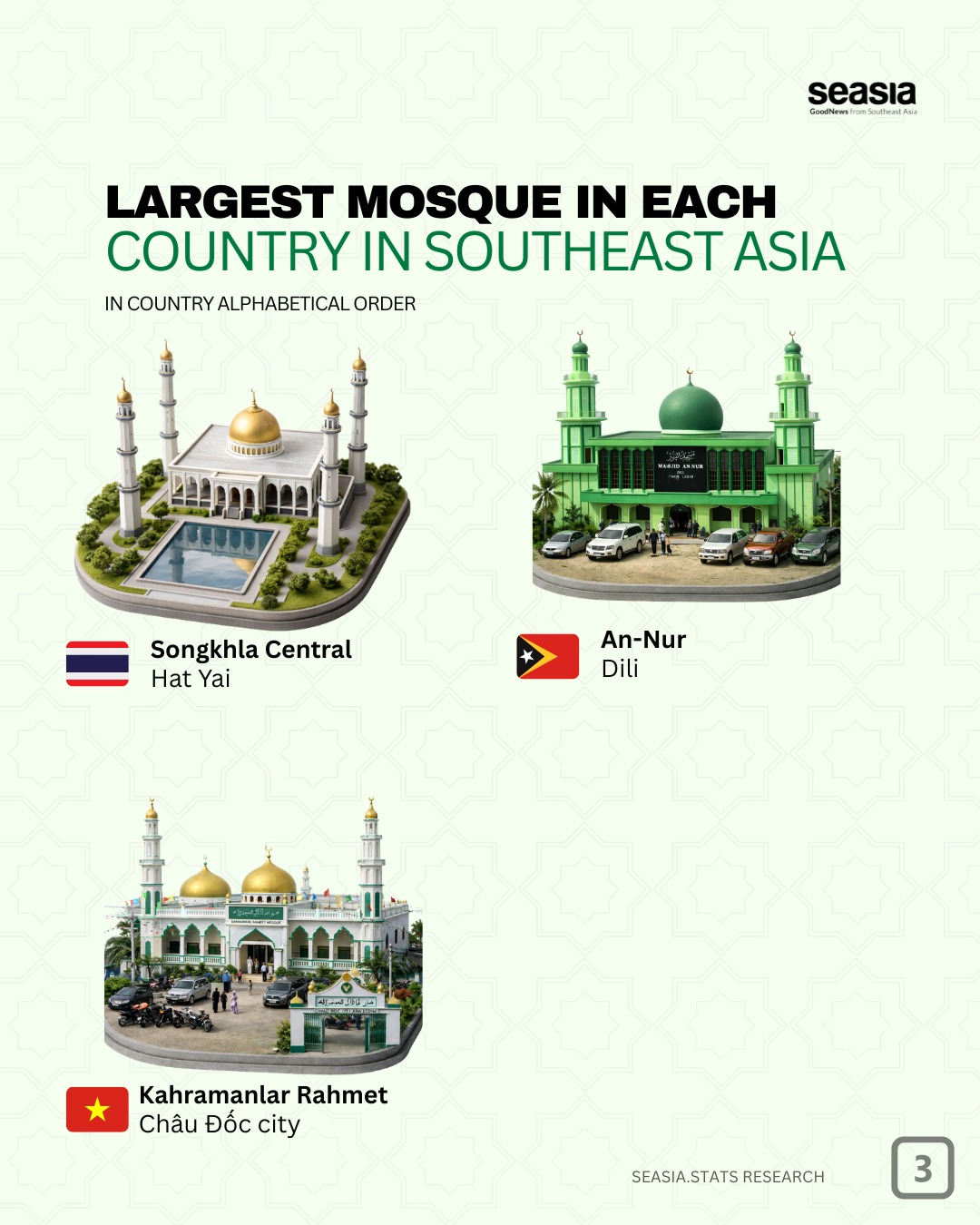
Thailand: Songkhla Central Mosque, Hat Yai
Often referred to as the “Taj Mahal of Thailand,” this mosque features a stunning symmetrical design with a central reflecting pool. It serves the Muslim-majority southern provinces and stands as one of the country’s most recognizable Islamic landmarks.
Timor-Leste: An-Nur Mosque, Dili
The An-Nur Mosque is the largest in Timor-Leste and symbolizes the nation’s small but significant Muslim community. Located in the capital, it acts as both a religious center and a cultural meeting point.
Vietnam: Kahramanlar Rahmet Mosque, Châu Đốc
This mosque in Vietnam’s Mekong Delta serves the Cham Muslim community and showcases unique architectural elements blending Islamic and local design influences. It stands as a testament to the region’s centuries-old trade and cultural exchange networks.
A Region United in Diversity
From Indonesia’s vast congregational spaces to the intimate mosques of Laos and Timor-Leste, Southeast Asia’s mosques reflect the region’s incredible diversity. Each structure carries layers of history—migration, trade, colonization, and faith—while continuing to serve as a living center of spiritual life.
Together, these mosques remind us that Southeast Asia is not only a crossroads of cultures but also a vibrant landscape of shared devotion, where faith continues to shape identity, architecture, and community life across nations.


