

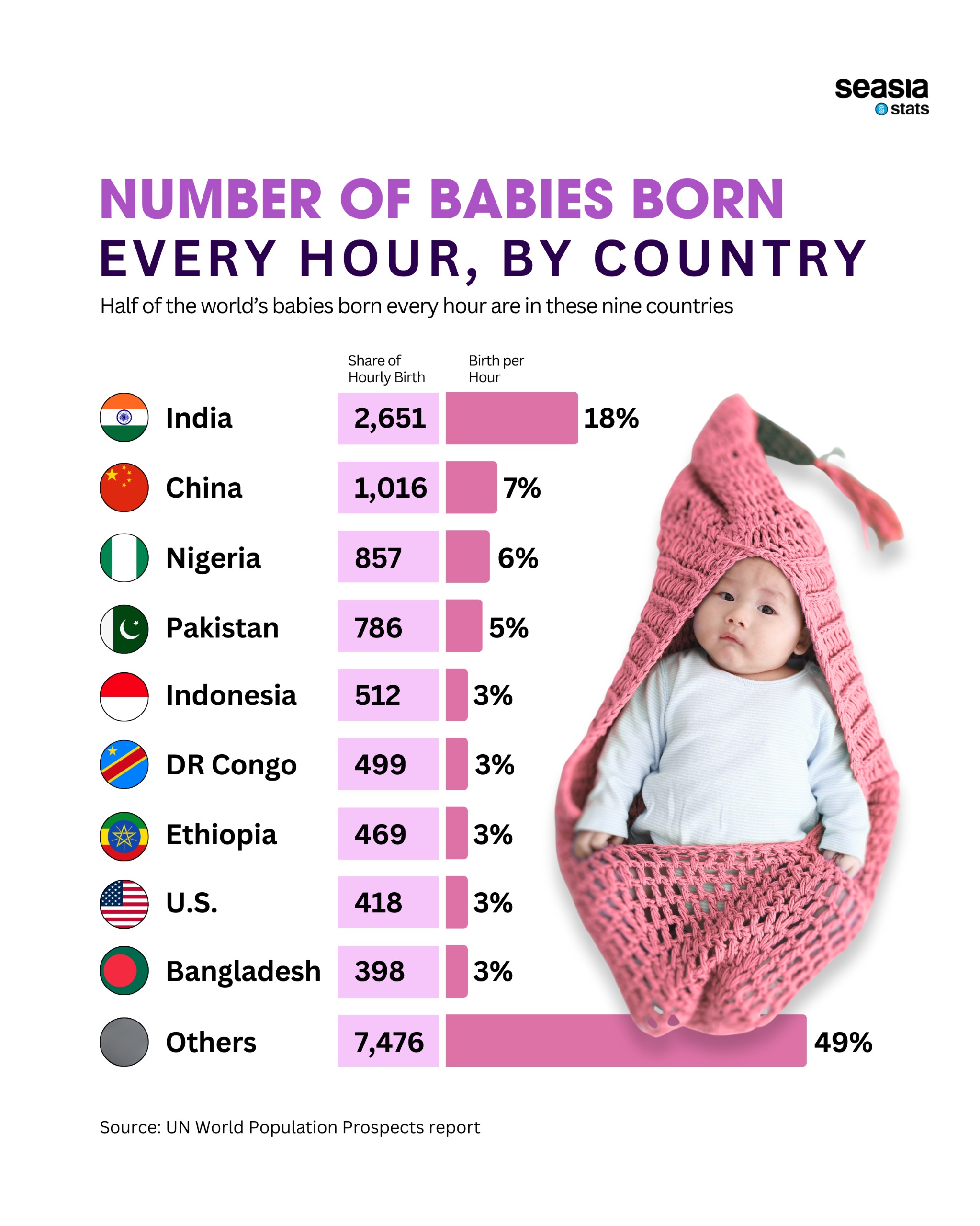
Every hour, thousands of babies take their first breath somewhere in the world. However, nearly half of all births are concentrated in just nine countries, reflecting key trends in global population growth.
Where Are the Most Babies Born?
According to the UN World Population Prospects report, India tops the list with an astounding 2,651 births per hour, contributing to 18% of the world’s hourly births. This highlights India’s continued role as the most populous country, overtaking China in recent years.
China, still a major contributor despite its declining birth rate, sees 1,016 births per hour, making up 7% of the total global births.
Following closely behind are:
- Nigeria – 857 births per hour
- Pakistan – 786 births per hour
- Indonesia – 512 births per hour
- Democratic Republic of Congo – 499 births per hour
- Ethiopia – 469 births per hour
- United States – 358 births per hour
- Bangladesh – 321 births per hour
Each of these countries accounts for approximately 3% of the world's births per hour, underscoring the concentration of population growth in Asia and Africa.
The Rest of the World’s Births
Beyond these nine nations, the remaining 49% of births—around 7,476 babies per hour—are spread across the rest of the world. While many developed countries experience declining birth rates, nations with high fertility rates continue to drive global population growth.
What This Means for the Future
These birth trends shape global demographics, economic development, and resource needs. Countries with high birth rates face unique challenges, including:
- Healthcare accessibility for mothers and infants
- Education and employment opportunities for a growing young population
- Infrastructure and resource management to support urban expansion
As the world navigates population growth and sustainability, these birth trends will play a crucial role in shaping the future. Understanding where and why births are concentrated can help policymakers plan for healthcare, education, and economic development in the decades ahead.


