

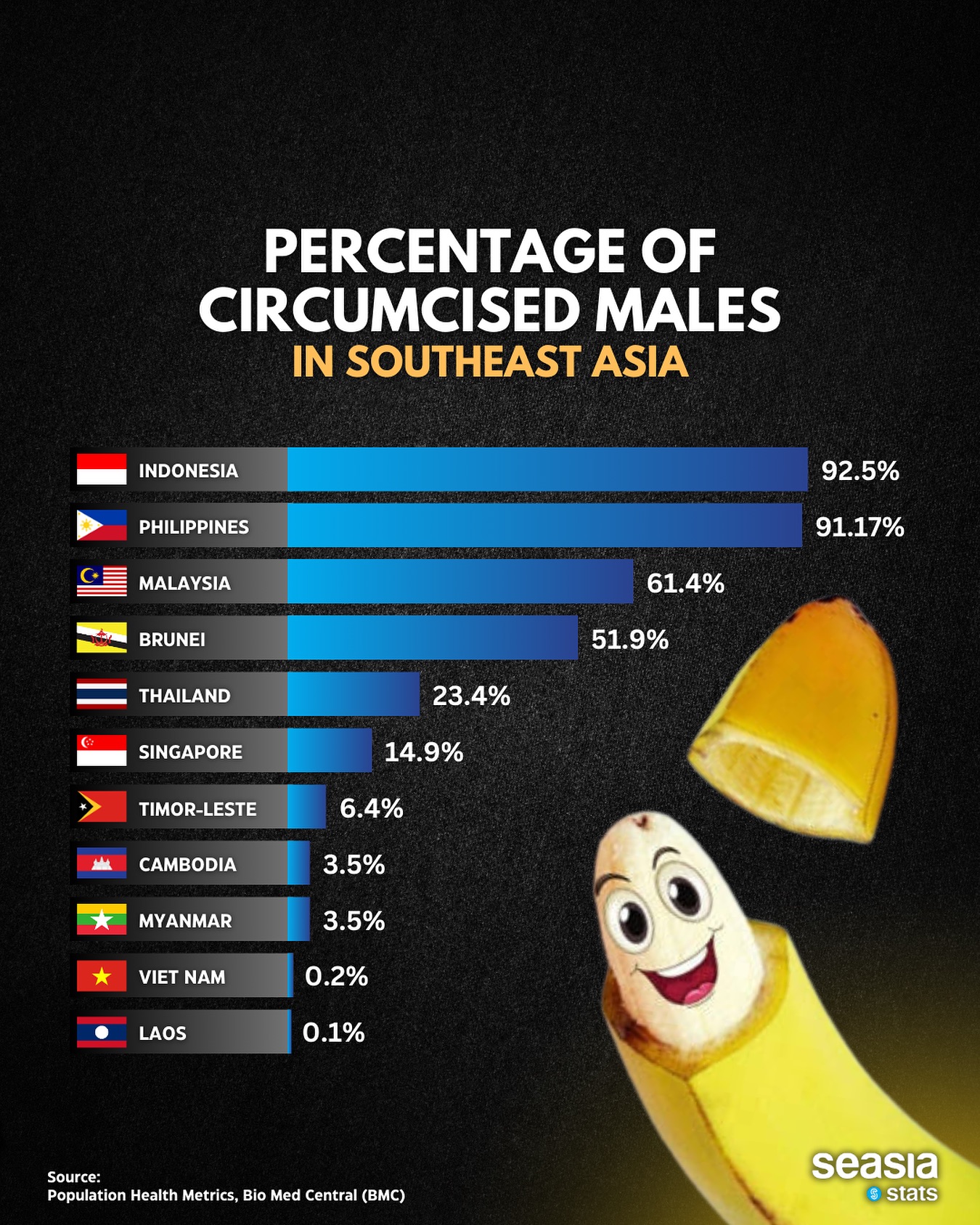
Circumcision practices in Southeast Asia vary widely, reflecting the diverse cultural, religious, and ethnic tapestry of the region. In some communities, circumcision holds religious significance and is a rite of passage symbolizing maturity and adherence to cultural traditions. For example, among Muslim populations in countries like Indonesia and Malaysia, male circumcision is a common practice and is often performed during childhood. In contrast, other communities in Southeast Asia may not have a widespread tradition of circumcision, and the decision to undergo the procedure may be more individual or family-specific. While the cultural and religious aspects play a significant role, health considerations are increasingly factored into the decision-making process. Understanding the nuanced perspectives on circumcision in Southeast Asia requires recognition of the region's rich cultural diversity and the complex interplay between tradition, religion, and evolving societal norms.


