

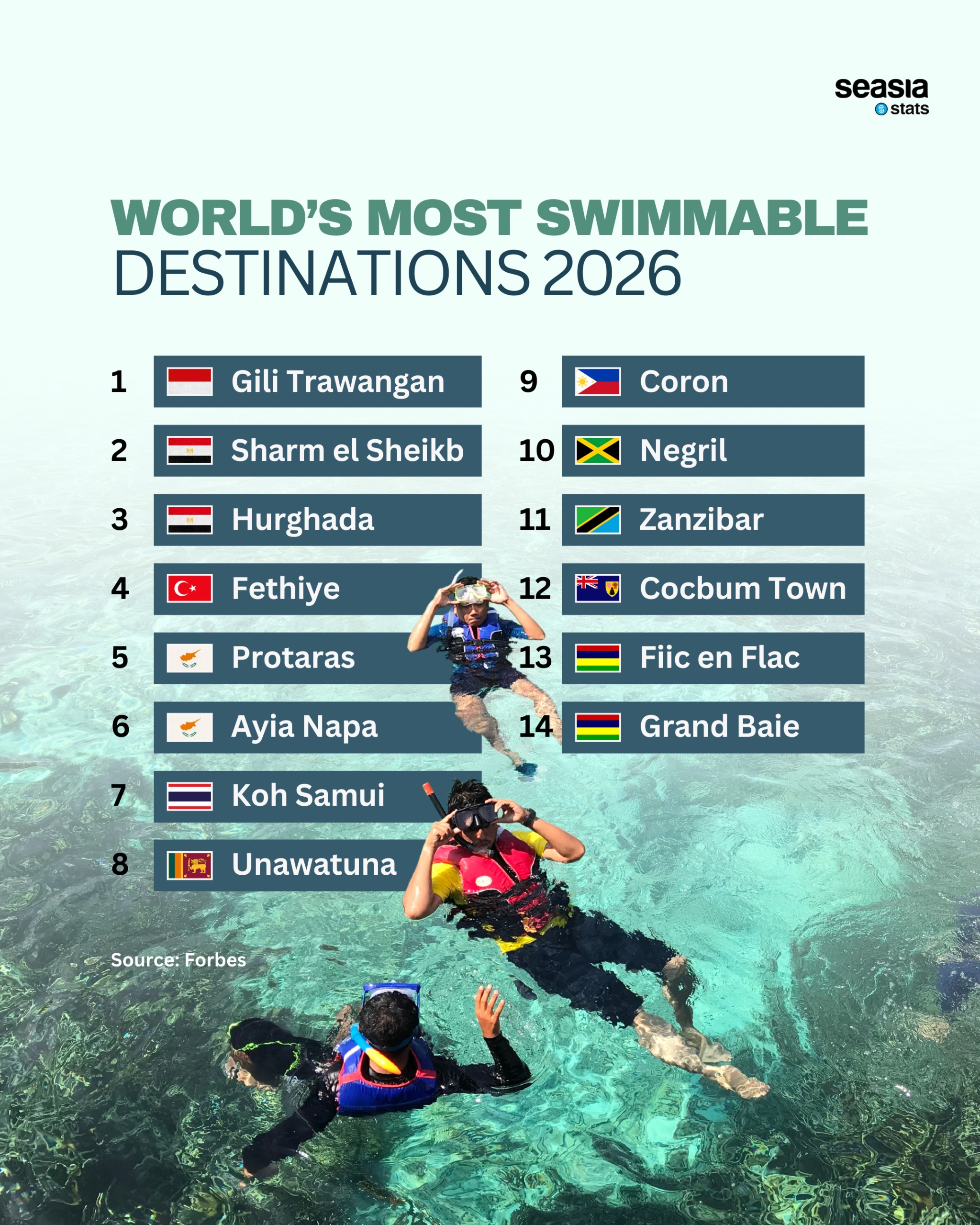
There is something universally freeing about stepping into calm, clear, warm water—and in 2026, travelers are seeking that feeling more than ever. A new global ranking by luxury travel specialist CV Villas, published by Forbes, highlights the world’s most swimmable destinations based on real environmental data, from sea temperature and wave height to UV exposure and wind conditions. Topping the global list is a tropical gem from Southeast Asia: Indonesia’s Gili Trawangan.
Gili Trawangan Takes the Crown
With a score of 78.6 out of 100, Gili Trawangan stands as the world’s most swimmable destination in 2026. Located just off Lombok in Indonesia, the island offers everything a swimmer could hope for—warm waters consistently between 26°C and 30°C, exceptional clarity, and gentle currents that make it ideal for beginners and families.
Perhaps most appealing is its car-free environment. Without traffic noise or urban pressure, visitors can focus on wellness, relaxation, and immersion in nature. The island’s shallow reefs, soft sandy beaches, and safe entry points make it perfect for snorkeling and open-water swimming alike, reinforcing Indonesia’s reputation as one of the world’s premier marine destinations.
The Red Sea and Mediterranean Shine
While Southeast Asia leads the ranking, Egypt’s Red Sea coastline remains a global powerhouse. Sharm el Sheikh and Hurghada claim second and third place respectively, both scoring 77.1. These desert-fringed coastlines are known for their unmatched underwater visibility and colorful coral ecosystems, offering year-round swimming conditions thanks to stable, warm climates.
The Mediterranean also holds strong with destinations like Fethiye in Turkey and Cyprus hotspots Protaras and Ayia Napa. These locations feature calm, protected bays with gentle wave patterns—perfect for long, relaxed swims in sun-soaked surroundings.
Southeast Asia’s Strong Presence
Southeast Asia continues to dominate the global swim map beyond Indonesia. Thailand’s Koh Samui ranks seventh, thanks to its palm-lined beaches and accessible, calm waters ideal for both casual swimmers and snorkelers. The Philippines’ Coron, in ninth place, is a dreamlike setting of limestone cliffs and emerald lagoons, offering some of the most visually stunning swim spots in the world.
Beyond the top ten, the region continues to impress. Bali’s Nusa Dua and Sanur beaches in Indonesia are known for their protected reef barriers and gentle surf, while Malaysia’s Perhentian Islands and Vietnam’s Phu Quoc offer similarly tranquil, warm-water environments. Even Cambodia’s Koh Rong and Thailand’s Krabi coastline are increasingly recognized for their swimmable, reef-rich waters.
A Global Shift Toward “Swimcations”
The 2026 ranking reflects a broader shift in global travel trends. More travelers are prioritizing wellness, nature, and immersive water-based experiences—giving rise to what many now call the “swimcation.” Rather than simply sunbathing, travelers want destinations where they can safely swim, snorkel, and connect with marine environments.
Factors such as water quality, safety, accessibility, and comfort are now central to destination choice. Places that combine calm seas with clean ecosystems and warm temperatures are quickly becoming top-tier travel priorities.
Southeast Asia at the Heart of the Movement
With its year-round tropical climate, vast archipelagos, and world-class marine biodiversity, Southeast Asia is perfectly positioned at the heart of this global trend. From Indonesia’s Gili Islands to Thailand’s Gulf coast and the Philippines’ island chains, the region offers some of the most swimmable—and unforgettable—waters on Earth.
As travelers continue to seek balance, serenity, and connection with nature, one thing is clear: the future of travel is not just about where you go—but where you can dive in.


