

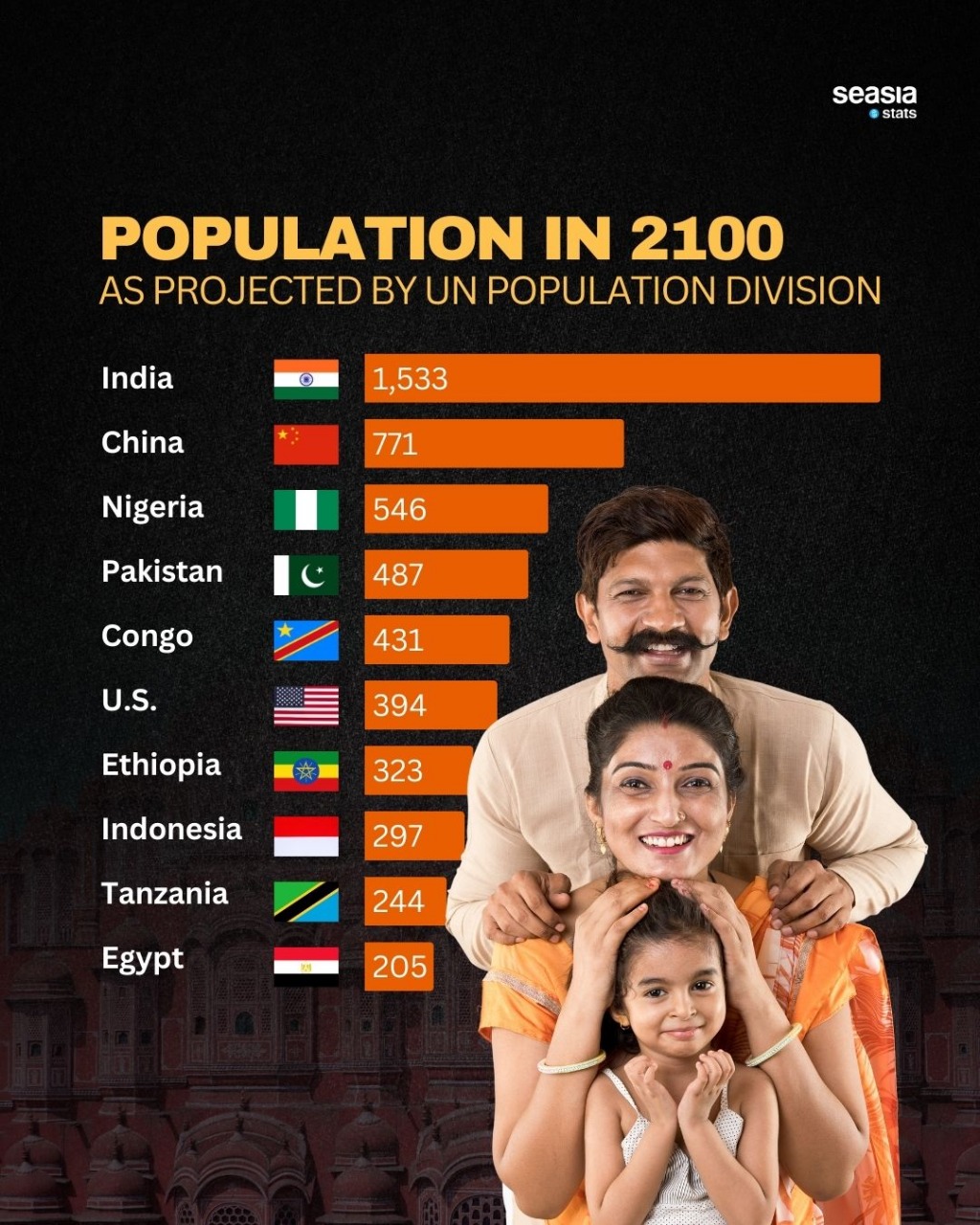
A new report by the United Nations Population Division reveals dramatic shifts in global population dynamics by the year 2100, with developing nations poised to dominate the list of the world’s most populous countries.
According to long-term projections, India will emerge as the world’s most populous country by the end of the century, with an estimated 1.53 billion people. This figure places India well ahead of China, whose population is expected to shrink significantly to 771 million, less than half of India’s projected total.
One of the most notable trends is the rapid rise of African nations in the global demographic landscape. Nigeria, currently the most populous country in Africa, is projected to rank third globally with 546 million people. Democratic Republic of the Congo and Ethiopia are also expected to see massive population increases, reaching 431 million and 323 million, respectively.
Top 10 Most Populous Countries by 2100 (UN Projections)
-
India – 1,533 million
-
China – 771 million
-
Nigeria – 546 million
-
Pakistan – 487 million
-
Congo (DRC) – 431 million
-
United States – 394 million
-
Ethiopia – 323 million
-
Indonesia – 297 million
-
Tanzania – 244 million
-
Egypt – 205 million
Population Shifts Driven by Birth Rates and Aging Trends
These projections reflect broader global patterns, including declining fertility rates in developed economies and higher birth rates in parts of Africa and South Asia. China’s projected decline is largely attributed to its aging population and prolonged low fertility rate, despite recent policy shifts encouraging larger families.
Meanwhile, countries like Nigeria and Pakistan continue to see high fertility rates combined with improving health outcomes, fueling rapid population growth.
Implications for Global Policy and Resources
The expected population surge in Africa and South Asia presents both opportunities and challenges. Nations experiencing fast growth will face increasing pressure on infrastructure, healthcare, education, and job creation. Conversely, countries with declining populations may encounter workforce shortages and economic stagnation.
This demographic evolution is expected to reshape geopolitical power balances, economic priorities, and climate strategies in the decades to come.
Source: United Nations Population Division, 2024 Projections


