

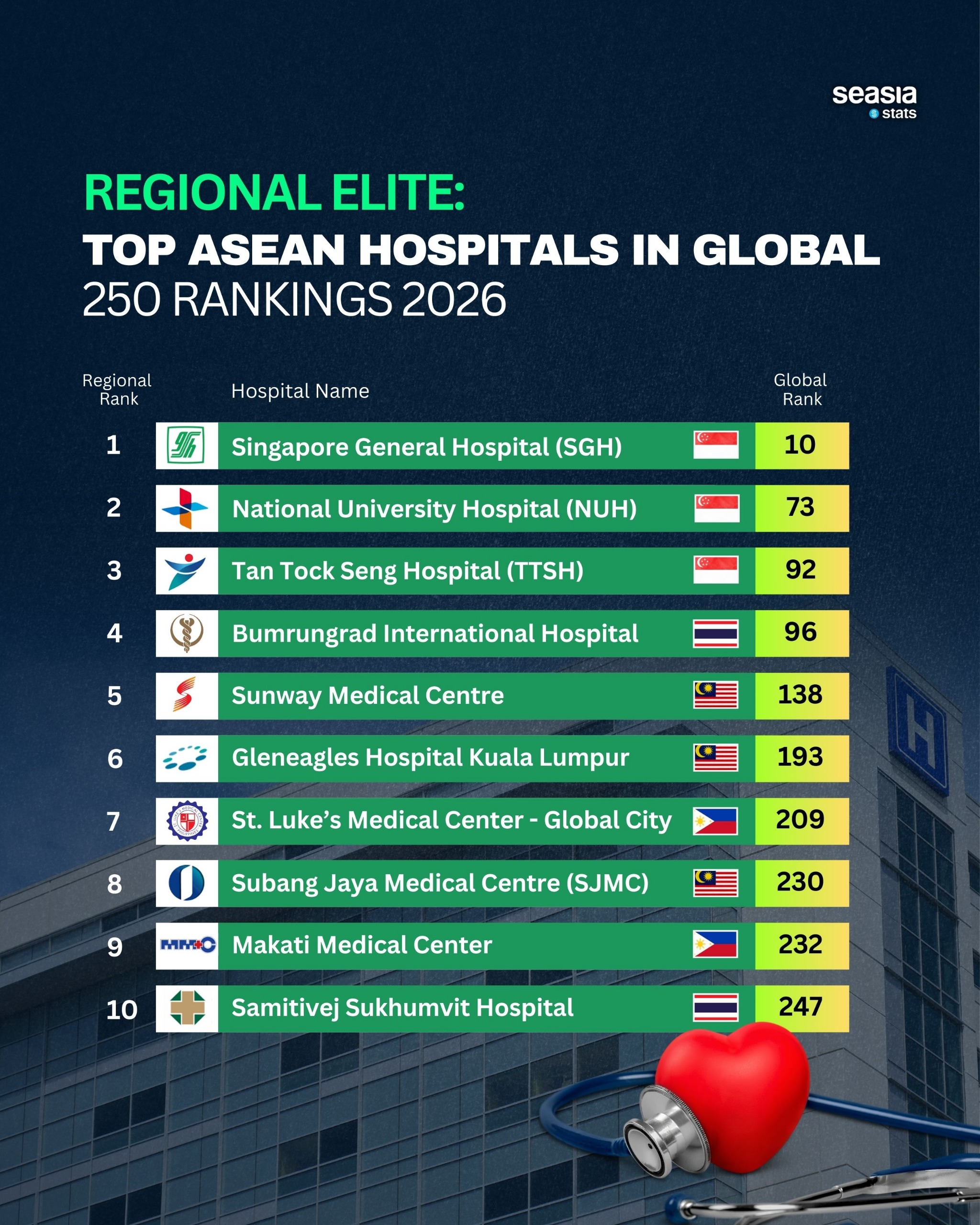
Healthcare across Southeast Asia has undergone remarkable transformation over the past two decades. With rapid investments in medical technology, highly trained specialists, and expanding international accreditation standards, several hospitals in the region are now recognized among the world’s best. According to the 2026 Global Top 250 Hospitals ranking, highlighted by Seasia Stats, a number of Southeast Asian institutions have earned global recognition for their excellence in patient care, research, and innovation.
Singapore Leads Southeast Asia’s Medical Excellence
At the top of the regional rankings stands Singapore General Hospital (SGH), which ranks 10th globally, making it the only hospital in Southeast Asia to enter the world’s top ten. SGH has long been considered a cornerstone of Singapore’s healthcare system, combining advanced research facilities with comprehensive patient care services.
Singapore’s success does not stop there. Two other institutions from the country also rank highly: National University Hospital (NUH) at 73rd globally and Tan Tock Seng Hospital (TTSH) at 92nd. These rankings highlight Singapore’s strong reputation as one of Asia’s most advanced medical hubs.
The country’s healthcare ecosystem benefits from world-class medical education, cutting-edge research institutions, and government support for innovation. As a result, Singapore has become a major destination for medical tourism, attracting patients from across Asia, the Middle East, and beyond.
Thailand and Malaysia Strengthen Regional Healthcare
Outside Singapore, Thailand and Malaysia also demonstrate strong medical capabilities. Thailand’s Bumrungrad International Hospital ranks 96th globally, placing it within the world’s top 100 hospitals. Known for its modern facilities and internationally trained physicians, Bumrungrad has become one of the world’s leading private hospitals for international patients.
Malaysia also features prominently in the rankings. Sunway Medical Centre holds 138th place globally, followed by Gleneagles Hospital Kuala Lumpur, which ranks 193rd. These hospitals have played a major role in positioning Malaysia as a competitive destination for healthcare services in Southeast Asia.
Malaysia’s healthcare sector has steadily expanded in recent years, with a focus on high-quality specialized care, modern hospital infrastructure, and accessible pricing. The country has become increasingly popular among regional patients seeking treatments ranging from cardiology to orthopedics and oncology.
The Philippines Joins the Regional Healthcare Elite
The Philippines also secures two spots in the ASEAN top ten. St. Luke’s Medical Center – Global City ranks 209th globally, recognized for its advanced facilities and international standards of care. Another prominent institution, Makati Medical Center, appears in the ranking at 232nd globally.
Both hospitals have established strong reputations for specialized services and international patient care. Located in Metro Manila, these institutions are key pillars of the Philippines’ private healthcare system and contribute to the country’s growing presence in the regional healthcare landscape.
Additional Leaders in Southeast Asia
Malaysia appears once more in the list with Subang Jaya Medical Centre (SJMC) at 230th globally, while Thailand completes the top ten with Samitivej Sukhumvit Hospital, ranked 247th globally.
Samitivej is particularly well known for pediatric care and services catering to international patients. Its presence in the rankings further strengthens Thailand’s reputation as a leader in medical tourism.
Southeast Asia’s Rising Healthcare Reputation
Beyond these top-ranked institutions, several other countries in Southeast Asia are working to strengthen their healthcare systems. Nations such as Indonesia, Vietnam, and Singapore’s regional partners are investing heavily in hospital modernization, digital health technologies, and specialist training programs.
Indonesia, for instance, has begun expanding internationally accredited hospitals in major cities such as Jakarta, Surabaya, and Bali. Vietnam is also developing modern medical centers to meet the needs of its rapidly growing population.
As healthcare standards continue to rise, Southeast Asia is increasingly becoming a major hub for high-quality medical care. With strong investments in technology, education, and infrastructure, the region’s hospitals are steadily gaining recognition on the global stage.


