

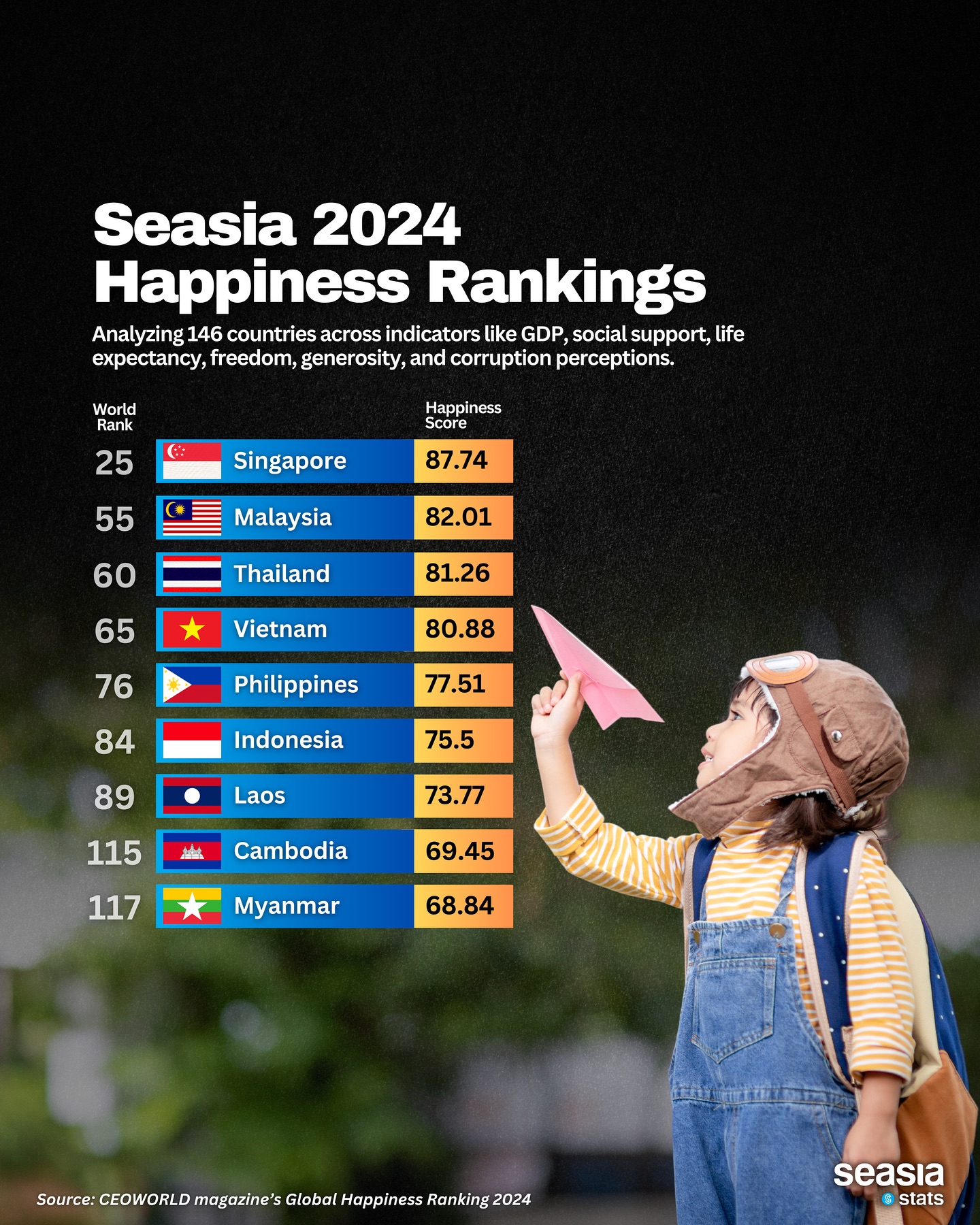
Happiness rankings hold significant importance in Southeast Asian countries as they provide valuable insights into the overall well-being and quality of life of the region's inhabitants. These rankings offer a comprehensive view of progress beyond traditional economic metrics such as GDP, considering factors like mental health, social connections, and personal fulfillment. By incorporating these broader indicators, happiness rankings offer a more holistic perspective on development and societal well-being.
Governments across Southeast Asia can leverage happiness rankings to inform policy decisions and allocate resources effectively. Understanding the factors contributing to happiness enables policymakers to implement targeted strategies aimed at improving the well-being of their citizens. This approach fosters the creation of policies that prioritize the happiness and fulfillment of individuals and communities.
Furthermore, happiness rankings facilitate international comparisons, allowing countries to benchmark their performance regionally and globally. This comparative analysis offers valuable insights into areas where countries excel or need improvement, fostering cross-country learning and collaboration. By identifying best practices and areas for growth, countries can work together to advance well-being across the region.
Higher levels of happiness are closely associated with better physical and mental health outcomes. Monitoring happiness levels can help identify populations at risk of mental health issues or societal challenges, prompting targeted interventions to promote well-being. By prioritizing mental health and happiness, Southeast Asian countries can create healthier and more resilient societies.
Moreover, positive happiness rankings can have economic benefits, attracting tourism and foreign investment. Countries perceived as happy and welcoming are more likely to appeal to travelers and investors seeking vibrant and inclusive destinations. By fostering environments where people feel happier and more fulfilled, Southeast Asian countries can promote social cohesion, economic prosperity, and overall well-being for their citizens.


