

Southeast Asia’s skyline is now defined by glittering glass towers and world-class megastructures—but long before the region’s modern skylines took shape, a handful of pioneering buildings marked the beginning of vertical urban life. Rising in the mid-20th century, these early skyscrapers symbolized postwar recovery, national ambition, and the region’s first steps toward modernization. Today, they remain powerful reminders of how Southeast Asia’s cities began to reach for the sky.
The First Towering Icon of the Region
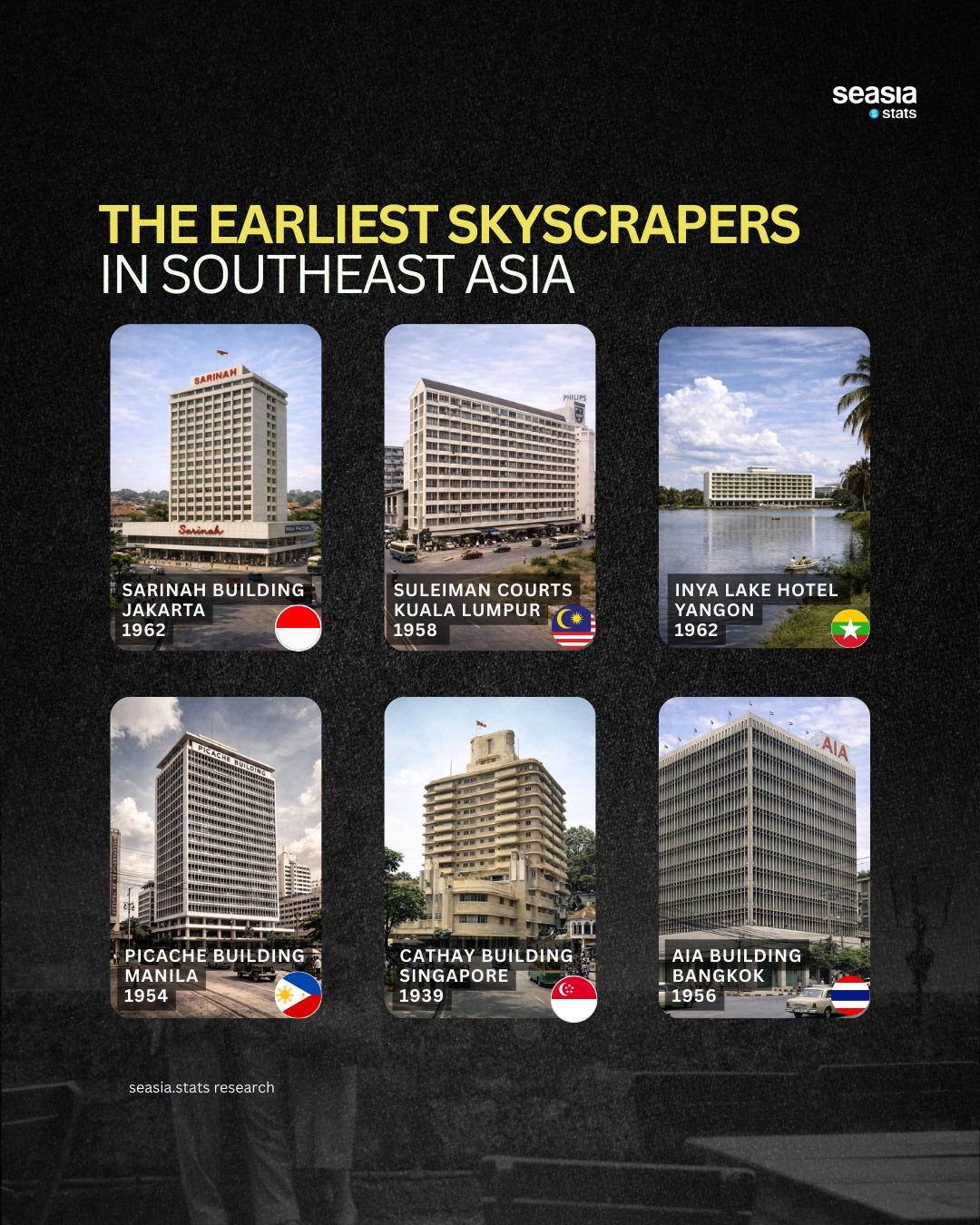
The story begins in Singapore with the Cathay Building, completed in 1939. Standing 83.5 meters tall with 16 stories, it was Southeast Asia’s earliest true skyscraper and the tallest structure in the region at the time. Designed in an Art Deco style, the building was more than an architectural marvel—it introduced Singapore to modern entertainment with its air-conditioned cinema, and later played a strategic role during World War II. The Cathay Building marked the first moment when Southeast Asia embraced the vertical city concept.
Postwar Rebuilding and New Ambitions
After World War II, Southeast Asian nations began rebuilding their cities and economies, and skyscrapers became a symbol of resilience and progress. In the Philippines, the Picache Building rose in Manila in 1954 as the country’s first modern skyscraper. Its clean International Style reflected a forward-looking optimism in the wake of independence and reconstruction.
Thailand followed in 1956 with Bangkok’s AIA Building, signaling the rise of corporate towers and commercial offices in the capital. This was a turning point for Bangkok, setting the stage for the financial district that would later dominate the city’s skyline.
Housing, Nationhood, and Urban Expansion
By the late 1950s, skyscrapers were no longer just commercial symbols—they also became tools of nation-building. Kuala Lumpur’s Suleiman Courts, completed in 1958, was Malaysia’s first high-rise residential complex. Built to accommodate a growing urban population ahead of independence, it reflected a government-driven vision of modern living.
Indonesia’s Sarinah Building, completed in Jakarta in 1962, embodied national pride. Initiated by President Sukarno, the 15-story structure became the country’s first department store and a symbol of Indonesia’s modernization agenda. That same year, Yangon’s Inya Lake Hotel emerged in Myanmar as a unique architectural landmark. Built with Soviet support, its ship-shaped design highlighted the country’s diplomatic ties and aspirations for development.
A Shared Regional Journey
Across Southeast Asia, these early skyscrapers told a shared story—of countries rebuilding, industrializing, and redefining their identities after colonial rule and wartime destruction. Each building reflected a unique national narrative, yet together they formed the foundation of the region’s modern urban culture.
Other Southeast Asian nations would soon follow in the decades that followed. Vietnam’s Saigon Centre Tower and Cambodia’s Canadia Bank Tower later continued this upward trajectory, while cities like Kuala Lumpur, Jakarta, and Singapore eventually transformed into global hubs with some of the tallest buildings in the world.
Foundations of Today’s Skylines
Today, Southeast Asia is home to some of the world’s most iconic skyscrapers—from Kuala Lumpur’s Petronas Towers to Jakarta’s rapidly rising skyline and Bangkok’s futuristic high-rises. Yet behind these modern giants stand the early pioneers of vertical development.
The Cathay Building, Picache Building, AIA Building, Suleiman Courts, Sarinah Building, and Inya Lake Hotel may no longer dominate the skyline, but their legacy endures. They represent the moment Southeast Asia looked upward and imagined a new future—one defined by ambition, resilience, and a bold vision of urban life.


