

Urban cleanliness has become one of the most visible indicators of a city’s quality of life. Clean streets, fresh air, efficient waste management systems, and green public spaces not only improve the health of residents but also enhance tourism, investment, and overall livability. In recent years, cities around the world have adopted innovative sustainability policies to ensure that rapid urban growth does not come at the expense of environmental well-being.
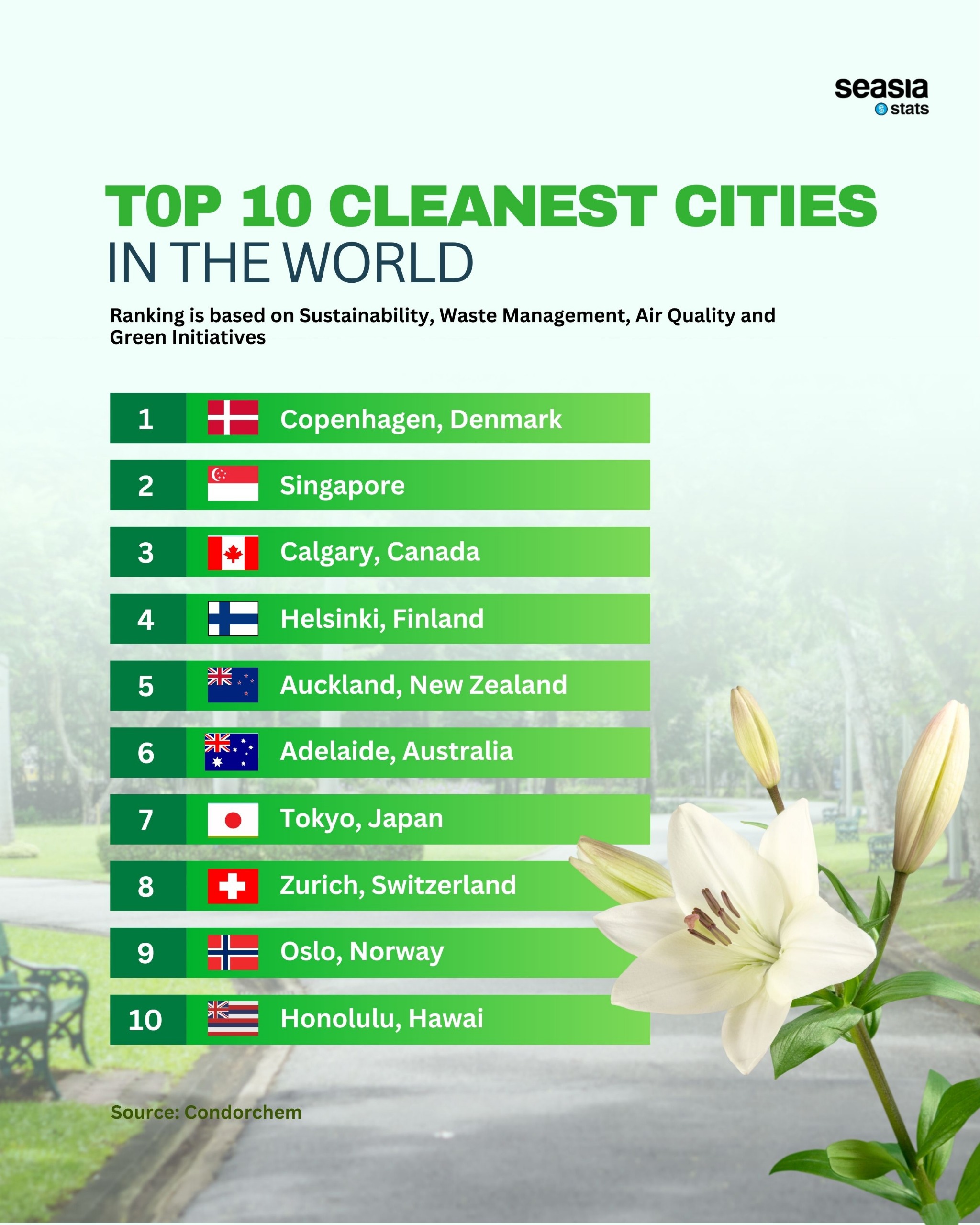
According to data compiled by Condorchem and highlighted by Seasia Stats, a number of cities have emerged as global leaders in urban cleanliness. The ranking evaluates several factors, including sustainability policies, waste management systems, air quality, and environmental initiatives. The results highlight a strong presence from Europe and Oceania, along with a standout city from Southeast Asia.
Copenhagen Sets the Global Standard
At the top of the ranking is Copenhagen, Denmark, widely regarded as the cleanest city in the world. The Danish capital has built a reputation for pioneering sustainable urban planning and ambitious climate policies.
Copenhagen’s goal of becoming carbon neutral by 2025 has driven massive investments in renewable energy, cycling infrastructure, and green urban spaces. The city’s waste management system is also among the most advanced in the world, with extensive recycling programs and waste-to-energy plants that convert garbage into electricity and heating.
Combined with its strong environmental culture, these initiatives have allowed Copenhagen to maintain excellent air quality and exceptionally clean public spaces.
Singapore Leads Asia in Urban Cleanliness
Coming in second place globally is Singapore, the only Southeast Asian city to make the top ten. Known for its strict environmental laws and efficient urban management, Singapore has long been celebrated as one of the cleanest cities on Earth.
The city-state’s government has implemented strict anti-littering policies, advanced waste treatment systems, and extensive urban greenery programs. Initiatives such as the “City in a Garden” vision have helped integrate nature into urban landscapes through parks, vertical gardens, and green corridors.
Singapore’s strong public discipline and advanced infrastructure have played a key role in maintaining its reputation as one of the world’s most pristine metropolitan areas.
North America and Northern Europe Shine
In third place is Calgary, Canada, another city well known for its exceptional cleanliness and strong environmental policies. Calgary consistently scores high in waste reduction and recycling programs, as well as in water quality management.
Northern Europe continues to dominate the list with Helsinki, Finland, ranking fourth. Finland’s capital benefits from advanced environmental planning, efficient public transportation, and a strong culture of sustainability among its residents.
Similarly, Zurich, Switzerland, ranked eighth, and Oslo, Norway, ranked ninth, demonstrate how European cities have prioritized environmental protection while maintaining high standards of urban living.
Oceania’s Clean and Green Cities
The ranking also highlights the strong environmental performance of cities in Oceania.
Auckland, New Zealand, ranked fifth, is known for its stunning natural landscapes and strict environmental protection policies. The city actively promotes sustainable urban development while preserving its coastal ecosystems.
Adelaide, Australia, ranked sixth, has gained global recognition for its green initiatives and effective waste recycling programs, including advanced composting and landfill reduction efforts.
Clean Megacities and Natural Paradises
One of the most impressive entries in the ranking is Tokyo, Japan, which places seventh. Despite being one of the largest and most densely populated metropolitan areas in the world, Tokyo maintains remarkably clean streets and public spaces.
This achievement is largely attributed to Japan’s cultural emphasis on public responsibility and meticulous waste separation systems.
The list is rounded out by Honolulu, Hawaii, ranked tenth. The city’s pristine environment is supported by strict environmental regulations and its unique island ecosystem, which encourages strong conservation practices.
Southeast Asia’s Growing Environmental Focus
While Singapore stands alone in the top ten from Southeast Asia, other cities in the region are increasingly prioritizing urban sustainability.
Cities such as Kuala Lumpur, Bangkok, Jakarta, and Ho Chi Minh City have launched major initiatives to improve waste management, expand green spaces, and reduce pollution. As Southeast Asia continues to urbanize rapidly, these efforts will be essential for maintaining livable and sustainable cities.
Ultimately, the world’s cleanest cities demonstrate that strong policies, public awareness, and long-term environmental planning can create urban environments that are both vibrant and sustainable.


