

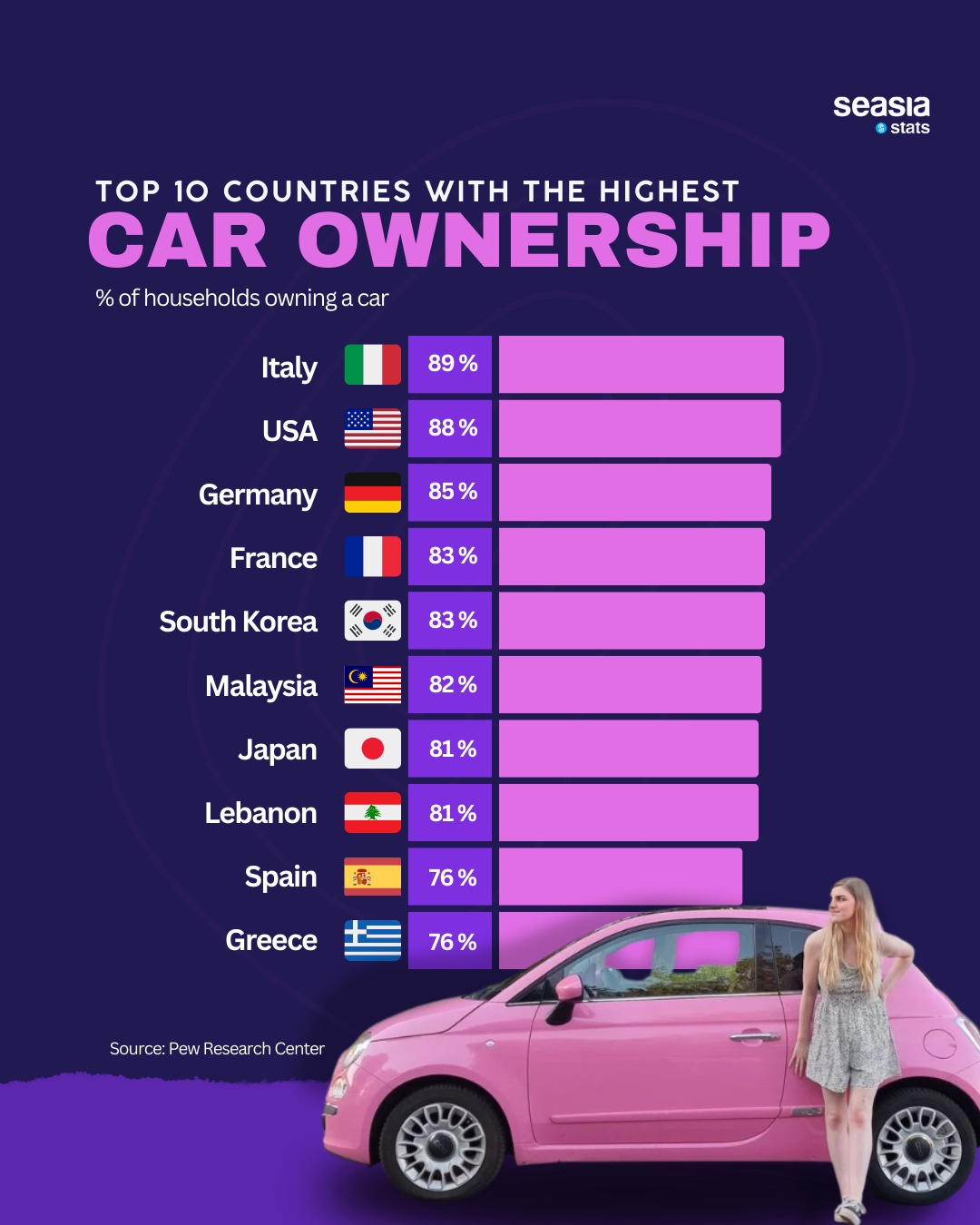
Car ownership is a significant marker of economic development and lifestyle, but its prevalence varies dramatically across the globe. Globally, around 38% of households own a car, but the disparity between regions underscores differences in wealth, infrastructure, and urban planning.
High Car Ownership in Developed Nations
In wealthier countries, car ownership is nearly universal. In the United States and Italy, for example, about 90% of households own a car, reflecting the widespread reliance on personal vehicles. This trend extends across other European nations and advanced Asian economies like South Korea and Japan, where approximately 80% of households own cars.
The high rates of car ownership in these countries are supported by robust infrastructure, affordable access to vehicles, and a cultural emphasis on personal mobility.
Lower Ownership in Emerging Economies
In contrast, car ownership is significantly lower in regions like Africa and South and Southeast Asia. For instance, in Viet Nam and Bangladesh, only about 2% of households own a car, underscoring the economic barriers and reliance on alternative modes of transportation, such as motorcycles or public transit.
Even in the world's most populous nations, China and India, car ownership remains modest, with rates of 17% and 6% respectively. These figures highlight the challenges of affordability and urban congestion, which deter widespread car adoption despite growing middle classes.
Implications and Trends
The global disparity in car ownership reflects broader socioeconomic trends:
- Infrastructure: Developed nations often have well-maintained roads and highways, facilitating higher car usage.
- Urban Density: In cities with dense populations, public transportation and smaller vehicles like motorcycles are often more practical than cars.
- Economic Growth: Emerging economies are seeing gradual increases in car ownership as income levels rise.
However, the environmental impact of car dependency and the rise of shared mobility and electric vehicles may reshape these patterns in the future, particularly in regions with low current ownership rates.
Understanding these trends not only offers insight into economic disparities but also points to the evolving role of mobility in shaping lifestyles worldwide.


