

Southeast Asia is widely known for its lush rainforests, vibrant cultures, and tropical climate—but it is also one of the most lightning-active regions on Earth. Thanks to intense heat, high humidity, and dramatic topography, thunderstorms here are frequent and powerful. In fact, several Southeast Asian cities rank among the world’s top lightning hotspots, where flashes of lightning illuminate the sky almost daily during certain seasons.
Bogor: The Lightning Capital of the World
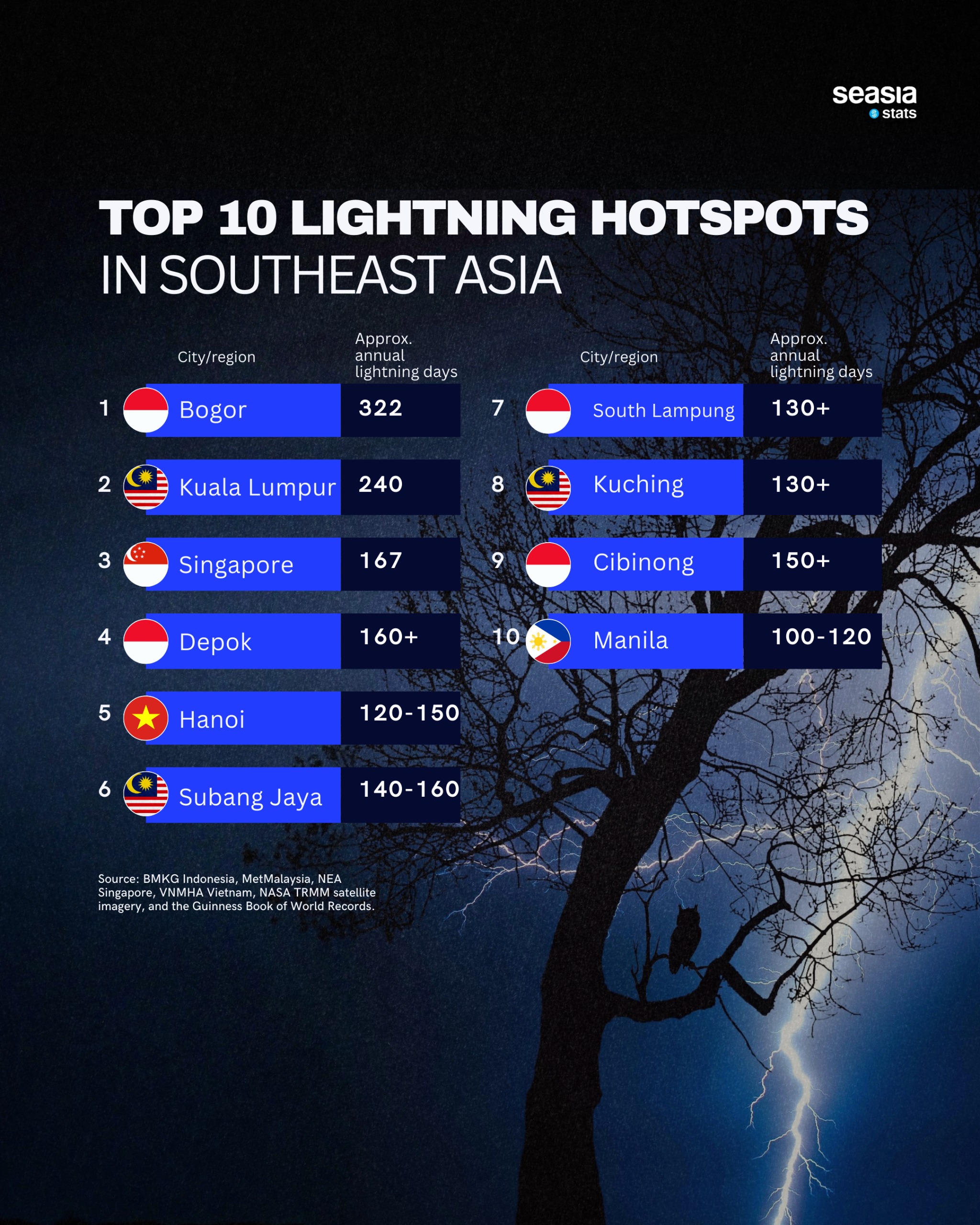
At the top of the list stands Bogor, Indonesia, often called the world’s lightning capital. The city records an astonishing average of 322 lightning days per year—meaning storms occur on most days. This remarkable frequency is driven by Bogor’s geographic position at the base of Mount Salak and Mount Gede. Warm air rises from the lowlands and collides with cooler mountain air, forming towering cumulonimbus clouds that generate intense lightning activity.
Nearby areas such as Depok and Cibinong also rank among Southeast Asia’s most electrified zones, recording more than 160 and 150 lightning days annually. Together, these urban centers in West Java create one of the most lightning-dense corridors in the world.
Malaysia and Singapore: Urban Thunderstorm Hubs
Malaysia’s capital, Kuala Lumpur, follows closely behind Bogor with approximately 240 lightning days each year. The city’s combination of urban heat, tropical moisture, and surrounding hills makes it a natural breeding ground for afternoon thunderstorms. Just outside the capital, Subang Jaya experiences between 140 and 160 lightning days annually, further reinforcing the Klang Valley as a regional lightning hotspot.
Singapore, ranking third overall with around 167 lightning days per year, is another standout. Its equatorial climate ensures consistently high humidity and temperature, ideal conditions for storm development. Frequent lightning strikes can disrupt flights, public transport, and outdoor activities—making lightning safety a constant concern for residents.
Emerging Hotspots Across the Region
Beyond Indonesia and Malaysia, other Southeast Asian cities are also experiencing high lightning activity. Hanoi in Vietnam records between 120 and 150 lightning days annually, particularly during the monsoon and transitional seasons. In the Philippines, Manila sees approximately 100 to 120 lightning days each year, often linked to tropical storms and seasonal downpours.
Meanwhile, South Lampung in Indonesia and Kuching in Malaysia each report over 130 lightning days per year. These cities demonstrate how widespread lightning activity is across the region—from mainland Southeast Asia to the islands of the Malay Archipelago.
Why Southeast Asia Leads in Lightning Activity
Several natural factors explain why Southeast Asia is a global lightning hotspot. The region’s tropical location near the equator ensures strong solar heating, which fuels the upward movement of warm air. Combined with high moisture levels and complex terrain—including mountains, coastlines, and forests—these conditions create powerful storm systems that produce frequent lightning.
Additionally, seasonal wind patterns such as the monsoons intensify storm formation. During inter-monsoon periods, when winds shift direction, thunderstorms can become even more frequent and severe.
Living with Lightning
For millions of people across Southeast Asia, lightning is a familiar part of daily life. While it creates stunning natural displays, it also poses risks to infrastructure, aviation, and public safety. Governments and meteorological agencies continue to improve early warning systems and lightning protection measures to reduce these risks.
As urban populations grow and climate patterns evolve, understanding lightning behavior will become even more important. For now, Southeast Asia remains one of the most electrifying regions on Earth—where the skies quite literally come alive with energy.


