

Across Southeast Asia, food is more than sustenance—it’s identity, culture, and daily ritual. From roadside kopi stalls to sprawling fast-food chains, the region’s food and beverage (F&B) sector has evolved into one of the most dynamic consumer industries in the world. Today, a new generation of homegrown giants is shaping how Southeast Asians eat, drink, and connect.
A Thai Giant Leads the Pack
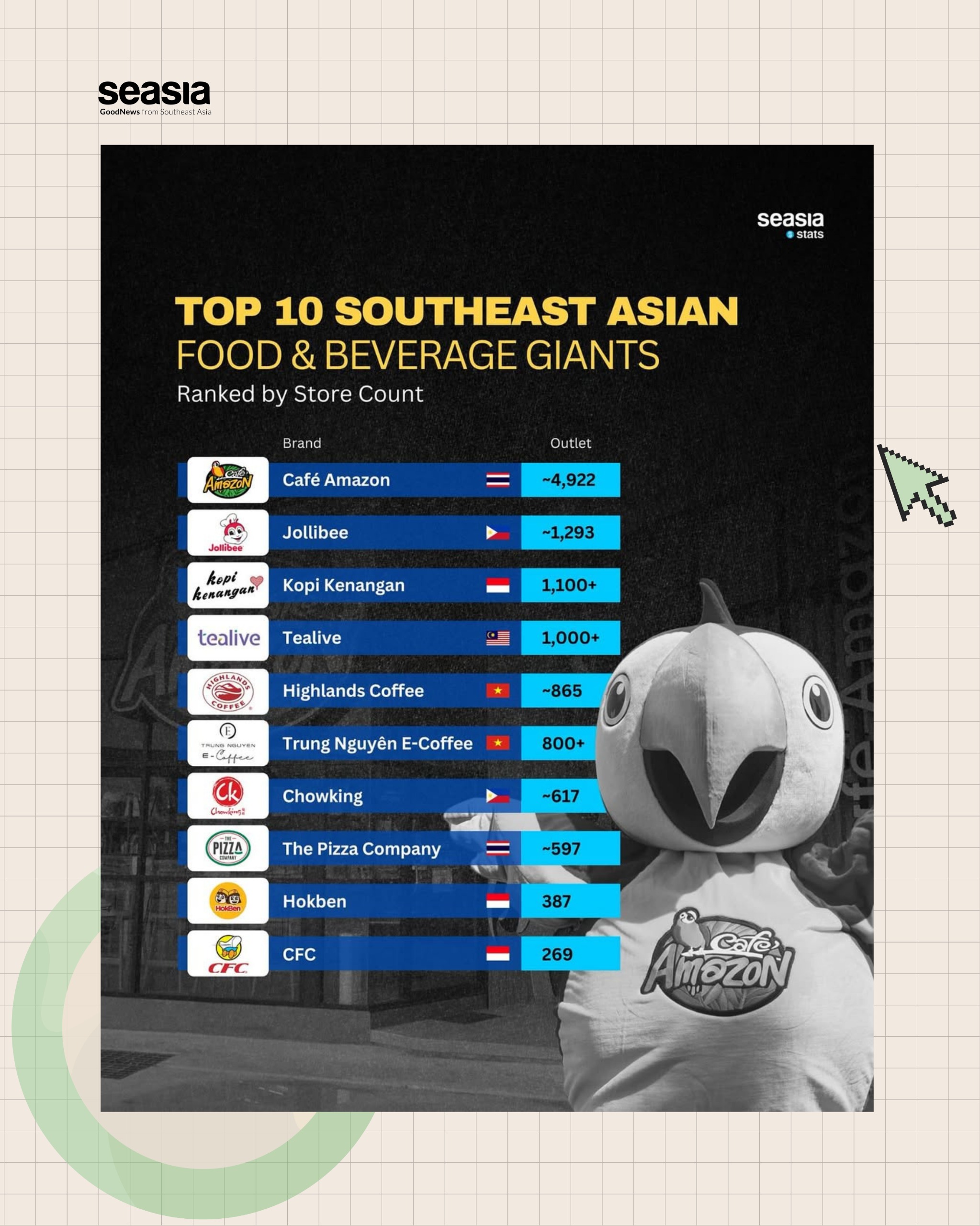
At the very top of the regional leaderboard stands Café Amazon, Thailand’s dominant coffee chain with approximately 4,922 outlets. Built by energy conglomerate PTT, the brand’s growth has been closely tied to the country’s highway and petrol station network, making it a familiar stop for commuters and travelers alike. Its rapid expansion into Cambodia, Laos, Vietnam, and even the Middle East reflects a broader ambition: turning a local coffee stop into a global lifestyle brand.
Café Amazon’s success highlights a key Southeast Asian trend—accessibility. Its outlets are everywhere, affordable, and consistent, offering a dependable coffee experience for millions of daily customers.
The Rise of Filipino and Indonesian Powerhouses
Following behind is Jollibee, the Philippines’ beloved fast-food champion with around 1,293 outlets. Known for its distinctly Filipino flavors—sweet-style spaghetti, Chickenjoy, and rice meals—Jollibee has built a loyal diaspora following and is now aggressively expanding across North America, the Middle East, and Asia.
Indonesia’s Kopi Kenangan represents a new generation of digital-first beverage brands. With more than 1,100 outlets, the chain blends modern branding with Southeast Asian coffee traditions, fueled by mobile ordering, delivery platforms, and strong youth appeal.
Malaysia’s Tealive, with over 1,000 outlets, completes the top tier. As one of the region’s most recognizable bubble tea brands, it has tapped into the region’s enduring love for milk tea culture while innovating with local flavors and seasonal drinks.
Vietnam’s Coffee Culture Goes Modern
Vietnam’s deep-rooted coffee heritage has found new expression through Highlands Coffee (around 865 outlets) and Trung Nguyên E-Coffee (800+ outlets). Both brands have transformed traditional coffee drinking into modern café culture, combining local flavors like robusta coffee and condensed milk with contemporary retail concepts.
Beyond Vietnam, similar modernization is visible across Southeast Asia. In Singapore, premium café chains and specialty roasters are redefining urban coffee experiences. In Thailand and Indonesia, artisanal coffee shops are thriving alongside mass-market brands, creating a multi-tiered coffee ecosystem that caters to every income level.
Fast Food and Local Favorites Still Thrive
The rest of the top ten shows the enduring strength of quick-service dining. Chowking from the Philippines (around 617 outlets) blends Chinese-style dishes with Filipino tastes, while Thailand’s The Pizza Company (597 outlets) has built a strong regional presence with localized menu offerings.
Indonesia contributes two iconic names—Hokben (387 outlets), known for its Japanese-inspired meals, and CFC (California Fried Chicken) with 269 outlets, a long-standing local competitor in the fried chicken segment.
Across Southeast Asia, other notable names continue to grow. Brands like Mang Inasal (Philippines), Marrybrown (Malaysia), Mixue (rapidly expanding in Indonesia and Vietnam), and BreadTalk (Singapore) show how diverse the region’s F&B landscape has become.
A Region Driven by Taste and Innovation
What makes Southeast Asia’s F&B sector unique is its blend of tradition and innovation. Consumers remain deeply attached to local flavors, yet they are also highly receptive to new formats—whether it’s app-based ordering, delivery kitchens, or café-style dining.
As urbanization accelerates and middle-class incomes rise, demand for convenient, affordable, and culturally relevant food options continues to grow. This creates fertile ground for local champions to expand not only regionally but globally.
From Bangkok’s highways to Jakarta’s malls and Manila’s neighborhoods, Southeast Asia’s food and beverage giants are no longer just local favorites—they are becoming global ambassadors of the region’s vibrant culinary identity.


