

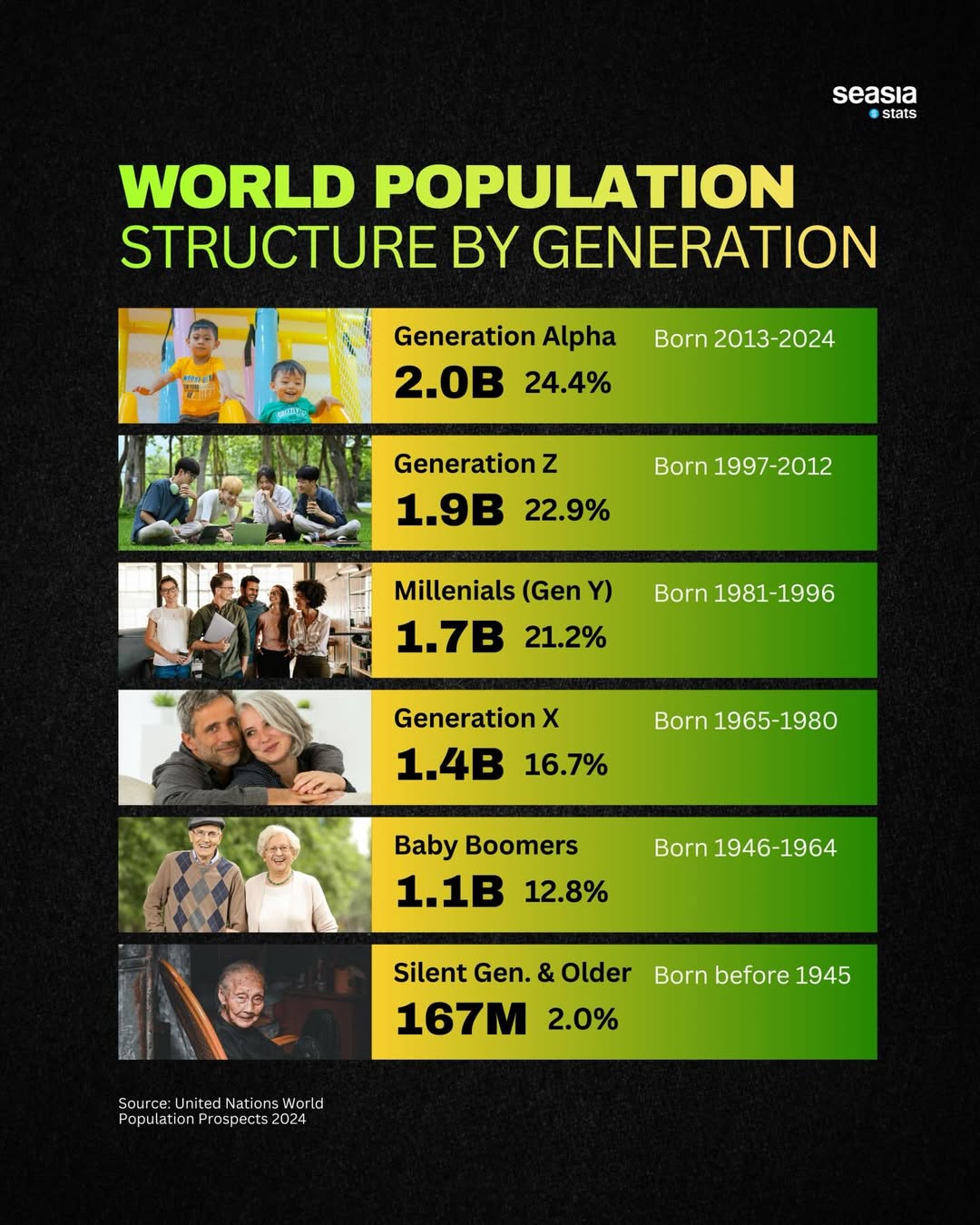
Recent data from the United Nations World Population Prospects 2024 reveals a significant shift in the world’s demographic landscape. The global population structure is now predominantly composed of younger generations, signaling a profound change in future economic and social dynamics. As older cohorts naturally diminish in size, the rising influence of those born in the digital age is becoming the defining characteristic of the 21st century.
The current demographic hierarchy is led by Generation Alpha, Generation Z, and Millennials (Gen Y). Generation Alpha, born between 2013 and 2024, is the largest group, totaling 2.0 billion people or 24.4% of the population. They are followed closely by Generation Z (born 1997–2012) at 1.9 billion (22.9%) and Millennials (born 1981–1996) at 1.7 billion (21.2%).
In contrast, the older demographic segments represent a shrinking portion of the global total. While Generation X and Baby Boomers still maintain a significant presence at 1.4 billion and 1.1 billion respectively, the Silent Generation and those older account for only 2.0% of the population. This structural reality underscores the increasing importance of catering to the values and needs of the three youngest generations who now dominate the global stage.


