

Food has always been one of the most powerful expressions of culture, identity, and history. Around the world, national cuisines reflect centuries of tradition, local ingredients, and culinary innovation passed down through generations. Every year, global food rankings offer a snapshot of how different cultures influence the international dining landscape. In 2026, the TasteAtlas ranking of the 100 Best Cuisines in the World highlights the enduring popularity of traditional food cultures while also showcasing the growing global appreciation for diverse culinary traditions, including those from Southeast Asia.
Italy Returns to the Top
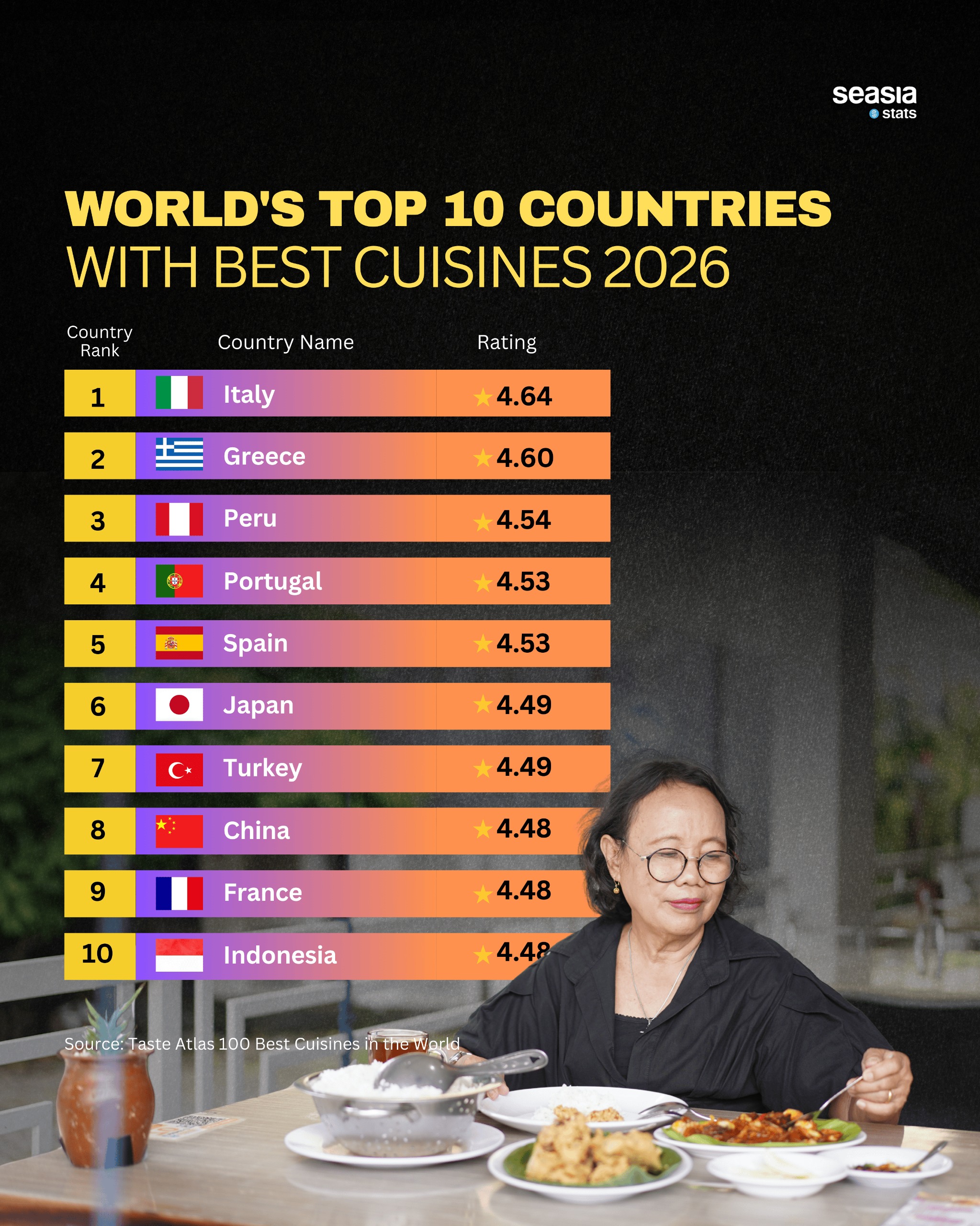
According to the 2026 TasteAtlas report, Italy has reclaimed the top position as the world’s best cuisine with a rating of 4.64. Italian cuisine’s global appeal lies in its emphasis on simplicity, fresh ingredients, and time-honored cooking techniques.
Dishes such as pasta, pizza, risotto, and gelato have become staples far beyond Italy’s borders. The country’s regional diversity—from the rich tomato-based sauces of the south to the butter-driven dishes of the north—continues to inspire chefs and home cooks worldwide. Italian cuisine’s balance of flavor, accessibility, and authenticity has helped it maintain its place at the top of global culinary rankings.
Mediterranean Traditions Dominate the Rankings
Mediterranean cuisine continues to dominate global taste preferences. Greece ranks second with a score of 4.60, reflecting the enduring popularity of dishes such as souvlaki, moussaka, and fresh seafood prepared with olive oil, herbs, and vegetables.
In third place is Peru, which has emerged as a global culinary powerhouse in recent decades with a rating of 4.54. Peruvian cuisine blends indigenous ingredients with Spanish, African, and Asian influences, producing iconic dishes such as ceviche and lomo saltado.
The fourth and fifth spots are held by Portugal and Spain, both receiving ratings of 4.53. Iberian cuisine is widely praised for its seafood traditions, cured meats, and ingredient-driven cooking. Spain’s tapas culture and Portugal’s famous bacalhau dishes highlight the region’s strong culinary identity.
Together, these Mediterranean and Iberian cuisines emphasize fresh produce, high-quality seafood, olive oil, and simple preparation methods—qualities that resonate strongly with global diners seeking authentic food experiences.
Strong Representation from Asia and Eurasia
Asian and Eurasian cuisines also make a strong showing in the global rankings. Japan and Turkey share the sixth and seventh positions, each with a rating of 4.49.
Japanese cuisine is internationally celebrated for its precision, balance, and artistic presentation. Sushi, ramen, tempura, and countless regional specialties continue to attract global attention for their elegance and refined flavors.
Turkish cuisine reflects centuries of cultural exchange between Europe, the Middle East, and Central Asia. Rich dishes such as kebabs, meze platters, and baklava demonstrate the depth and diversity of Turkey’s culinary traditions.
The final three positions in the top ten include China, France, and Indonesia, all tied with a rating of 4.48. These cuisines represent some of the most influential culinary traditions in the world.
Indonesia’s Culinary Rise on the Global Stage
Indonesia’s inclusion among the world’s top ten cuisines is a significant milestone for Southeast Asia. The archipelago’s culinary traditions are deeply rooted in a complex blend of spices, regional ingredients, and cultural influences.
Famous dishes such as rendang, nasi goreng, satay, and gado-gado highlight the diversity of Indonesia’s food culture. Many of these dishes have gained international recognition for their bold flavors and intricate spice blends.
Indonesia’s ranking also reflects a broader global appreciation for Southeast Asian cuisine. Across the region, countries such as Thailand, Vietnam, Malaysia, and Singapore have developed vibrant food cultures that attract global attention.
Thai cuisine, for example, is known for its balance of sweet, sour, salty, and spicy flavors in dishes like pad thai and tom yum soup. Vietnamese cuisine is widely celebrated for its freshness, with iconic dishes such as pho and banh mi gaining popularity worldwide.
Malaysia and Singapore are also renowned for their multicultural culinary landscapes, where Malay, Chinese, and Indian influences blend together in dishes like laksa, nasi lemak, and Hainanese chicken rice.
Southeast Asia’s Growing Culinary Influence
As global travel, migration, and digital food culture continue to expand, Southeast Asian cuisines are gaining increasing international recognition. Food festivals, culinary tourism, and global restaurant networks are introducing millions of people to the region’s diverse flavors.
Indonesia’s presence in the global top ten demonstrates that Southeast Asian culinary traditions are not only rich and diverse but also increasingly influential on the world stage. With its deep heritage of spices, regional specialties, and vibrant street food culture, Southeast Asia is steadily establishing itself as one of the world’s most exciting culinary regions.


