Southeast Asia's navies are modernizing fast. From Indonesia's first locally built heavy frigate to Myanmar's homegrown stealth warship, the region is investing seriously in blue water naval capability. Here's a look at the five biggest frigates in Southeast Asia, ranked by displacement.
Victory class MRCV - Singapore
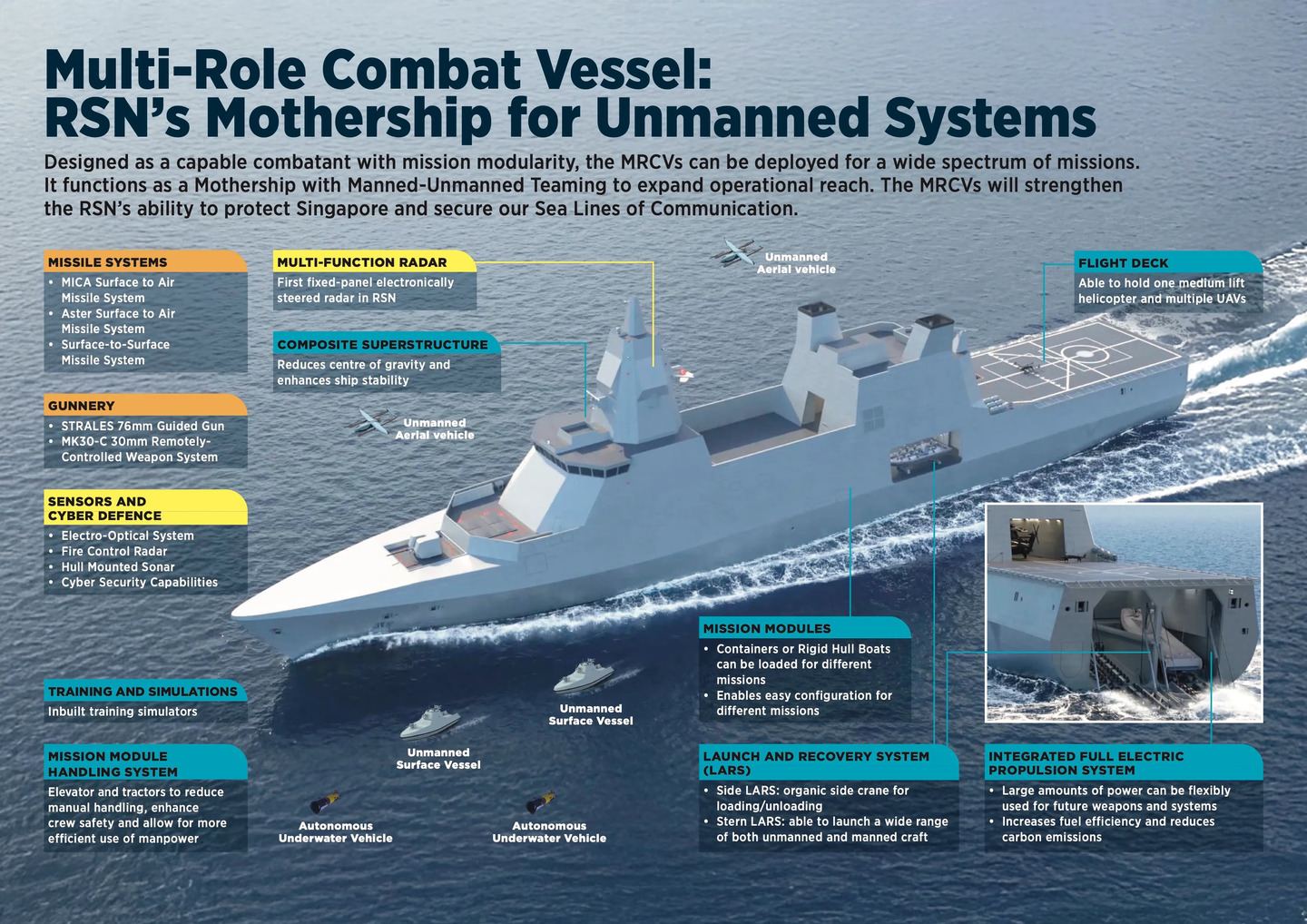
At the top of the list sits a ship that isn't even in service yet. Singapore's new Victory class Multi-Role Combat Vessel displaces 8,000 tons and stretches 150 meters. This frigate is not just the largest warship in Southeast Asia, but the largest and most complex vessel ever built in Singapore.
Built by ST Engineering Marine, the MRCV is designed to function as a "mothership" for unmanned aerial, surface, and underwater systems, allowing a single ship with fewer than 100 crew members to conduct missions that would previously have required several warships.
It is armed with a 32 cell vertical launch system capable of firing VL MICA NG and Aster 30 surface to air missiles, alongside a 76mm main gun and 30mm remote weapon systems. The first vessel was launched in October 2025, with six units planned in total.
Balaputradewa class - Indonesia
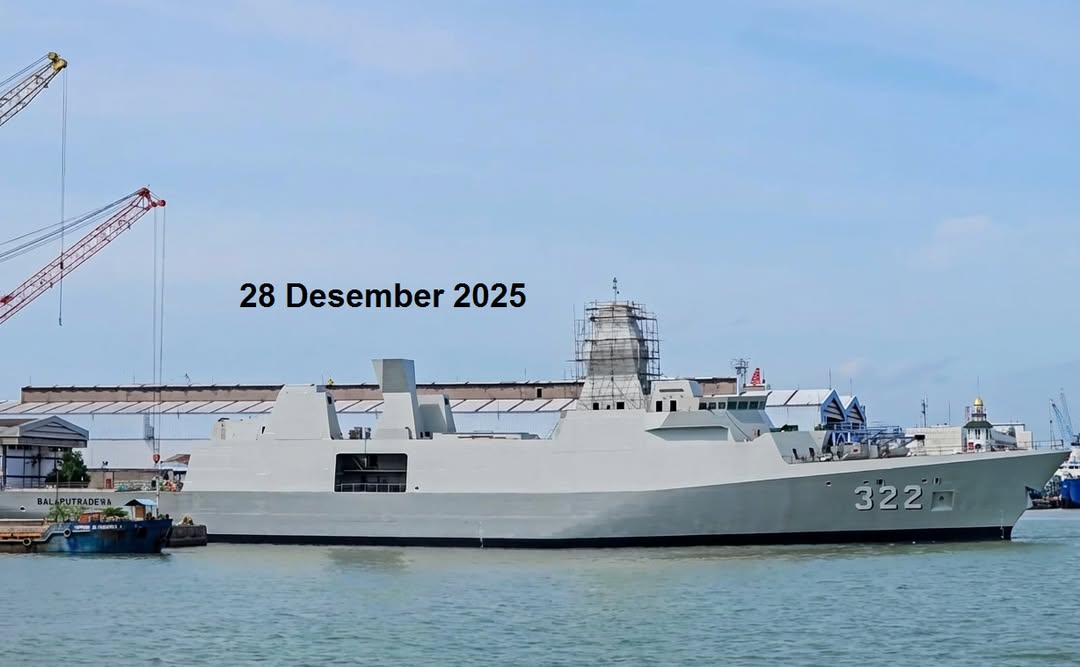
Indonesia's Balaputradewa class is the biggest frigate story of 2025. Launched in December 2025 by state shipbuilder PT PAL Indonesia in Surabaya, it is the largest surface warship ever built in Indonesia.
At 6,626 tons full load displacement and 140 meters in length, it is a serious ocean going combatant by any regional standard. Based on Babcock International's Arrowhead 140 design, the same platform as the United Kingdom's Type 31 frigate.
Balaputradewa class features a 64 cell vertical launch system supplied by Turkish manufacturer Roketsan capable of deploying both surface to air and anti ship missiles, two Leonardo 76mm guns, a Rheinmetall 35mm Millennium CIWS, and torpedo launchers.
Its range of 9,000 nautical miles is the longest on this list, reflecting Indonesia's need to patrol one of the world's largest maritime territories. Four units are planned.
Bhumibol Adulyajed class - Thailand
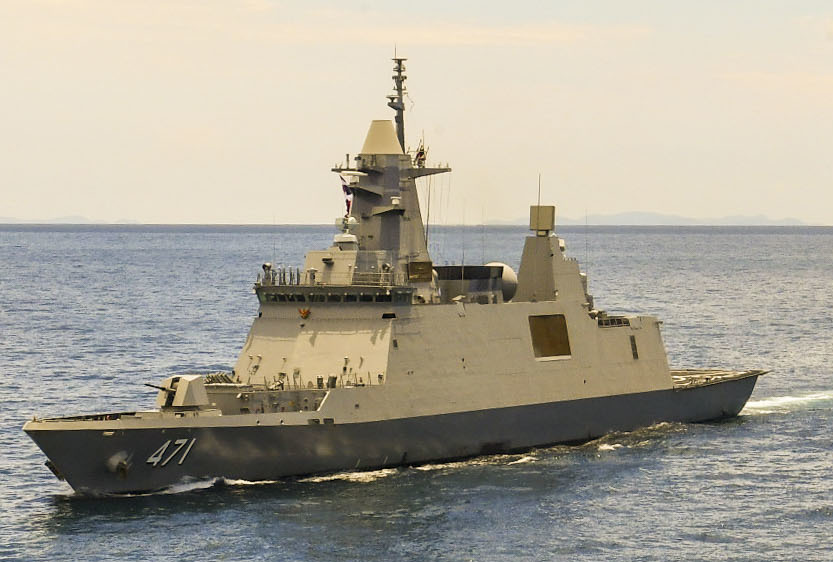
Thailand's most capable warship carries the name of the country's most revered monarch. HTMS Bhumibol Adulyadej displaces 3,700 tons over 124.1 meters and was built by Daewoo Shipbuilding & Marine Engineering in Busan, South Korea. Commissioned in January 2019.
It is the lead ship of a planned two vessel class, though the second unit has been postponed indefinitely due to budget constraints. The design is derived from South Korea's Gwanggaeto the Great class destroyer, adapted with additional stealth features including sloping hull sides and enclosed masts to reduce radar cross section.
What sets it apart from others on this list is its propulsion, a combined diesel and gas turbine arrangement pairing two MTU diesel engines with a General Electric LM2500 gas turbine. Giving the ship a top speed of 33.3 knots.
It carries a crew of 141 and has a range of 4,000 nautical miles, with hangar facilities for up to two medium helicopters.
Miguel Malvar class - Philippines
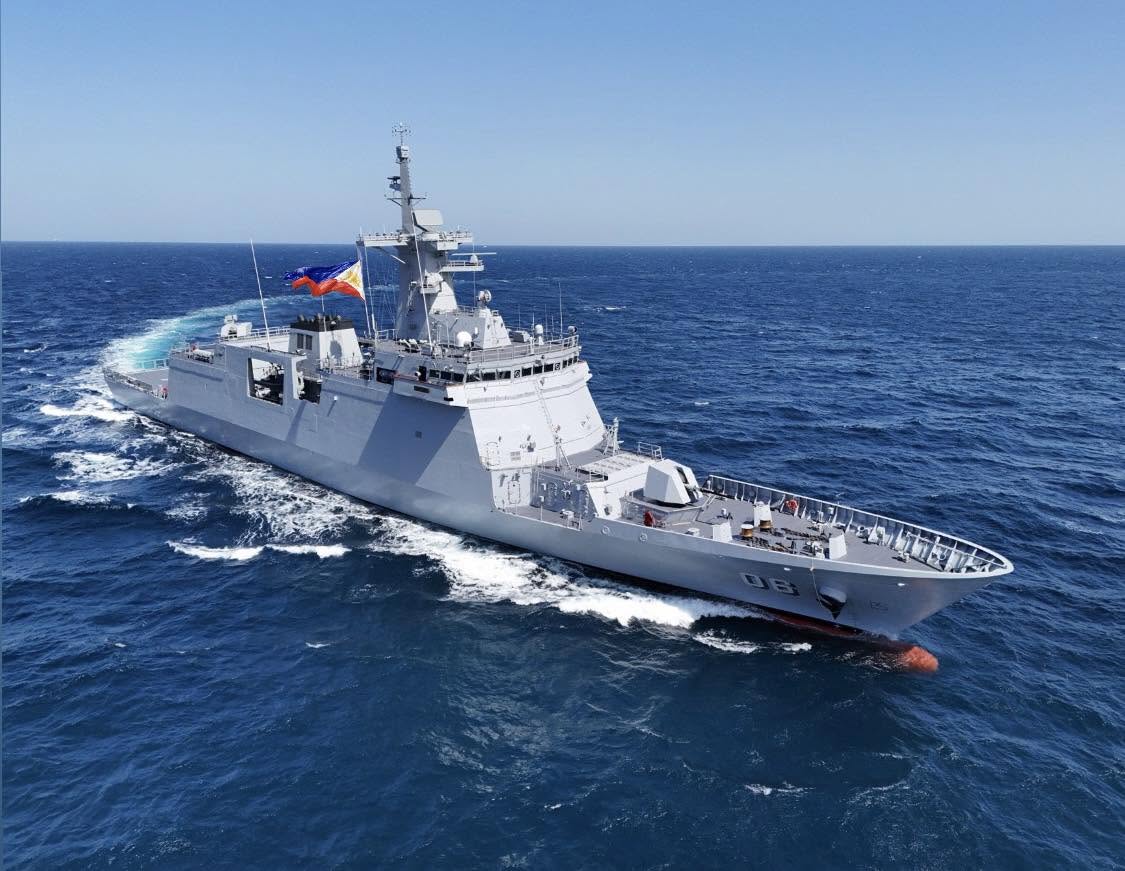
The Philippines' Miguel Malvar class represents the country's most capable surface combatant to date. Based on South Korea's HDF-3200 design and built by HD Hyundai Heavy Industries, the class displaces around 3,200 tons and measures approximately 118 meters in length.
Designed to strengthen the Philippine Navy's ability to operate in contested waters.
The frigates feature a 16 cell vertical launch system for surface to air missiles, anti ship missiles. Also 76mm main gun, close in weapon systems, torpedo launchers, and advanced radar and electronic warfare suites.
The class also includes a hangar and flight deck capable of supporting naval helicopters, significantly enhancing its anti submarine warfare capabilities. Two ships are currently under construction and are expected to become the most heavily armed warships in Philippine naval service upon commissioning.
Maharaja Lela class - Malaysia
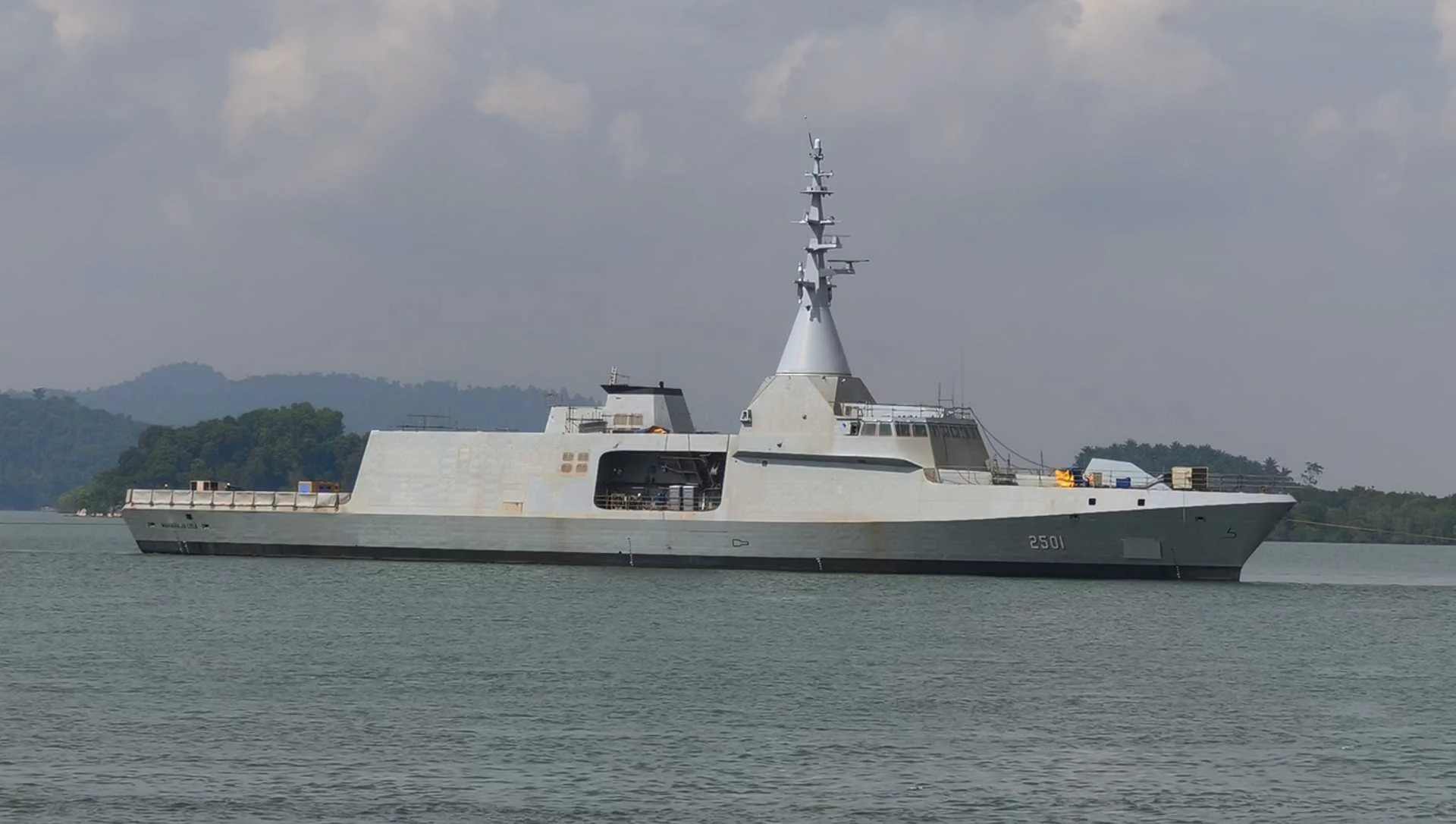
Malaysia's Maharaja Lela class has had a turbulent path to sea. Based on an enlarged version of the French Naval Group Gowind design. The program was awarded to Boustead Heavy Industries at a ceiling price of RM9 billion and was originally meant to deliver six ships starting from 2017.
Financial difficulties at the original shipbuilder halted construction in 2019. The program was restarted in 2023 under Lumut Naval Shipyard, with the order reduced to five units.
The lead ship KD Maharaja Lela, displacing 3,100 tons over 111 meters, is currently in sea trials. Once operational, it will be the most capable surface combatant in the Royal Malaysian Navy.
Armed with a 16 cell Sylver VLS firing VL MICA surface to air missiles, a Bofors 57mm, two 30mm cannons, and torpedo launchers. Its combat management system is supplied by Naval Group, with sensors from Thales. Range is 5,000 nautical miles at 15 knots.
Kyan Sittha class - Myanmar
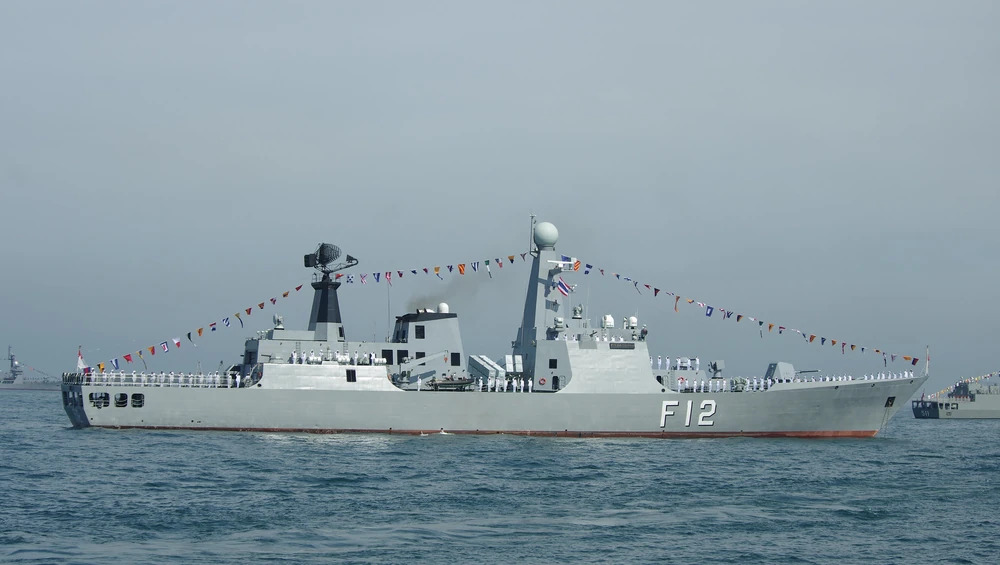
At the bottom of the list by displacement, but arguably the most remarkable story of indigenous shipbuilding. Myanmar's Kyan Sittha class was designed and built entirely at the Myanmar Naval Dockyard with technical assistance from China and Russia. Two units have been active since 2014.
Displacing 3,000 tons over 108 meters, the Kyan Sittha class was the first frigate in Myanmar's history to incorporate stealth features. Enclosed masts, low profile funnels, and a smooth hull profile designed to reduce radar cross section.
It carries a mixed armament sourced from multiple countries, an Italian Oto Melara 76mm gun, eight Chinese C-802 anti ship missiles, Russian Igla S surface to air missiles, Indian Shyena torpedo systems, and Chinese 30mm close in weapon systems.
This unusual combination reflects Myanmar's pragmatic approach to defense procurement amid international arms restrictions.