In 2009, Viet nam’s National Assembly approved its first full nuclear power program under Resolution 41/2009/QH12.
The plan centered on two nuclear power plants in Ninh Thuan Province, each designed with two reactors, making a total of four units. Russia and Japan were brought in as strategic partners, and for years the project was treated as a cornerstone of Viet nam’s long term energy strategy.
Then in 2016, Viet nam made one of the rarest decisions in nuclear politics, it stopped the entire program before construction even began. No reactor had been built, no concrete had been poured. But after seven years of planning, the economics and institutional realities had changed.
Why Viet nam Walked Away in 2016
The decision to cancel was driven by three major problems.
First, costs had risen sharply. The estimated cost of electricity from the Ninh Thuan plants doubled from around 4 to 8 US cents per kWh, while the total project cost climbed to roughly US$18 billion.
Second, Viet nam’s public debt was approaching 65% of GDP, placing heavy pressure on state finances and making large scale nuclear borrowing politically difficult.
Third, Viet nam lacked the institutional readiness to operate nuclear power. The country did not yet have enough trained engineers, safety inspectors, or a regulatory system aligned with International Atomic Energy Agency (IAEA) standards.
At the time, the National Assembly concluded that the program was too expensive and too premature.
For eight years, the project remained frozen.
Eight Years Later, the Same Sites Are Back
In November 2024, Viet nam’s National Assembly passed Resolution 174/2024/QH15, formally reviving nuclear development at the exact same Ninh Thuan sites shelved in 2016.
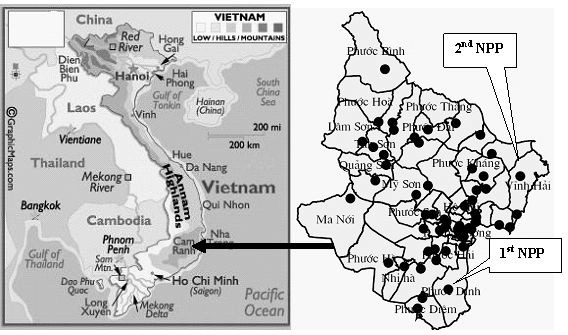
By January 2025, the Prime Minister had established a dedicated steering committee for construction. A month later, two state owned companies were assigned as investors, Viet nam Electricity (EVN) for Ninh Thuan 1 and PetroVietnam (PVN) for Ninh Thuan 2.
In April 2025, the revised Power Development Plan VIII included nuclear energy for the first time.
By June 2025, a new Atomic Energy Law was passed with near unanimous approval, replacing the 2008 framework and formally designating nuclear power as a national strategic priority, effective from January 2026.
The problems that ended the first program had now become the foundation of the second.
The Grid Has Changed Faster Than the Plan
Viet nam’s energy demand today looks very different from 2016.
Electricity consumption has been growing at roughly 10% per year, with government projections now estimating demand could reach 1,200 TWh by 2045, significantly higher than earlier forecasts.
According to PwC, Viet nam will need 150 GW of installed generation capacity by 2030 and 500 GW by 2050, compared to around 80 GW today. Solar and wind capacity have expanded rapidly, but both remain intermittent and weather dependent.
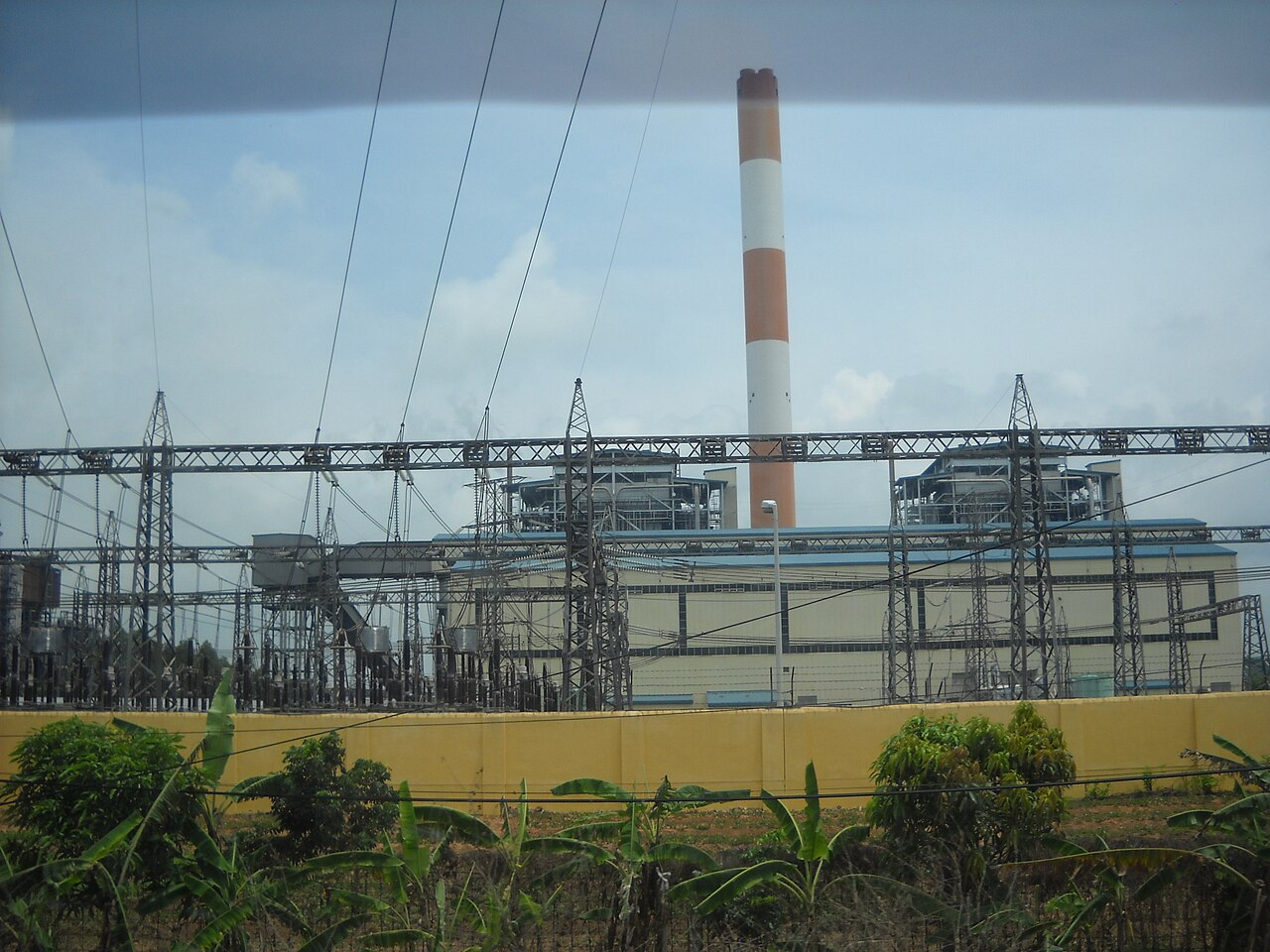
Coal still provides around 45% of Viet nam’s electricity, making it the country’s primary baseload source. At the same time, Viet nam has committed to reaching net zero emissions by 2050. That leaves policymakers facing a difficult equation, rising power demand, carbon reduction targets, and a grid that still needs stable baseload generation.
The revised Power Development Plan VIII outlines nuclear as part of that solution, targeting 4,000 to 6,400 MW by 2035, and another 8,000 MW by 2050.
Three Countries, Two Plants, One Deadline
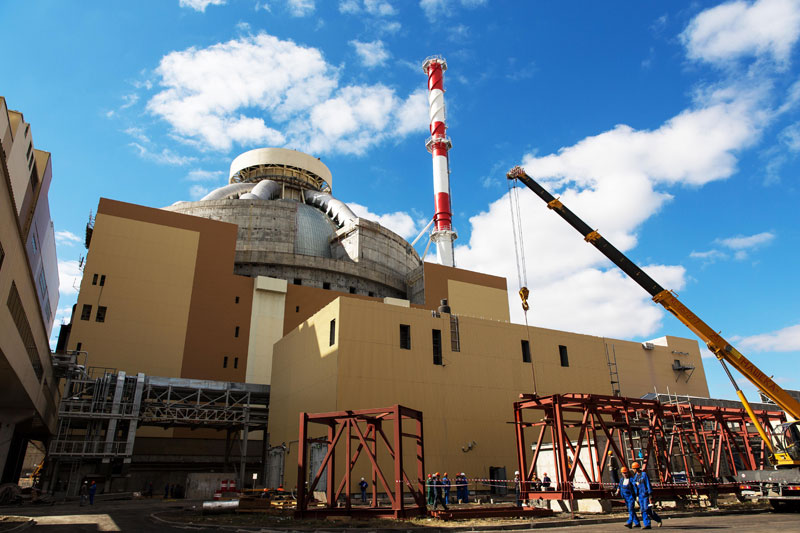
Viet nam's nuclear program is backed by multiple international partners. In March 2026, an intergovernmental agreement was signed with Russia for the construction of Ninh Thuan 1, using two VVER-1200 reactors. South Korea's KEPCO is engaged through energy cooperation and workforce training agreements with PVN.
During President Macron's visit in May 2025, France pledged a €500 million concessional loan covering renewables, hydrogen, and nuclear related initiatives. The Viet nam Atomic Energy Commission has also signed a technical information agreement with Atomic Energy of Canada Limited.
The total program cost is estimated at $22 billion. Target commissioning for Ninh Thuan 1 is between 2031 and 2035, Ninh Thuan 2 is projected to be operational between 2036 and 2040.
The Ninh Thuan sites are currently in land clearance, with Khanh Hoa Province given a deadline of December 2026 to have land ready for construction.