In 1923, when most of the world was still figuring out how to string telephone wires between cities, a radio station on a mountain in West Java was transmitting human voice across 12,000 kilometers, all the way to the Netherlands.
No cables. No satellites. Just radio waves, two mountains, and an antenna stretching 2 kilometers in between.
Built Because of War
The story begins with a logistical problem. The Dutch colonial government needed a reliable communication link between Batavia and Amsterdam, but World War I had made undersea cable laying nearly impossible.
Too many countries were at war, and routing cables across European territories was politically untenable. The solution: longwave wireless radio.
Dr. Ir. Cornelis Johannes de Groot, an electrical engineer, was commissioned to design the system. Construction began in 1916 on the slopes of Mount Puntang in the Malabar mountain range, Bandung Regency.
The project took seven years to complete, a timeline shaped by the complexity of sourcing equipment during wartime and the engineering challenge of building on mountainous terrain.
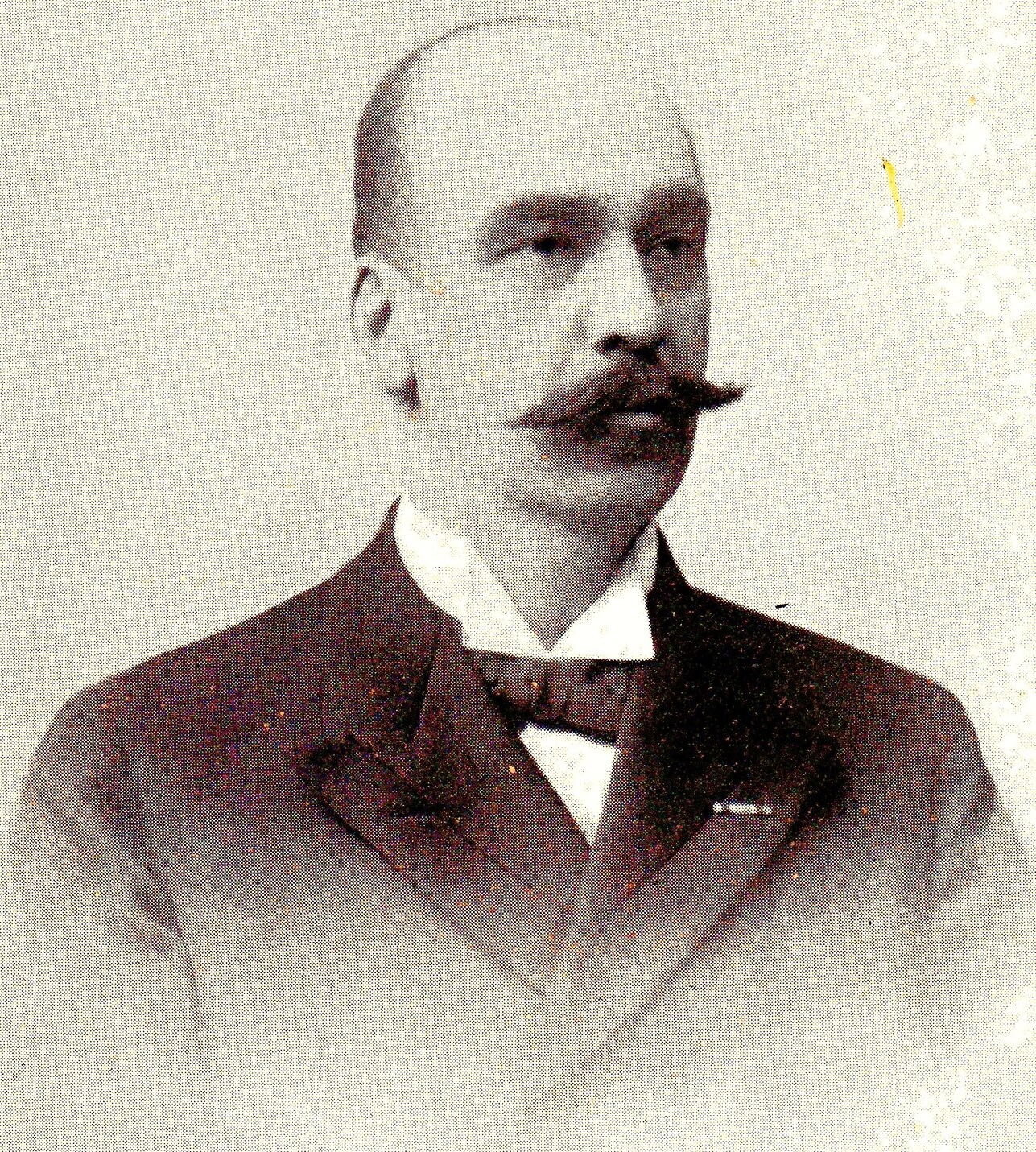
Governor General Dirk Fock officially inaugurated the station on May 5, 1923.
The Number Behind the Signal
The technical scale of Radio Malabar was unlike anything built before it.
The antenna was suspended between two peaks, Mount Puntang and Mount Halimun spanning 2 kilometers in length, at an average height of 350 meters above the valley floor. The transmitter operated at 2,400 kilowatts, one of the highest power outputs of any radio installation at the time. Its signal was locked onto a fixed target.
the Netherlands, exactly 12,000 kilometers away.
To power a system of that scale, the station drew electricity from multiple sources across the Bandung region. The Lamajan Hydroelectric Power Plant, the Dayeuhkolot Thermal Power Plant, and a hydroelectric facility in the Dago area. Connected through an extensive electrical network built specifically for the station.
This distance was remarkable by the standards of the early 1920s. Contemporary wireless records had reached roughly 9,000 kilometers achieved by Italian engineer, Guglielmo Marconi. Radio Malabar extended that range to 12,000 kilometers and did so with full voice transmission.
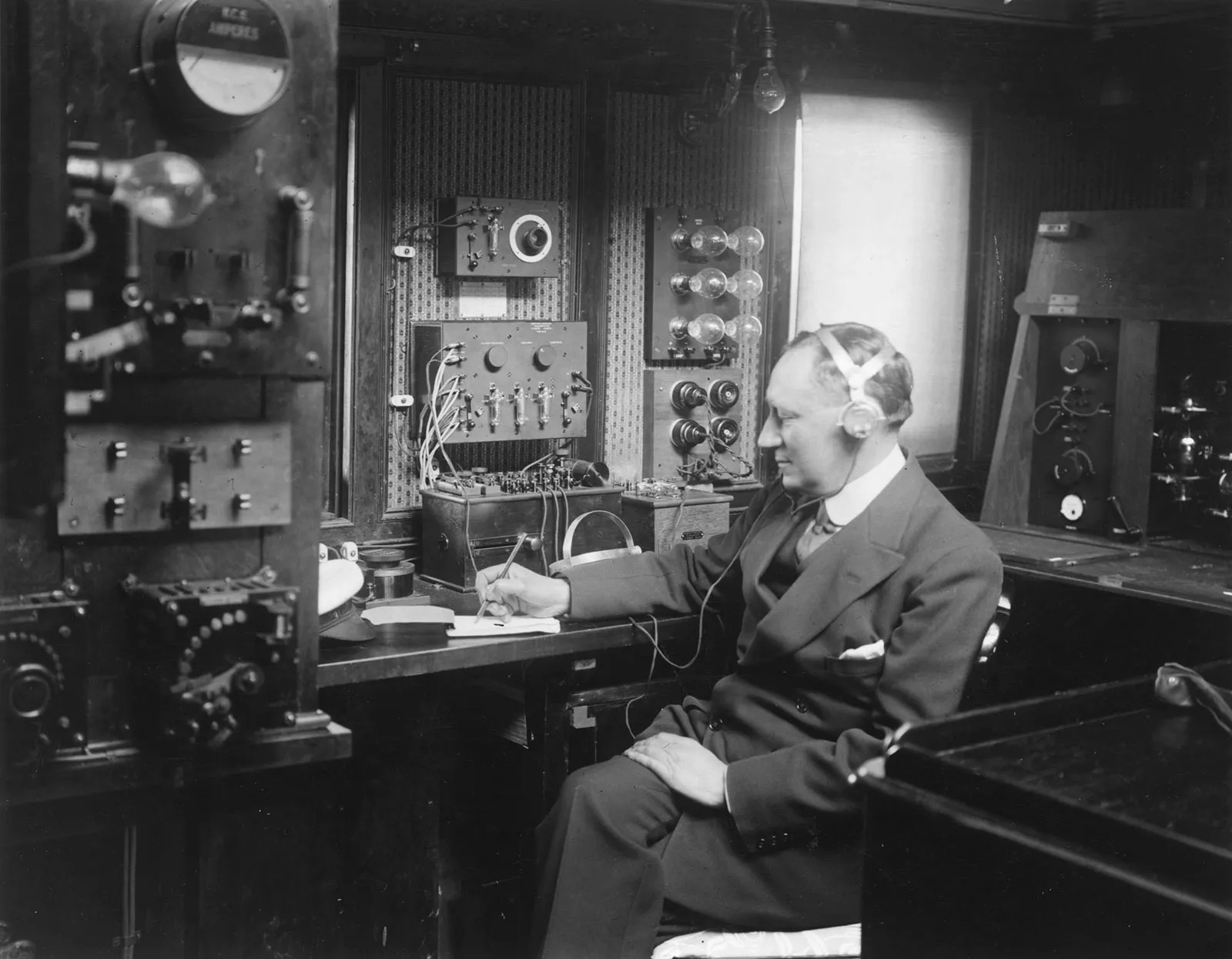
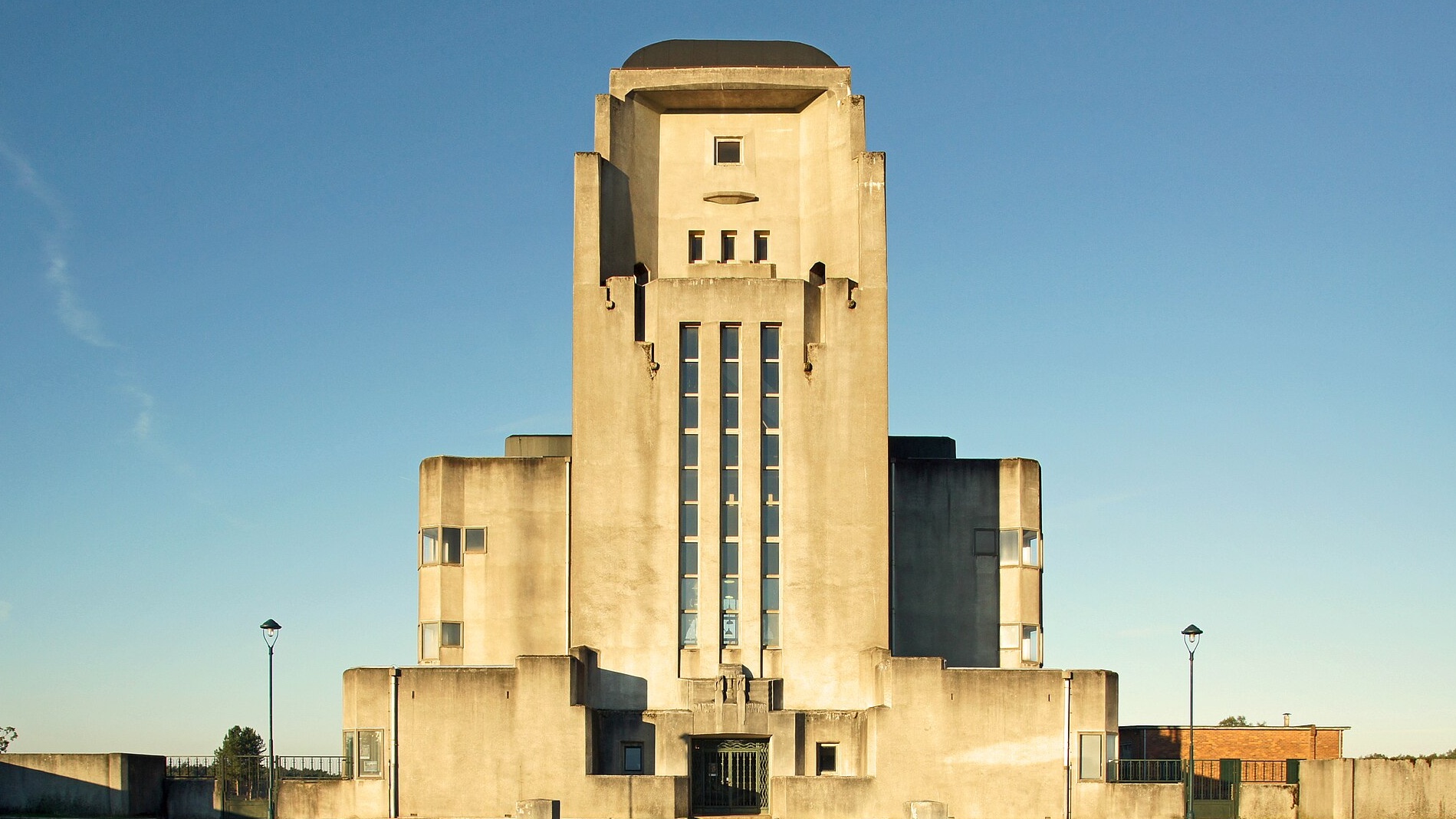
Its paired receiving station was Radio Kootwijk in the Netherlands, which together with Radio Malabar formed what historians have identified as the world's first intercontinental wireless telephony link.
The inauguration itself did not go smoothly. During the opening ceremony on May 5, 1923, de Groot's primary transmitter failed. A backup Telefunken transmitter was used instead, and a radio telegraph message was sent to Queen Wilhelmina of the Netherlands and the Minister for Colonial Affairs.
Despite the technical hiccup, May 5, 1923 was recorded as the official date of operation.
A Monument, a Pool, and a Mosque
To commemorate the inauguration, the mayor of Bandung commissioned architect Prof. C.P. Wolff Schoemaker to design a public monument at Citarum Field (Tjitaroemplein).
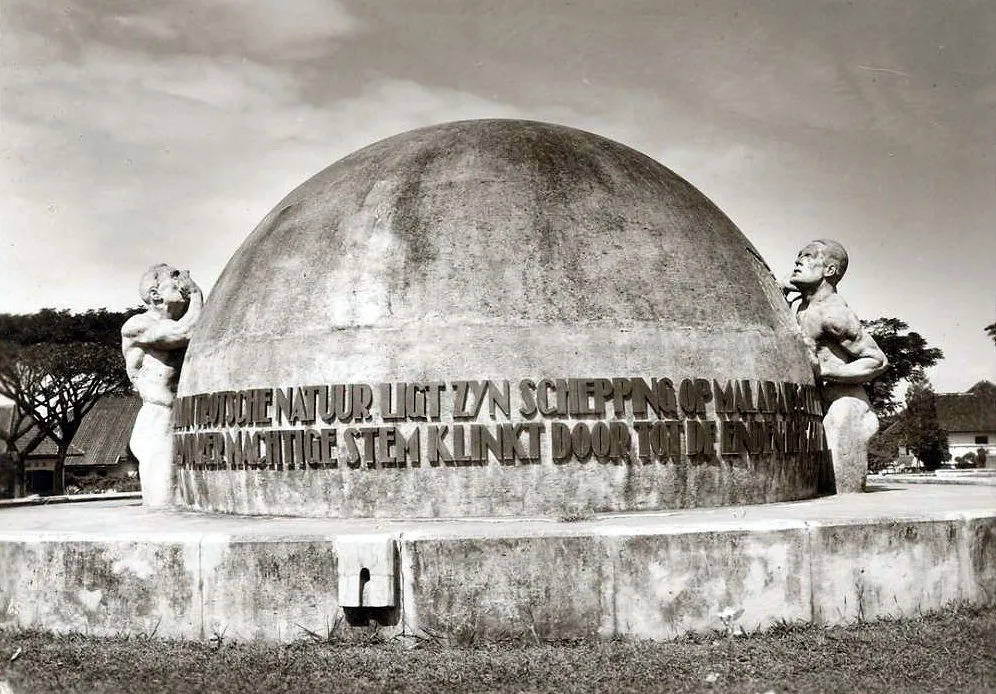
The result was a globe sculpture flanked by two nude human figures, one with hands cupped to its mouth, the other with a hand raised to its ear, representing the act of speaking and listening across continents.
Bandung residents at the time had a blunter name for it, Bloote Billen Plein, Dutch for "Nude Butt Square."
Back at the station itself, a pool was constructed in front of the main building. Its shape an arrowhead was not decorative by accident. The point of the arrowhead was oriented to face Den Haag, the Netherlands, a deliberate design choice reflecting the station's singular purpose. Today the pool still exists but sits dry, its surface covered in wooden boards.
★★ @BdgDailyPic ★★ "Wisata Ramadhan" Masjid Istiqomah Terletak di Jalan Citarum Bandung. Hayu Kita Tarawih disini. pic.twitter.com/adBbCcyU3h
— BANDUNG ᮘᮔ᮪ᮓᮥᮀ (@infobdg) July 30, 2013
The monument at Citarum Field was eventually demolished, not for historical or political reasons, but on grounds of public decency. In the 1970s, Mosque Istiqomah was constructed on the same site, where it still stands today.
The Station's End
Radio Malabar operated for roughly two decades. When Japanese forces entered Indonesia in 1942, the station was repurposed for Japanese propaganda broadcasts, used to make contact with Hooshoo Kanri Kyoku and other stations across occupied territories.
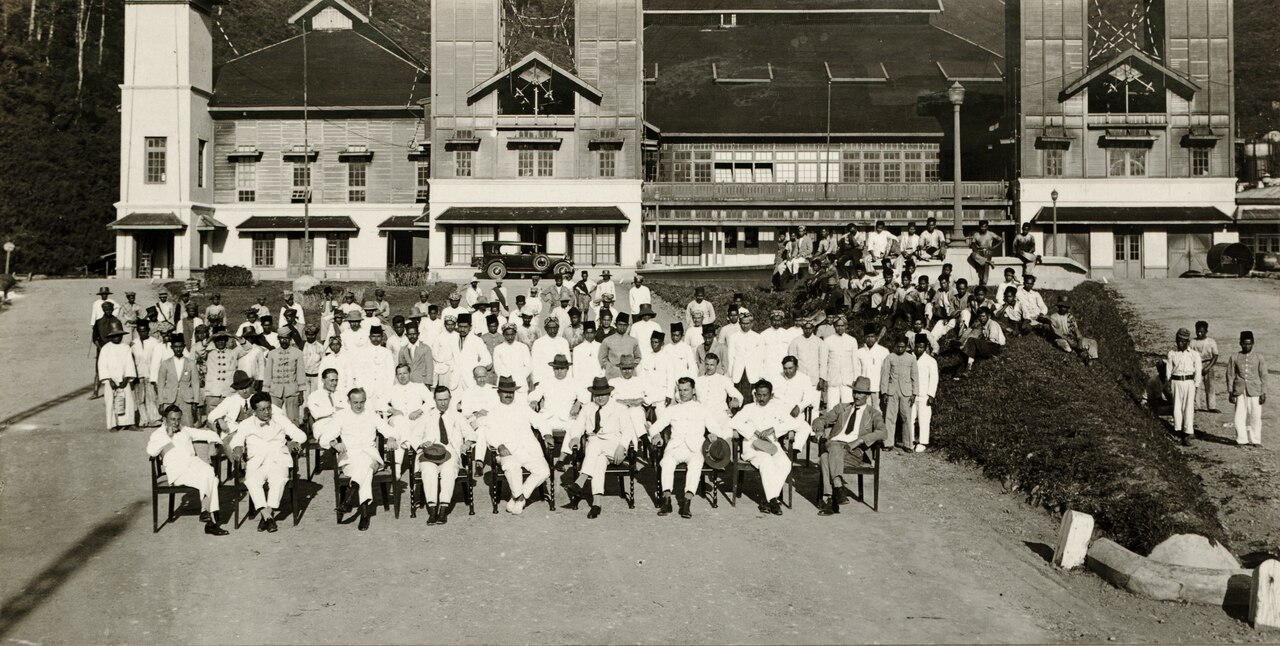
As World War II ended and Indonesia's independence revolution intensified, republican fighters from South Bandung destroyed the station in 1947. Their concern was practical, a functional long range radio transmitter in the hands of returning Dutch forces would pose a direct threat to the republic.
What remains today are moss covered ruins on the slopes of Mount Puntang. Sections of the building's foundation, partial walls still standing, and the dry arrowhead shaped pool. The transmitter infrastructure, the residential quarters that once housed station staff, and the monument in central Bandung are all gone.
The factual record, however, remains in 1923, from a mountain in West Java, engineers completed and operated the longest range wireless voice communication system in the world,12,000 kilometers, from Bandung to the Netherlands, transmitted through the air.