When Prime Minister Anwar Ibrahim landed in Ashgabat last two week, he wasn't just making a state visit. He was collecting on three decades of patient, unglamorous trust-building — and bringing home something Malaysia had genuinely earned.
In the energy world, the most valuable currency is not capital. It is credibility … and on 19 June 2026, at the Oguzhan Presidential Palace Complex in Ashgabat, Malaysia spent some of that credibility — accumulated over thirty years — on a deal that opens a new chapter for Petronas in one of the world's most gas-rich regions.
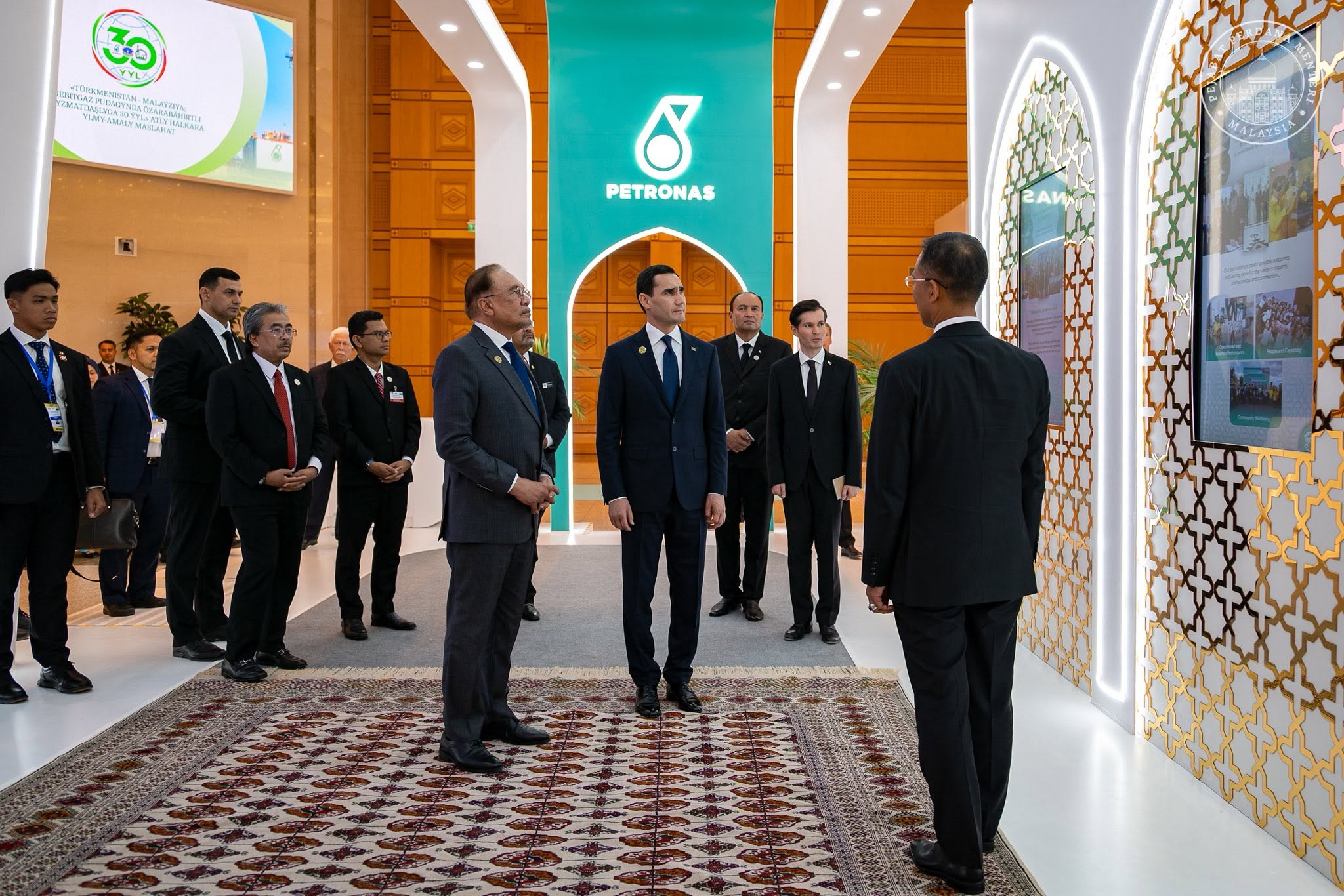
Petronas, through its wholly owned subsidiary Petronas Carigali (Turkmenistan) Sdn. Bhd., marked 30 years of operations in Turkmenistan by signing a series of new strategic agreements with State Concern Turkmennebit and State Enterprise Hazarnebit.
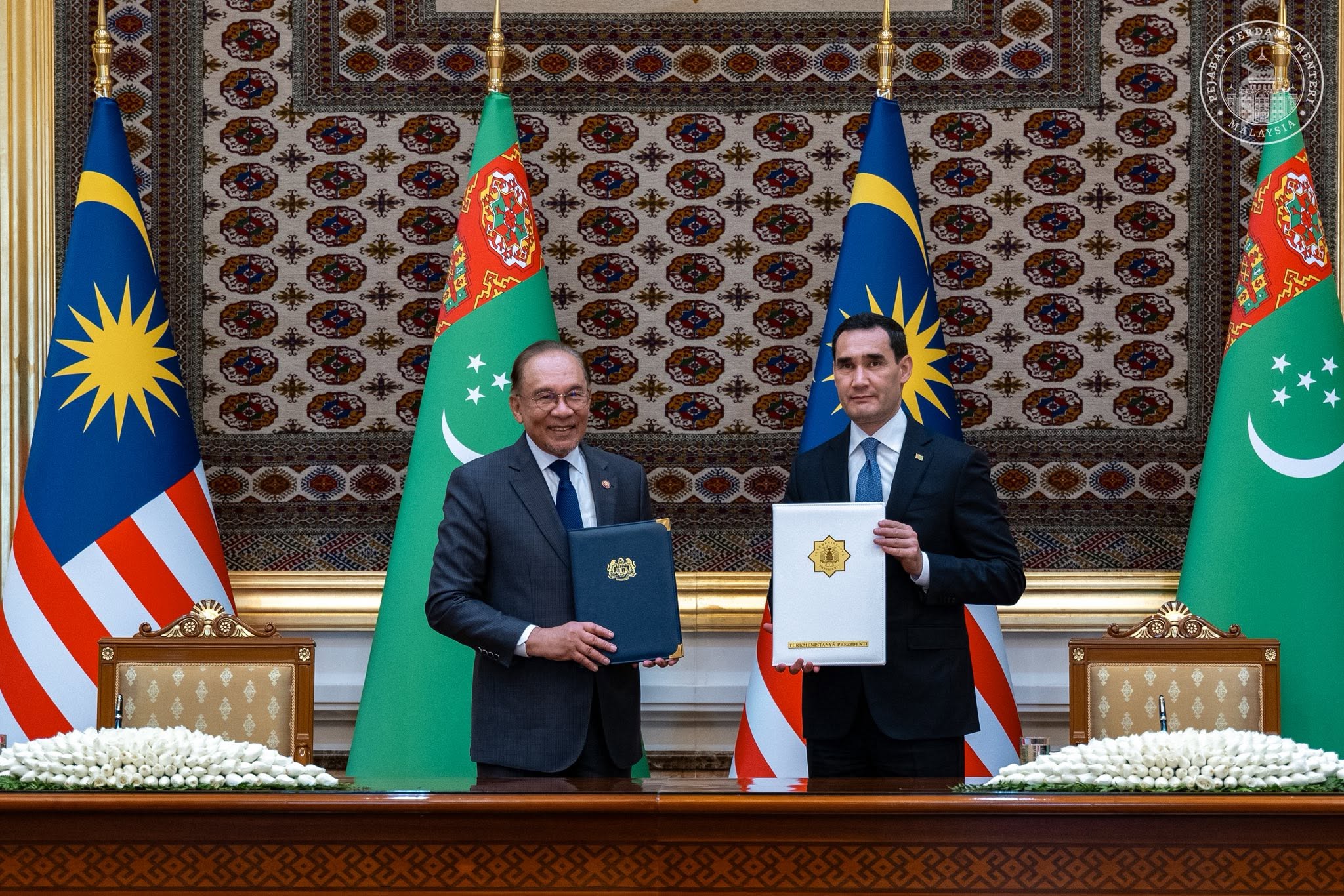
The signing was witnessed by both Prime Minister Anwar Ibrahim and Turkmenistan President Serdar Berdimuhamedov — a deliberate signal that this was not routine corporate paperwork, but a state-level affirmation of a relationship that has outlasted governments, oil price cycles, and geopolitical shifts.
Through the agreements, Petronas secured a 100 per cent participating interest in Offshore Block-19 and Block-20 in the Caspian Sea under a Production Sharing Agreement, alongside a cooperation agreement for 2D seismic studies over northern offshore blocks and a wider framework to explore future collaboration in hydrocarbon development, gas processing and gas chemicals
What It Is … and What It Isn't
A word of honest context is warranted here, because the numbers floating across social media in the days after the announcement deserve some tempering.
These are exploration rights, not guaranteed returns. Block 19 and Block 20 are areas where Petronas now has the right to search — and the Caspian is known to be more gas-heavy than oil-rich.
No revenue flows until exploration confirms what is there, and commercial development follows its own long timeline. The deal should not be oversold as an immediate earnings catalyst.
What it is, however, is strategically significant. Turkmenistan holds some of the world's largest gas reserves, and the Caspian shelf remains a region of considerable long-term energy interest — particularly as Asia's demand for cleaner-burning gas continues to grow.
Anwar noted that PETRONAS' involvement in the blocks helps solidify Malaysia's position as a respected global energy player, and that Malaysia could use future energy gains to increase exports to partner countries, particularly China, Japan and South Korea.
Thirty Years is Not An Accident
The reason Turkmenistan opened this door to a Malaysian company comes down to one thing: a track record that no amount of money can fast-track.
Over the years of its operations in Turkmenistan, Petronas has invested approximately US$12 billion in the country's oil and gas industry, and together with its Turkmen partners has produced over 44 billion cubic meters of gas and 16 million tons of liquid hydrocarbons.
A gas treatment plant, an onshore gas terminal, and an offshore structure assembly facility now stand on the Turkmen coast of the Caspian — built through that partnership.
Beyond the infrastructure, Petronas trained hundreds of local technicians and awarded scholarships to Turkmen students at Universiti Teknologi Petronas. These are not footnotes. In a country that is selective about who it lets in, they are the reason the door stayed open.
Petronas COO Mohd Jukris Abdul Wahab put it plainly at the signing: "For three decades, PETRONAS and Turkmenistan have built a partnership defined by trust, shared ambition and a commitment to creating long-term value."
The Diplomatic Dimension
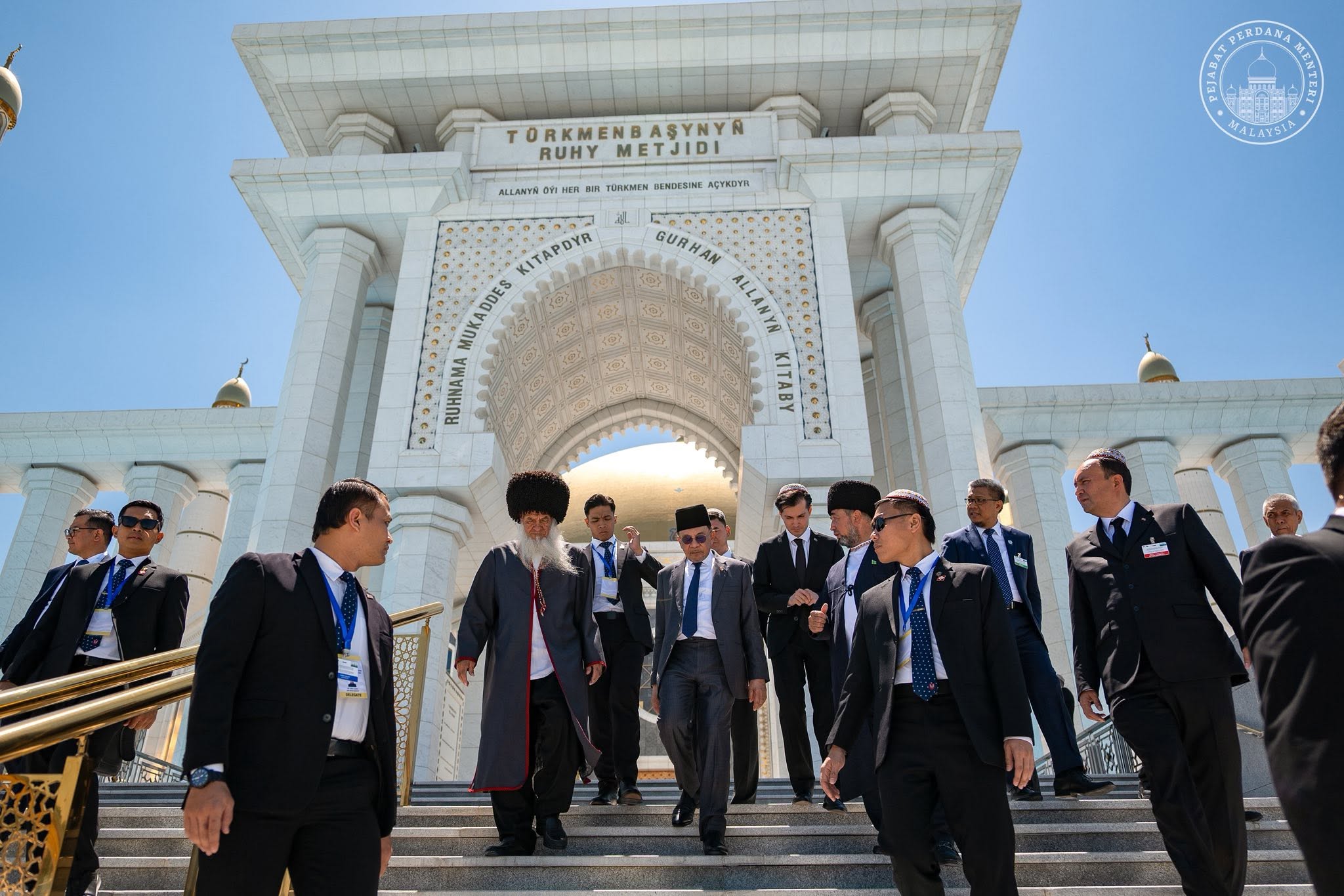
Anwar Ibrahim's two-day visit to Ashgabat — his first official visit to Turkmenistan — was described by the Turkmen side as an important event in the history of the two peoples and states. The Prime Minister personally engaged in the negotiations, building on groundwork laid two years earlier when President Serdar Berdimuhamedov visited Kuala Lumpur.
There is a geopolitical layer worth understanding here too. Turkmenistan holds some of the world's largest natural gas reserves but has historically funnelled the bulk of its exports through a single buyer — China.
Diversifying that relationship is very much in Ashgabat's strategic interest. A trusted long-term partner like Malaysia, with Petronas as its calling card, offers exactly that.
Beyond energy, observers note that the visit marked the beginning of a new chapter — one in which energy remains the foundation but no longer stands alone, with discussions pointing to a broader strategic partnership encompassing trade, investment, transport, logistics, education and regional connectivity.
The visit also came fresh on the heels of Anwar's engagement in Moscow, where Russia reportedly committed to supplying energy to Malaysia for the next 20 years — part of a broader, deliberate pattern of energy diplomacy that positions Malaysia as a neutral, pragmatic partner in a world where everyone else seems to be choosing sides.
A National Champion Doing Its Job
Back home, Petronas faces its own headwinds. Petronas Sarawak is contesting the national oil company's monopoly in the courts. Last year's profits dipped, and the government dividend was the lowest since 2017. The pressures are real, and they are not going away.
Which is precisely why what happened in Ashgabat matters — not as a distraction from those challenges, but as a reminder of what Petronas, at its best, actually is.
It is a company that entered an unfamiliar country in 1996 when few others were willing, built something durable and useful, treated its host community with enough respect to train a generation of local engineers, and has now been rewarded with a seat at a table that far larger players are still trying to find.
Anwar called it the result of Malaysia's MADANI diplomacy. "This success reflects high international confidence in Malaysia's capabilities," he said.
That confidence was not gifted. It was built — quietly, steadily, over thirty years — one well drilled, one engineer trained, one relationship honoured at a time.
The Caspian blocks are an opportunity, not a guarantee. But the credibility that opened those doors? That belongs to Malaysia. And that, at least, is worth being proud of.