Did you know that the UN leader who stopped the Cuban Missile Crisis was a former school principal from Myanmar? His name was U Thant, a former educator who made a monumental leap from the classroom into global diplomacy in 1957.
His strategic move to New York unexpectedly placed him at the center of the world's most dangerous geopolitical theater. Within a few short years, this unassuming diplomat would find himself holding the key to preventing a global nuclear war.
From Classroom to UN Headquarters
The life journey of the man whose full name was Maha Thray Sithu U Thant began in a small town in Southeast Asia. He was born in Pantanaw, Myanmar on January 22, 1909.
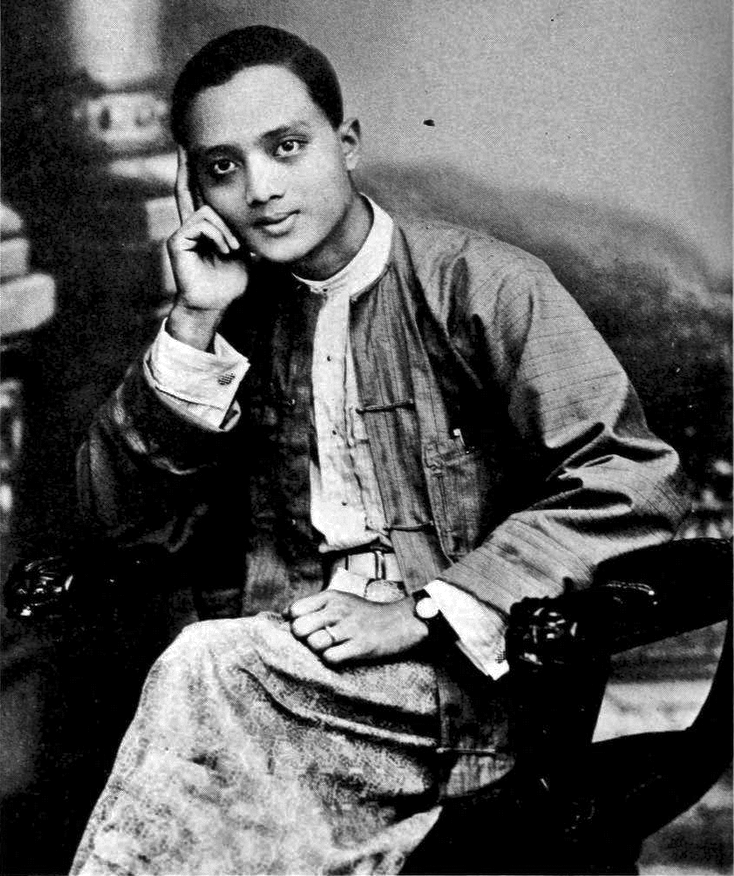
Before entering the world of diplomacy, he began his career in education. During the 1930s, he worked as a teacher and later became the headmaster at National High School Pantanaw.
His career in government started after the country gained independence from Britain in 1948, which was still known as Burma at the time. The government appointed U Thant as the Director of Broadcasting and later as the Secretary to the Ministry of Information.
His position at the ministry served as a bridge to his diplomatic career in the late 1950s. In 1957, Prime Minister U Nu officially dispatched U Thant to New York to serve as the Permanent Representative to the UN. He became recognized by many nations as a neutral diplomat.
A Surprise Historic Selection
U Thant's opportunity to lead the UN began in September 1961. The second UN Secretary-General, Dag Hammarskjöld, died in a plane crash while on a peace mission in Africa.
The tragic event left a highly sensitive power vacuum at the UN late that year. The United States and the Soviet Union were involved in a tense situation during the Cold War. Both nations repeatedly utilized their veto power against every newly proposed leadership candidate.
The UN required a mediator acceptable to all factions. U Thant emerged as an ideal compromise candidate who was viewed as genuinely neutral.
Myanmar's position as a non-aligned country made U Thant acceptable to both the Western and Eastern blocs. The UN General Assembly finally reached a decisive resolution on November 3, 1961.

U Thant was officially appointed as the new Acting Secretary-General of the United Nations on that day. His selection marked the very first of Asian representation at the UN leadership.
Defusing the Cuban Missile Crisis
U Thant's leadership faced an immediate test during a direct confrontation between the United States and the Soviet Union in October 1962.
Tensions peaked when the Soviet Union secretly constructed missile bases with nuclear warheads in Cuba.
The US President John F. Kennedy responded immediately by enforcing a total naval blockade around the island. American warships surrounded the waters, preparing to intercept Soviet military vessels sailing toward the Caribbean.
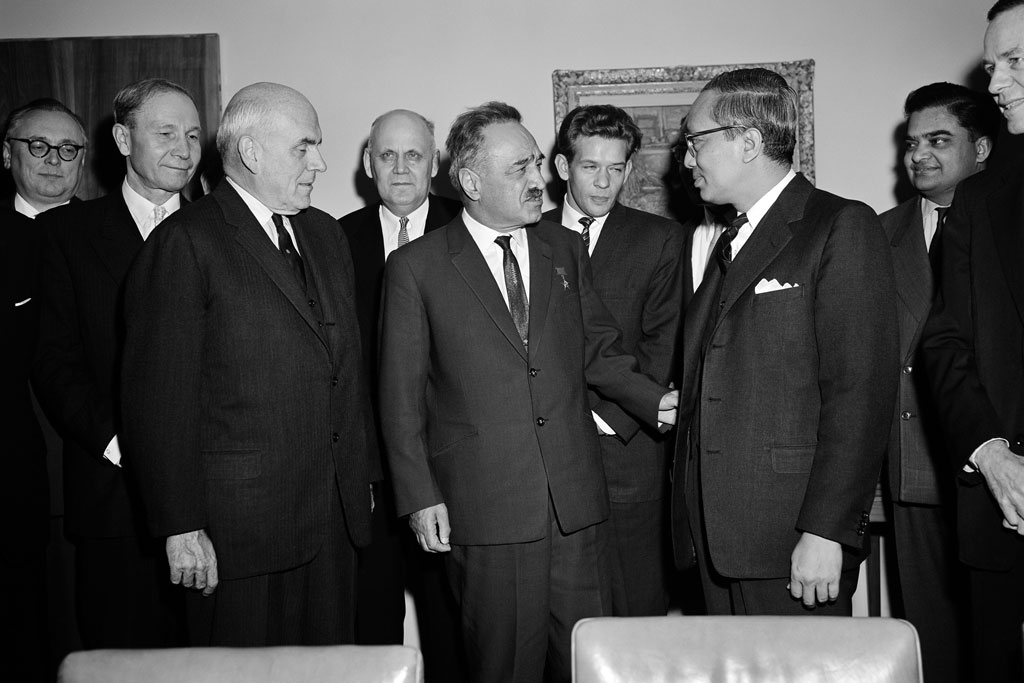
The world stood on the brink of nuclear war as both factions refused to communicate directly. Amidst this complete deadlock, U Thant assumed an active role as a solo mediator.
He bypassed traditional, slow UN bureaucratic channels. U Thant dispatched an emergency moratorium proposal directly to President Kennedy and Premier Nikita Khrushchev.
The proposal contained a specific two-way compromise. He requested the Soviet Union to temporarily halt its military ship deployments. Simultaneously, he asked the United States to defer its naval blockade operations.
This timely intervention provided the necessary negotiation room for Washington and Moscow to talk. The brief pause allowed both sides to bypass public posturing and reach a peaceful resolution.
The Soviet Union agreed to dismantle the missile sites entirely. In return, the United States issued a public guarantee that it would not invade Cuba. This successful mediation cemented his diplomatic authority.
The UN General Assembly voted unanimously to appoint him to a second term on December 2, 1966.
His Long Lasting Legacy
After succesfully defusing the Cuban Missile Crisis, U Thant to focused on internal UN reforms. He merged separate technical aid branches to create the United Nations Development Programme (UNDP). His 1968 environmental report on industrial pollution also laid the foundational groundwork for the United Nations Environment Programme (UNEP).
Following the UN structural reforms, U Thant declined a third term and stepped down in late 1971. He lived quietly in retirement until his death from lung cancer in New York in 1974. His body was returned to Myanmar and remains interred at the U Thant Mausoleum in Yangon.