In the hilly area of Shan State, Myanmar, there is a unique settlement in Nyaung Shwe Township. This region is home to a community that spends most of their life on the water.
The community is widely known as the Intha people. In the local language, the word In means lake, while tha means people. When combined, the name Intha literally translates to people of the lake.
Geographical Roots of the Intha People
Genealogically, the Intha people belong to the Tibeto-Burman ethnic group. They have long inhabited the mountainous regions of eastern Myanmar. The main settlement center of the Intha people stands directly around and on the waters of Inle Lake.
The lake area serves as the primary home for Intha people. They build all their social activity centers directly above the water.
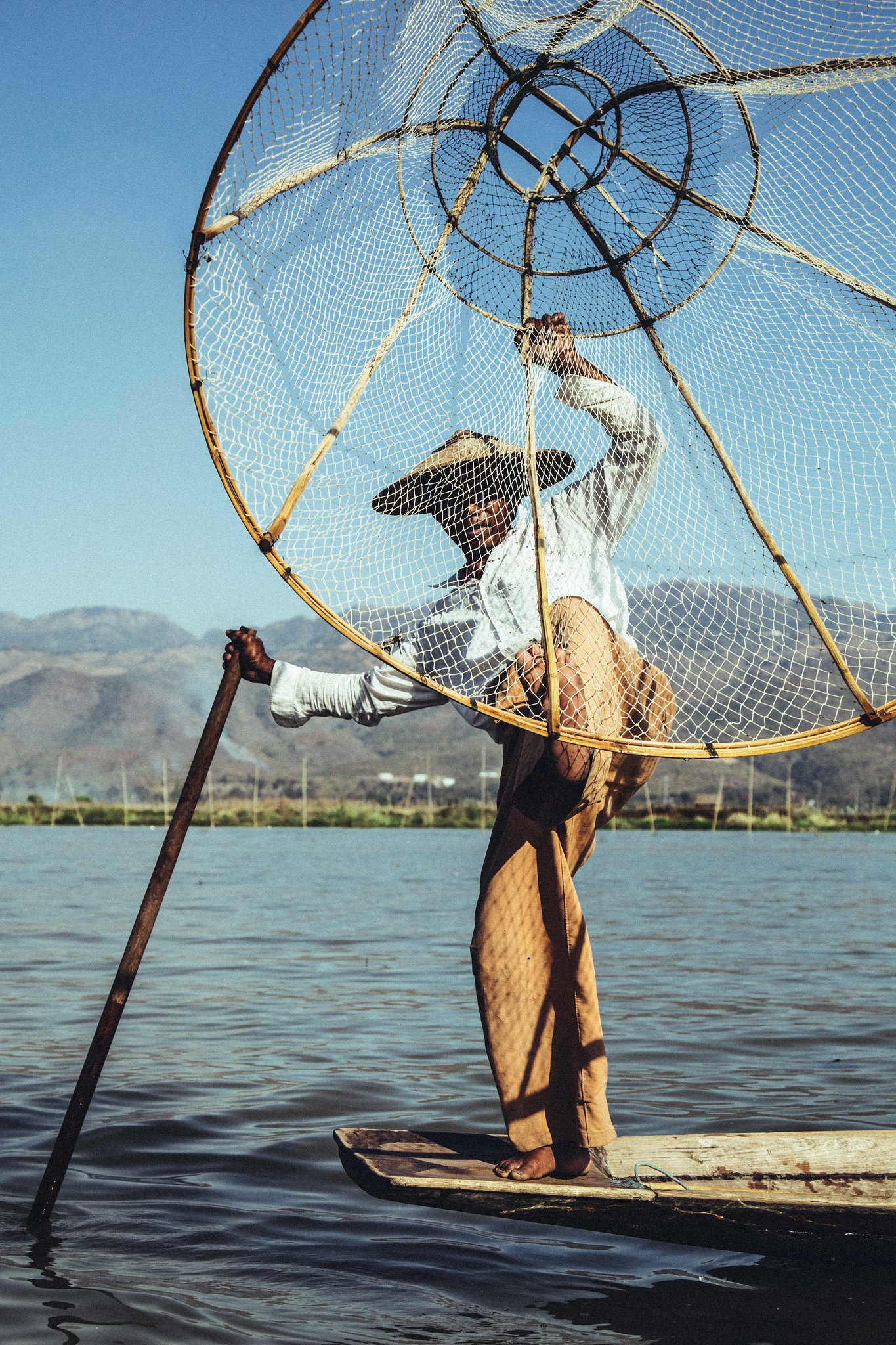
The most prominent signature of the Intha people can be seen in the way local Intha fishermen navigate their wooden boats.
Intha fishermen do not row their boats while sitting down. Instead, a fisherman stands upright on just one leg at the edge of the boat, while wrapping his other leg around the wooden oar blade.
Their leg movements are swung in a sweeping motion to propel the boat through the water. Their unique rowing technique becomes a distinct visual identity that sets them apart from other community groups.
Life Centered Around Lake Waters

The houses where Intha people live are built as wooden stilt structures. The house buildings stand in rows along the shorelines and extend directly out over the water surface.
The economic life of the Intha people relies heavily on the lake ecosystem. Fishing serves as a primary livelihood supporting the local families. Mastered over generations, navigating the waters of Inle Lake has long been the financial backbone for fishermen in the area.
Small wooden boats without engines serve as essential daily transport for the residents. The boats are relied upon by the community to support all forms of everyday mobility.
The presence of these wooden boats allows residents to travel to school, shop at local markets, and visit neighboring houses. The small craft acts as a crucial link for social interaction among families living across the lake perimeters.
Floating Garden on Inle Lake

The livelihood of the Intha people is not strictly limited to the fishing sector. The Intha people also possess high technical skill in managing agricultural practices directly over the water.
The Intha People utilize the surface of Inle Lake to build floating garden plots. On these floating plots, farmers focus heavily on cultivating tomato crops. Tomato production from the lake has grown into one of the largest agricultural commodities in the entire region.
In addition to floating gardens, residents cultivate land in the lake's delta area. This delta region is formed by river outlets spilling directly into Inle Lake. On this fertile, muddy soil, local farmers grow rice crops.
In recent years, long-tail motorized boats have begun operating around Nyaung Shwe Township. The engine-powered boats are utilized to transport local passengers, carry agricultural produce to and from Nyaung Shwe Town, and take tourists around the lake.
For Intha households, however, the small hand-rowed wooden boat remains the primary mode of transport relied upon for daily chores.
Reference:
Aung, T. T. (2020). Traditional maritime skills and knowledge of social and economic developments in Inle Lake. International Information and Networking Centre for Intangible Cultural Heritage in the Asia-Pacific Region under the auspices of UNESCO (ICHCAP).