Imagine arriving in another country and paying for lunch, booking a hotel, or withdrawing cash from an ATM, all in US dollars instead of the local currency.
In Cambodia, that’s perfectly normal.
Although the Cambodian riel (KHR) is the country’s official currency, the US dollar has circulated alongside it for decades, making Cambodia one of the world’s most dollarized economies.
So how did this unusual system emerge?
When Cambodia Had No Currency
Cambodia’s dual currency system traces its roots to one of the darkest periods in the country’s history.
When the Khmer Rouge seized power in April 1975, it abolished money altogether. Banks were shut down, the National Bank of Cambodia was destroyed, and existing currency became worthless.
Instead of using money, the regime attempted to replace the economy with a centrally planned system based on barter.
Following the fall of the Khmer Rouge in 1979, Cambodia reintroduced the riel in 1980. However, after years without a functioning monetary system, public confidence in the national currency remained weak.
The UN Helped Rebuild Cambodia
A major turning point came in 1992, when the United Nations Transitional Authority in Cambodia (UNTAC) arrived to oversee the country’s transition after decades of conflict.
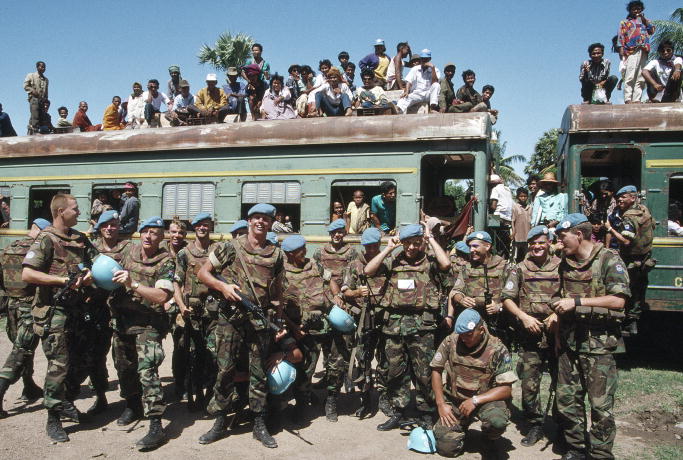
UNTAC deployed approximately 15,900 military personnel, 3,400 civilian police, 2,000 civilian staff, and 450 UN volunteers, in addition to locally recruited staff and interpreters.
The operation cost over US$1.6 billion, mostly in salaries for expatriate staff. Most salaries, contracts, and purchases were paid in US dollars, injecting large quantities of the currency directly into Cambodia’s economy.
Businesses quickly began accepting dollars because international personnel used them every day. Over time, local residents also adopted the currency for larger transactions and savings.
Why Cambodians Kept Using Dollars
Even after UNTAC left in 1993, dollarization continued.
For many Cambodians, the US dollar offered greater stability than the newly restored riel. It became widely used for salaries, property purchases, automobiles, hotel bills, and many other high value transactions.
The banking system also became heavily dollarized. According to the National Bank of Cambodia and the International Monetary Fund, foreign currency deposits accounted for between 80% and 90% of broad money in the Cambodian banking system.
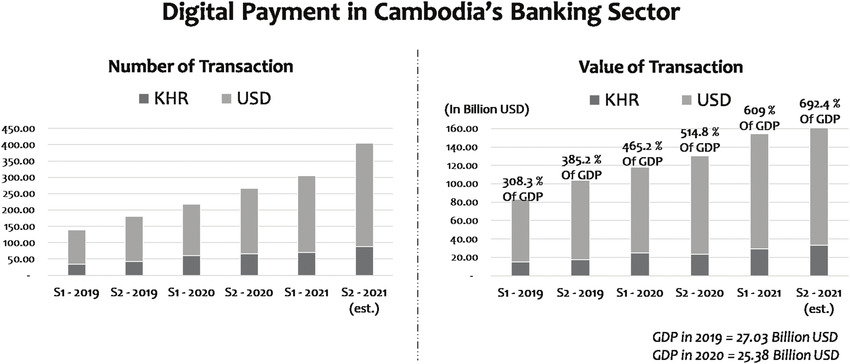
From the early 2010s through the early 2020s, with the ratio reaching 84.1% in 2022, placing Cambodia among the world’s most dollarized economies. The riel, meanwhile, remained common for smaller everyday purchases, particularly in local markets and rural areas.
A Gradual Shift Back to the Riel
In recent years, the Cambodian government has been encouraging greater use of its national currency.
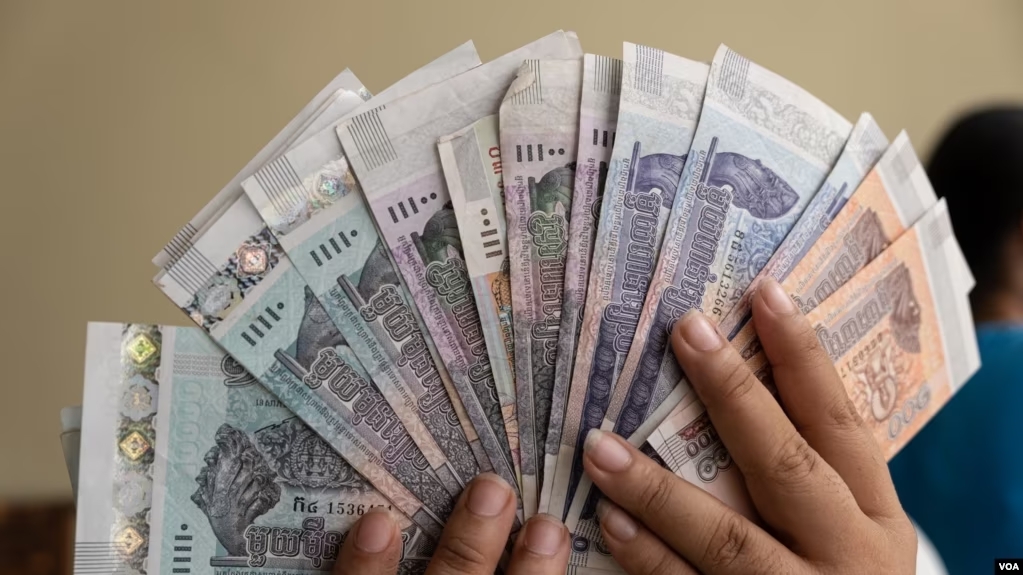
The National Bank of Cambodia has introduced measures to reduce dependence on the US dollar, including the launch of Bakong. A blockchain based payment system officially launched on October 28, 2020, that enables seamless digital payments in both riel and US dollars while promoting wider domestic use of the riel.
Although the US dollar remains deeply embedded in Cambodia’s economy, the share of riel denominated bank deposits has gradually increased in recent years, with foreign currency deposit ratios declining from peaks above 90% to around 84% by 2022.
Cambodia still operates one of the world’s most dollarized economies. But after decades of relying on two currencies, the country has introduced measures aimed at restoring a larger role for the riel, without replacing the dollar that has shaped its economy for more than three decades.