Two countries. Two national currencies. Yet in Brunei and Singapore, both can be accepted on either side of the border.
Although the Brunei dollar (BND) and the Singapore dollar (SGD) are separate national currencies issued by different central banks, they have been officially interchangeable at par for nearly six decades.
A Deal Signed in 1967
The arrangement dates back to 12 June 1967, when Brunei and Singapore signed the Currency Interchangeability Agreement (CIA).
Under the agreement, both countries agreed that their currencies would be accepted by each other’s monetary authorities at a fixed 1:1 exchange rate, at par and without charge.
The Brunei dollar is issued by the Autoriti Monetari Brunei Darussalam (AMBD), while the Singapore dollar is issued by the Monetary Authority of Singapore (MAS).
Although the currencies have different designs, serial numbers, and issuing authorities, each central bank is obligated to exchange the other’s currency at face value.
Beyond the central banks, commercial banks in both countries are also required to accept deposits from the public and businesses in the other country’s currency, at par and without charge.
This means a Brunei dollar deposited with MAS can be exchanged for an equivalent amount of Singapore dollars, and vice versa through AMBD.
The agreement is supported by both countries maintaining comparable monetary policy objectives focused on price and exchange rate stability.
One Currency Board, Three Countries
The arrangement has its origins in history. Before independence, Brunei, Singapore, and the territories that later became Malaysia all used a common currency issued by the Board of Commissioners of Currency, Malaya and British Borneo.
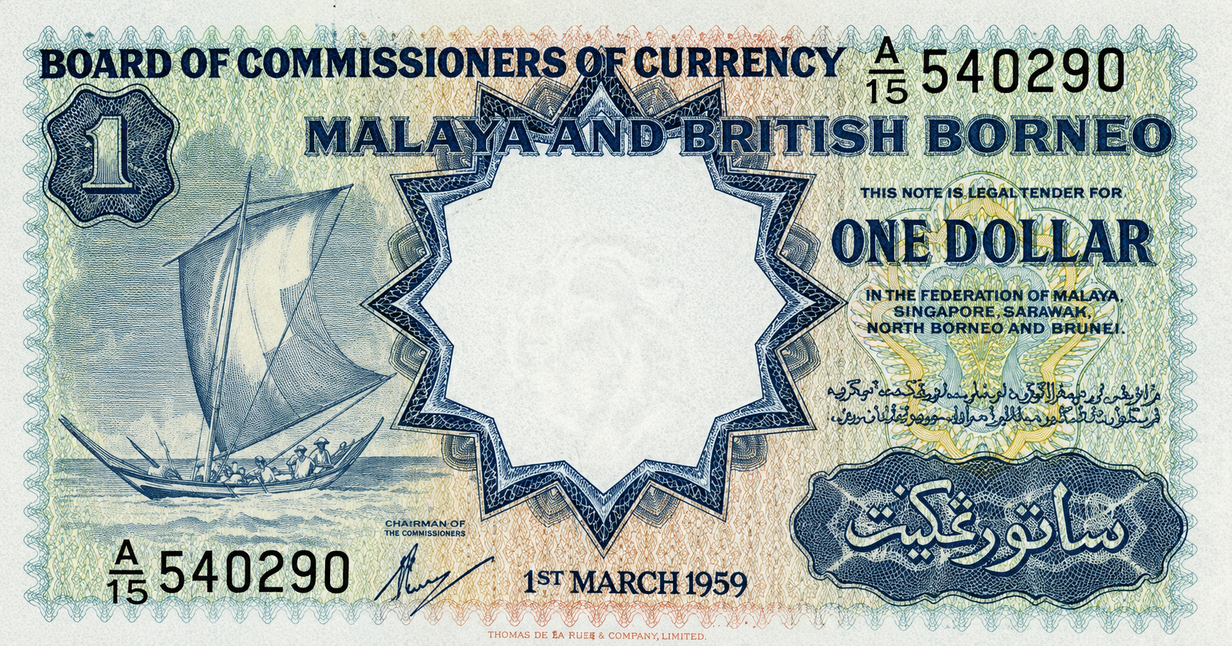
The common currency survived several major political changes, including Malaya's independence in 1957, Malaysia's formation in 1963, and Singapore's separation from the federation in 1965. However, the arrangement became impractical as each government established its own monetary authority.
In 1967, the Board of Commissioners of Currency of Malaya and British Borneo was dissolved, and each country introduced its own national currency.
Instead of ending monetary cooperation altogether, Brunei, Malaysia, and Singapore signed the Currency Interchangeability Agreement on the same day in 1967. This agreement allowed their newly issued currencies to remain interchangeable at par despite being issued separately.
However, Malaysia unilaterally withdrew from the agreement in 1973. The move followed the collapse of the Bretton Woods fixed exchange rate system after the United States suspended the dollar's convertibility into gold in 197, prompting Malaysia to adopt a more independent exchange rate policy.
Brunei and Singapore chose to maintain their bilateral agreement, which has remained in effect ever since.
What It Means at Street Level
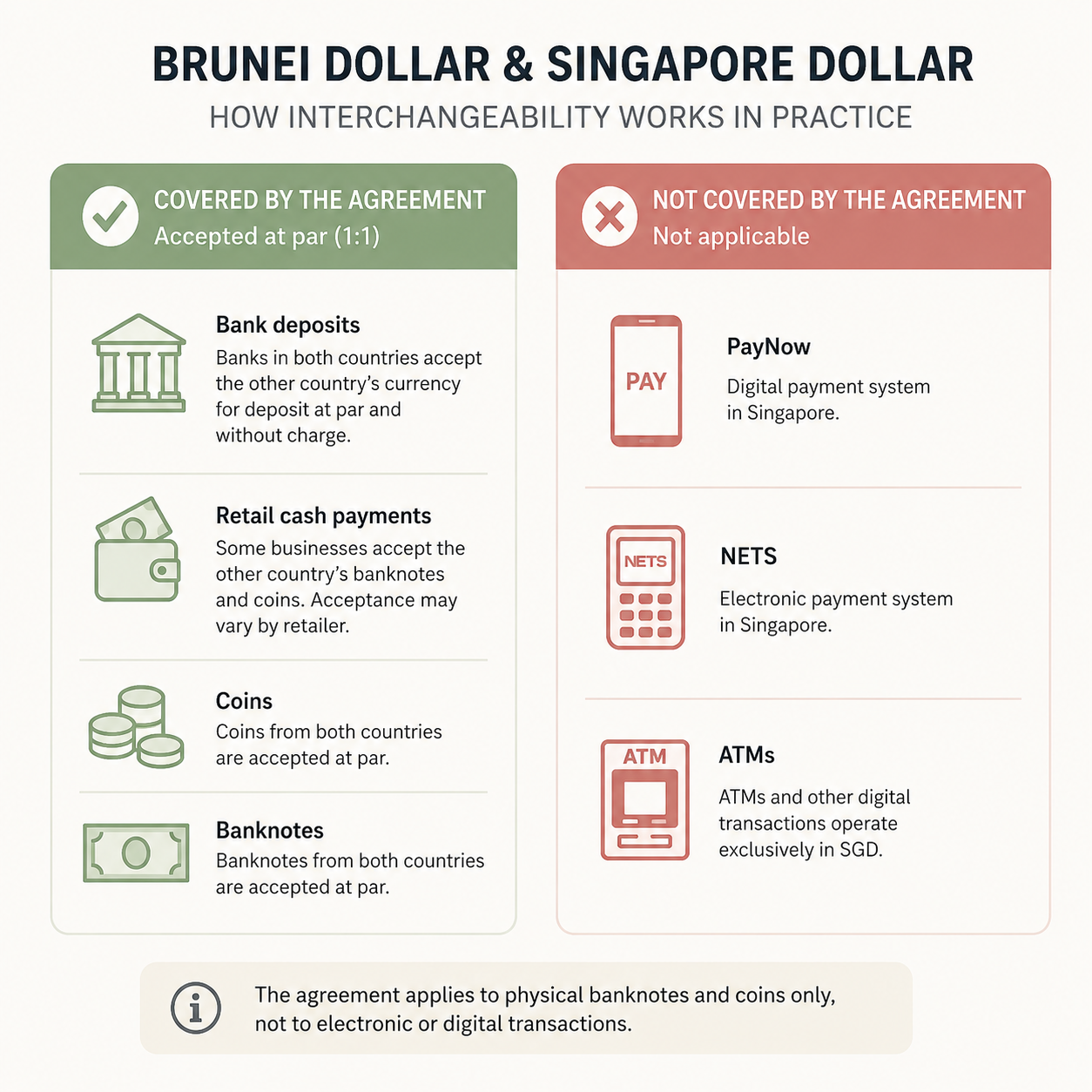
In practice, banks in both Brunei and Singapore accept the other country’s currency for deposit from the public and businesses at par and without charge.
Retail acceptance, however, may vary. Individual businesses are not legally required to accept the other country’s banknotes. In Singapore, some retailers accept Brunei dollars, while others accept only Singapore dollars.
The same applies in Brunei, although Singapore dollars are commonly accepted in many businesses there.
Digital payment systems such as ATMs, PayNow, and NETS operate exclusively in SGD, meaning the interchangeability arrangement applies to physical banknotes and coins only, not electronic transactions.
Two Currencies, One Rate
Despite their fixed 1:1 relationship, the Brunei dollar and Singapore dollar remain separate currencies.
Each country issues its own banknotes and coins, manages its own monetary policy, and determines its own currency design and security features.
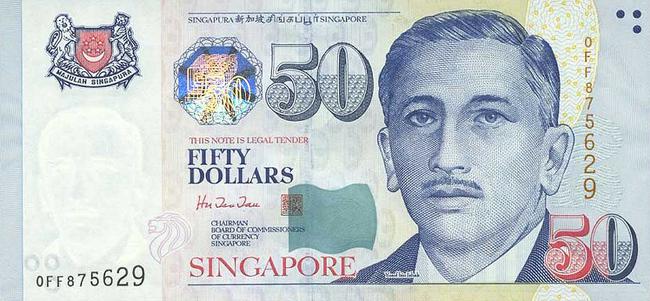
The Currency Interchangeability Agreement simply ensures that the two currencies remain officially exchangeable at par by their respective monetary authorities.
Still Running After Nearly Six Decades
The agreement took effect on 12 June 1967 and has continued in full force following MAS’s absorption of the Board of Commissioners of Currency, Singapore in 2002, and after Brunei’s currency authority was reorganized and renamed AMBD.
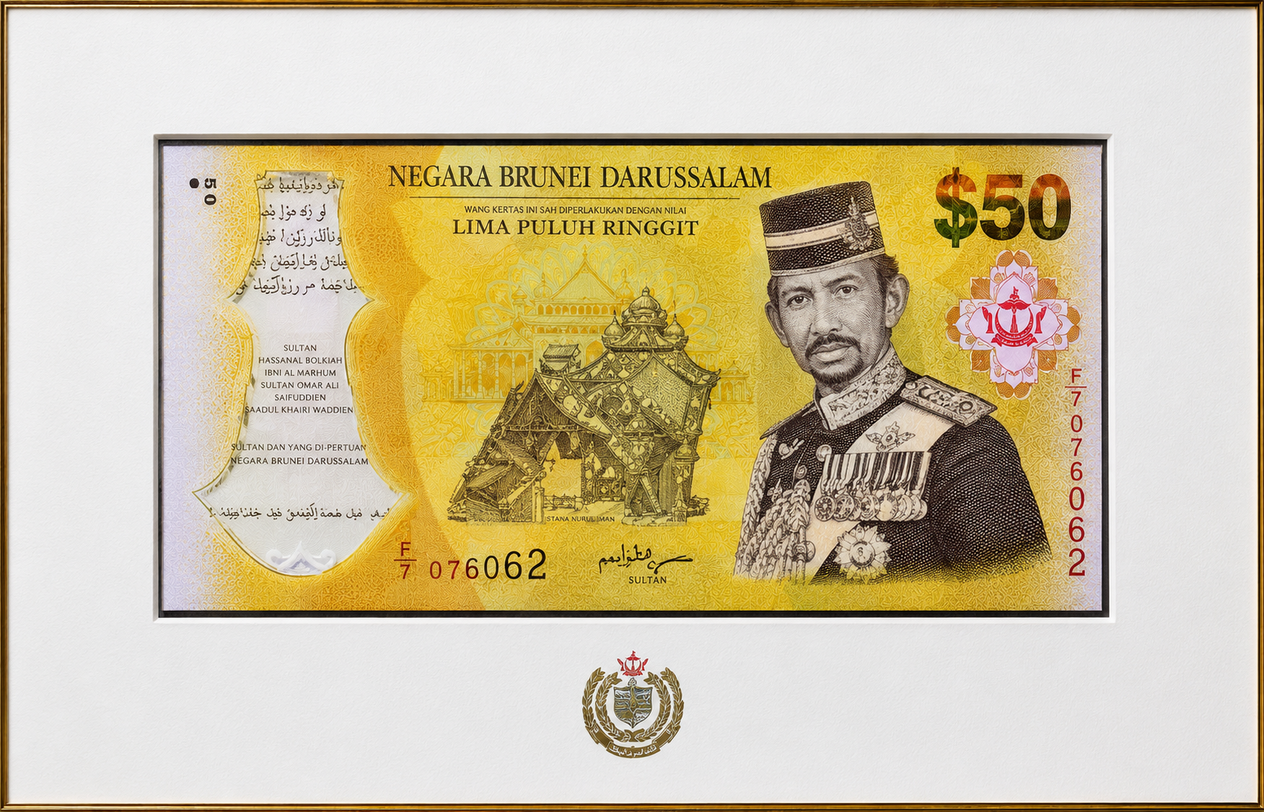
To mark its 40th anniversary in 2007 and its 50th anniversary in 2017, both countries jointly issued commemorative polymer notes, a set of $20 notes and a set of $50 notes respectively. Reaffirming to the public, retailers, and financial institutions that both currencies continue to be treated on par.
As of 2025, both AMBD and MAS have reaffirmed their commitment to maintaining the agreement, with no indication of discontinuation from either side.