One-third of the world's electricity comes from coal. In Brunei, that number is zero.
Coal remains the world's largest source of electricity generation, and across Southeast Asia, countries such as Indonesia, Viet Nam, Malaysia, and the Philippines operate coal fired power plants as part of their national electricity systems.
Brunei has never built one. Instead, its electricity system has relied almost entirely on natural gas for decades.
A 1929 Discovery That Set the Course
The reason lies beneath the ground. Exploration for oil in Brunei began as early as 1899, when the first well was drilled near what is now Bandar Seri Begawan, without success.
Three decades of further exploration followed before the breakthrough came at Seria, where the S-1 well began producing oil on 5 April 1929, the country's first commercial discovery.
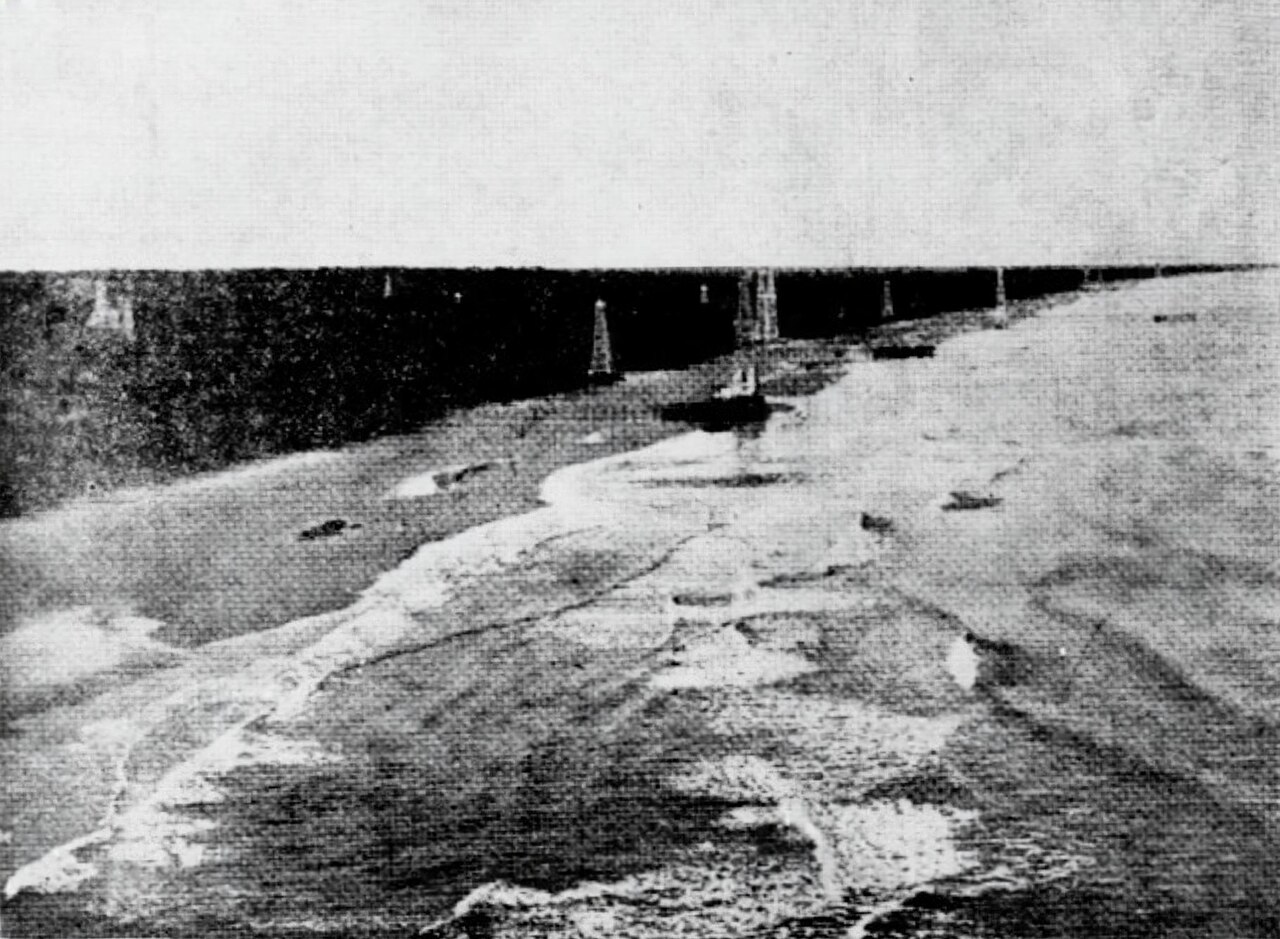
Brunei exported its first oil in 1932, and by 1950s the Seria field had made Brunei the largest oil producer in the Commonwealth, with output peaking at roughly 115,000-120,000 barrels per day in 1956.
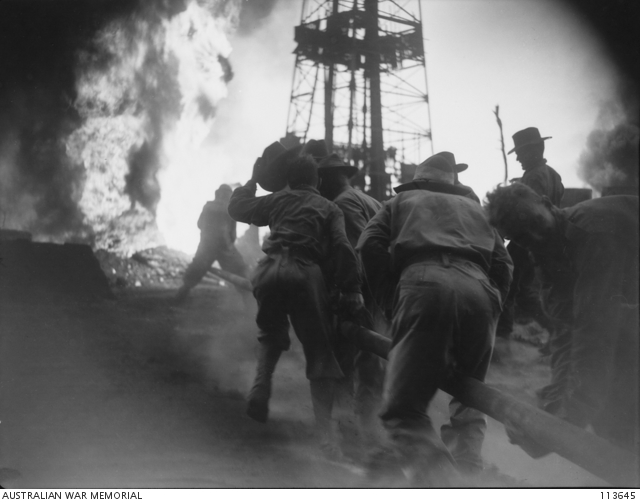
The Seria field survived a major disruption during the Second World War, when retreating British forces set fire to the wells to keep them out of Japanese hands. Australian troops recaptured the area in 1945 and production later resumed. Since 1990, Seria has produced a steadier but far smaller volume, around 20,000 barrels per day, as the field has matured.
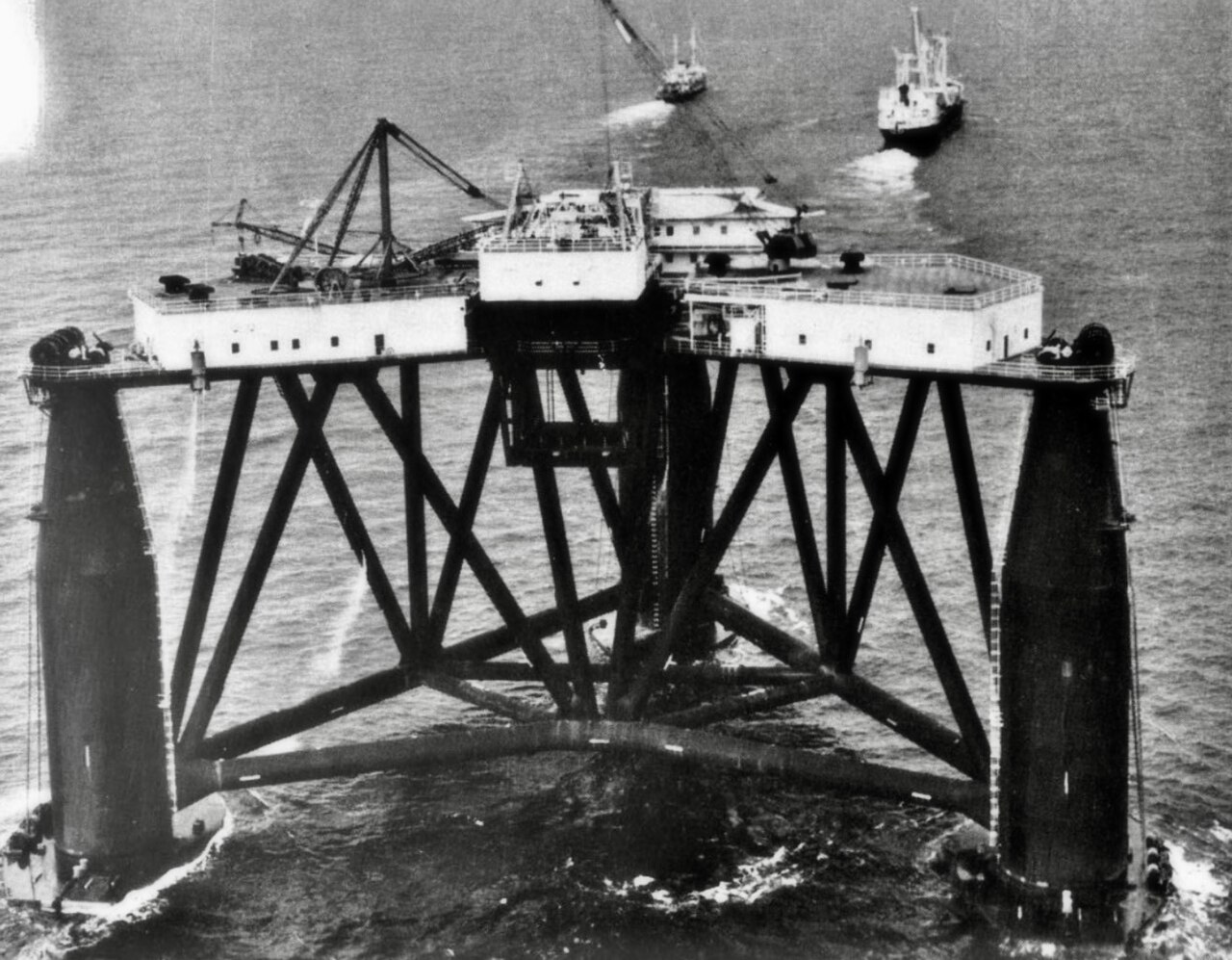
Gas came later, and it is what ultimately shaped the power sector. The discovery of the South West Ampa gas field in 1963, located 13 kilometers off the coast of Kuala Belait, gave Brunei its first major offshore gas reserve.
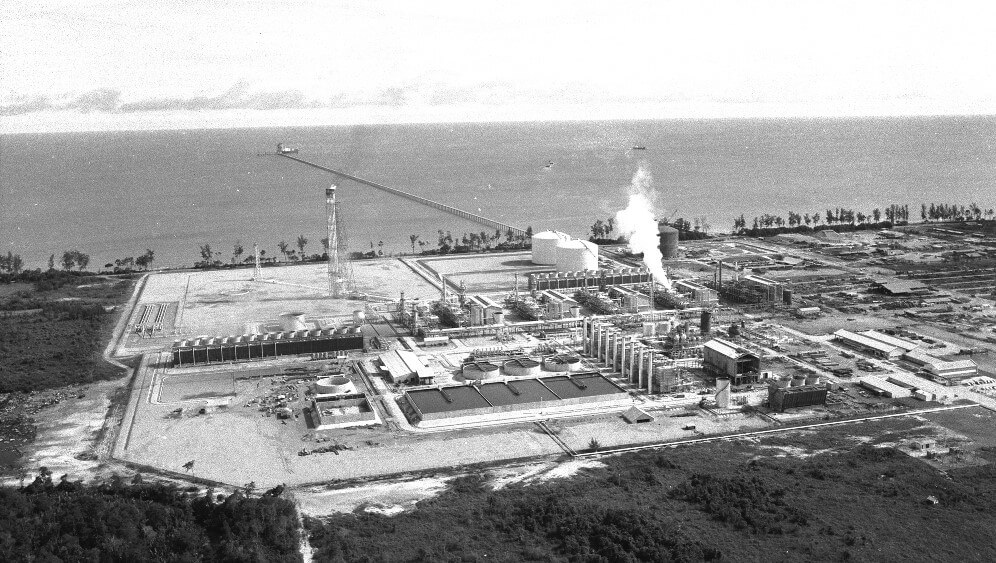
That discovery led to the establishment of Brunei LNG in 1969, and its plant at Lumut began operations in 1972 as one of the first large scale liquefied natural gas facilities in the world. This gave Brunei not just an export industry, but a domestic gas supply large enough to fuel its own power stations.
Removing any economic incentive to build coal import infrastructure that neighboring countries needed for their coal fired plants.
A Grid Built Entirely on Gas
The numbers reflect this reality. According to data compiled by the IEA, natural gas generated 98.95% of Brunei's electricity in 2015, and its share has remained above 98% for decades.
That year, the country produced around 4,200 gigawatt hours of electricity, of which solar photovoltaic accounted for just 2 gigawatt hours.
Brunei's electricity comes from two operators. The Department of Electrical Services (DES) runs four natural gas plants. Gadong 1A, Gadong 2, Bukit Panggal, and Lumut, plus one diesel plant, supplying about 58% of national demand.
The Berakas Power Company (BPC) runs three more gas plants. Berakas, Gadong 3, and Jerudong, covering the remaining 42%, including government buildings, hospitals, and the international airport.
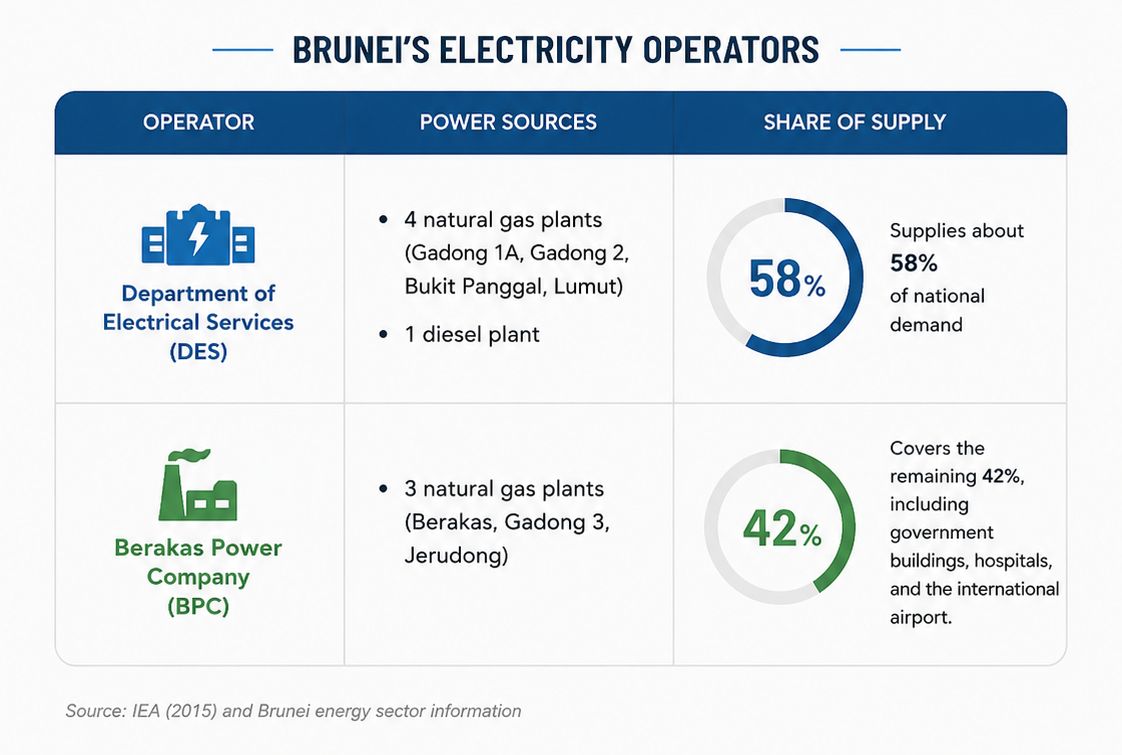
Together, DES and BPC had a combined installed capacity of 889 megawatts as of 2020, 609 MW from DES and 280 MW from BPC. The Lumut Cogeneration Plant alone accounts for 246 MW, the country's single largest generating facility.
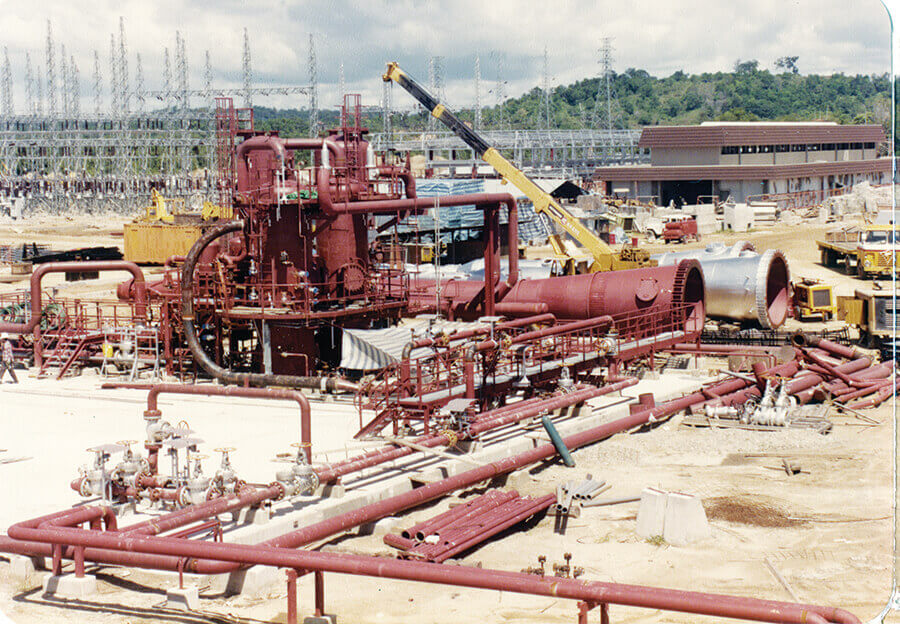
Because this gas comes from Brunei's own offshore fields, the country has never needed to build the coal import infrastructure. Ports, storage yards, rail links that coal fired power typically requires in countries without domestic coal reserves.
No Room for Coal in the Climate Plan
Government policy has reinforced this trajectory rather than reversed it.
Under the Brunei Darussalam National Climate Change Policy (BNCCP), launched in July 2020, one of ten strategies targets increasing renewable energy, mainly solar to at least 30% of total installed power generation capacity by 2035.
An interim target of 200 megawatts of solar by 2025, however, was missed. As of mid 2026, installed solar capacity remains a small fraction of that goal, led by the first stage of Hengyi's SINAR project (about 38 MW, commissioned February 2026).
View this post on Instagram
Two larger projects are underway. A 30 megawatt plant in Kampong Belimbing, targeted for completion by end of 2026, and a 12 megawatt Hibiscus Petroleum facility that began construction in February 2026.
Coal has not appeared in any of these plans as an alternative to gas.
A Different Path from Its Neighbors
This puts Brunei on a different track from most of its regional neighbors.
Rather than transitioning away from coal, as Indonesia, Viet Nam, and the Philippines are now attempting to do, Brunei built its power sector on natural gas from the start and is layering solar on top of it.
The BNCCP's 30% renewable target for 2035 does not aim to displace gas from the generation mix entirely, it aims to add capacity alongside it.
As a result, Brunei remains one of the few countries in Southeast Asia that has never operated a coal fired power plant, with natural gas continuing to serve as the foundation of its national electricity supply.