Twenty years ago, sedans were among the most recognizable passenger cars on Indonesian roads. A segment where brands like Honda, Toyota, and Nissan competed head-to-head across multiple sub-classes, from compact city cars to premium executive models.
In 2024, Indonesians bought 865,723 new vehicles. Only 10,015 of them were sedans.
That means sedans accounted for just over 1% of Indonesia’s new car market. A dramatic decline for a vehicle segment that was once a mainstream choice.
Before the Decline
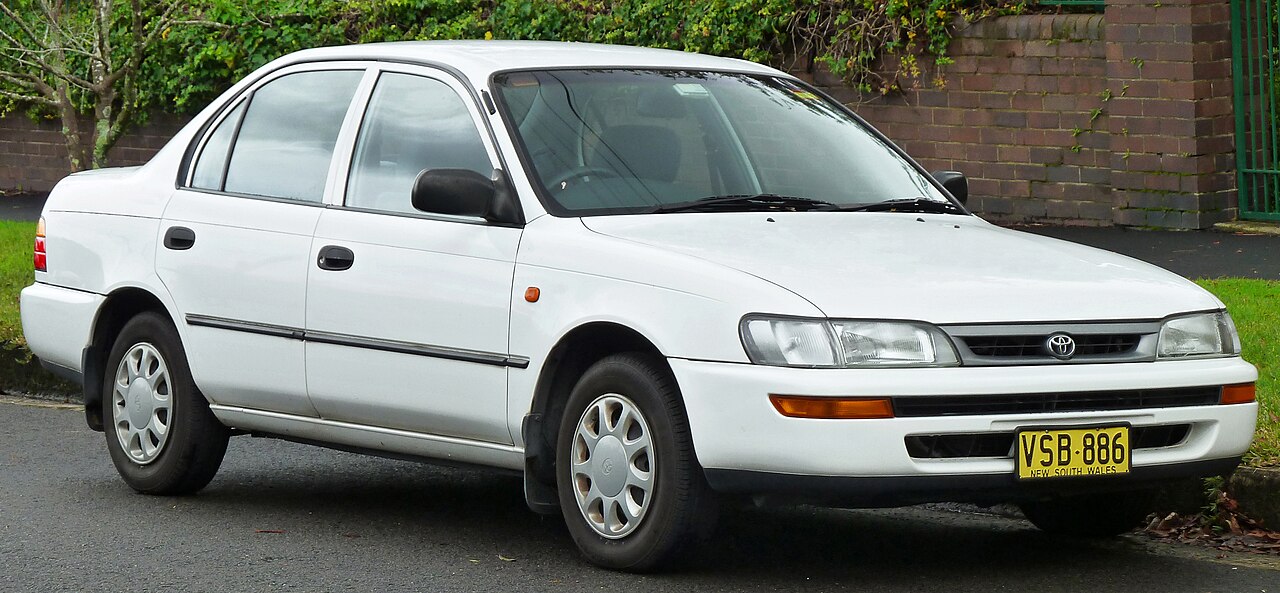
Long before SUVs and crossovers dominated Indonesian roads, sedans were one of the country's most prominent passenger car segments, spanning nearly every price bracket.
At the entry level, models like the Suzuki Baleno and Suzuki Esteem gave budget conscious buyers a foothold in the segment. In the mainstream middle, the Toyota Corolla, Honda Civic, and Mitsubishi Lancer became some of the country's best known passenger cars throughout the 1990s and early 2000s.
At the premium end, models such as the Toyota Camry and BMW 3 Series catered to executives and higher-income buyers.
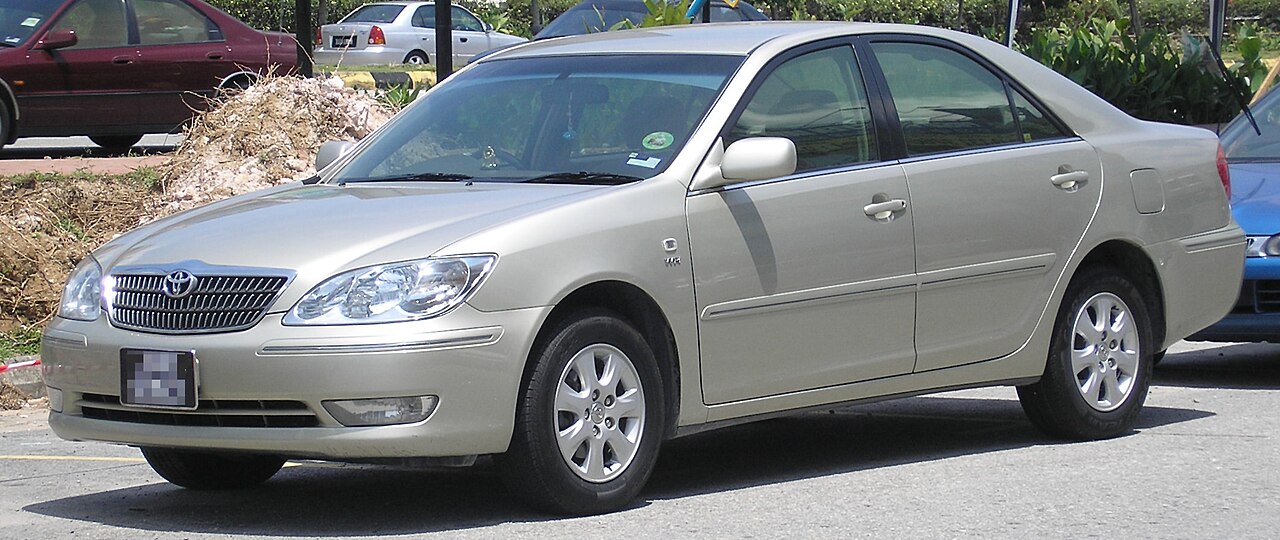
This meant that, unlike today, a sedan was not a niche or specialty purchase, it was a viable option for nearly any Indonesian car buyer, regardless of budget.
Over the following two decades, however, MPVs and later SUVs gradually became the dominant choice across all of these price brackets.
The Number Speaks for Itself
The decline did not happen overnight.
According to GAIKINDO (the Association of Indonesian Automotive Industries), Indonesia recorded 34,221 sedan wholesales in 2012, followed by 26,614 units in 2014.
By 2016, annual sedan sales had fallen to 23,323 units, prompting GAIKINDO to describe the segment as being at one of its lowest levels in years.
Fast forward to 2024, and sedan sales had dropped further to just 10,015 units, less than one-third of the level recorded in 2012.
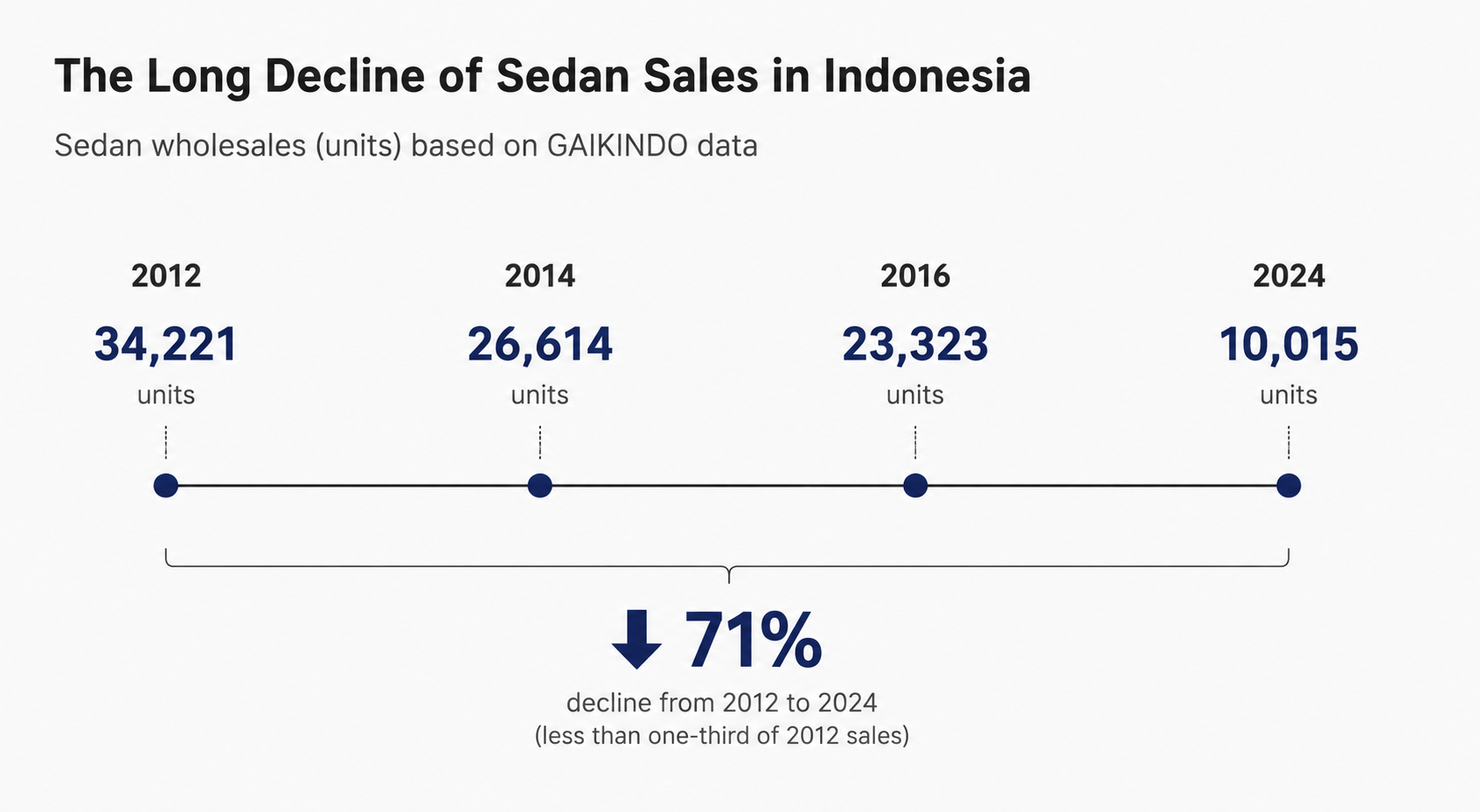
While Indonesia’s overall automotive market continued to sell hundreds of thousands of new vehicles annually, the sedan segment steadily lost its place in the market.
A Market That Changed
No single event caused the decline of the sedan.
Instead, Indonesia’s automotive market gradually shifted toward Multi Purpose Vehicles (MPVs) and Sport Utility Vehicles (SUVs).

MPVs became the preferred choice for many households because of their larger passenger capacity, while SUVs and crossovers gained popularity thanks to their higher ground clearance and increasingly diverse model offerings.
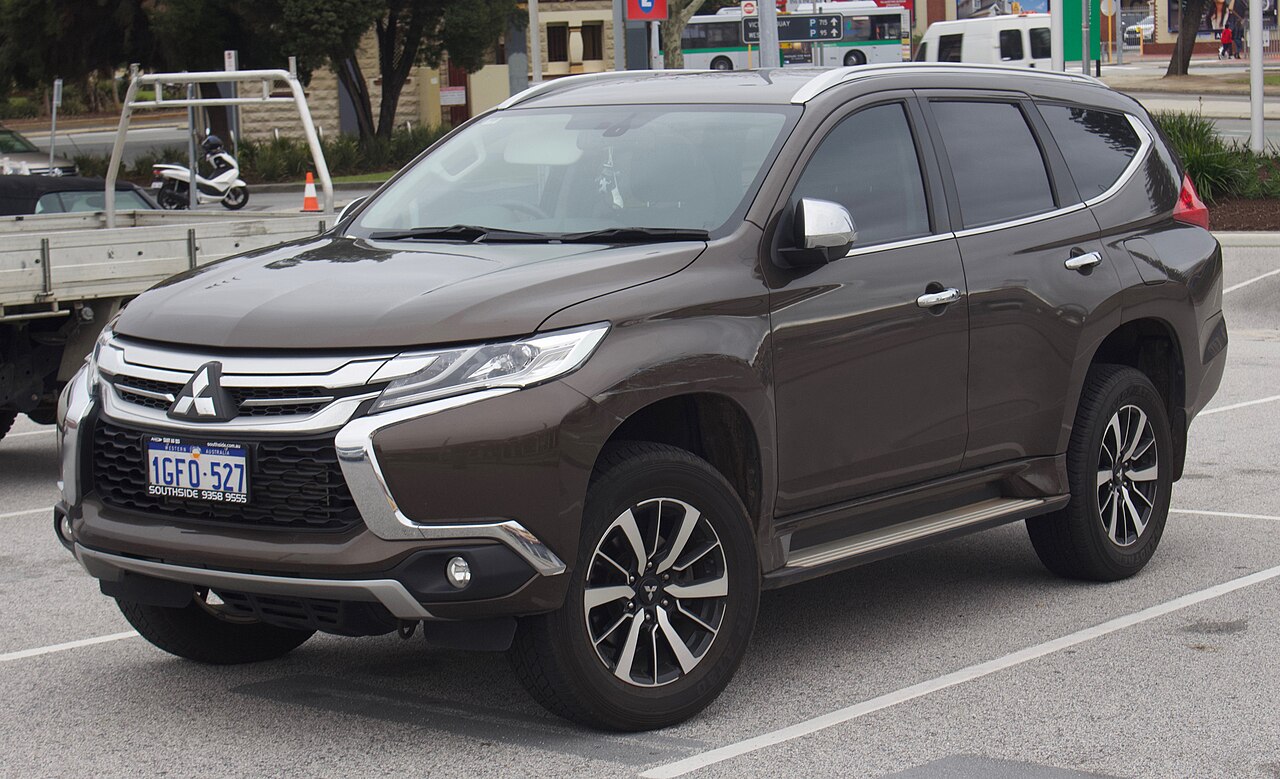
As consumer demand shifted, manufacturers responded by investing more heavily in those segments, gradually reducing the importance of sedans within their product portfolios.
Even Tax Reform Couldn’t Reverse the Trend
For many years, Indonesia’s tax structure placed conventional sedans at a relative disadvantage.
Under the previous PPnBM (Luxury Goods Sales Tax) system, passenger vehicles were taxed largely based on their body style, engine capacity, and drivetrain.
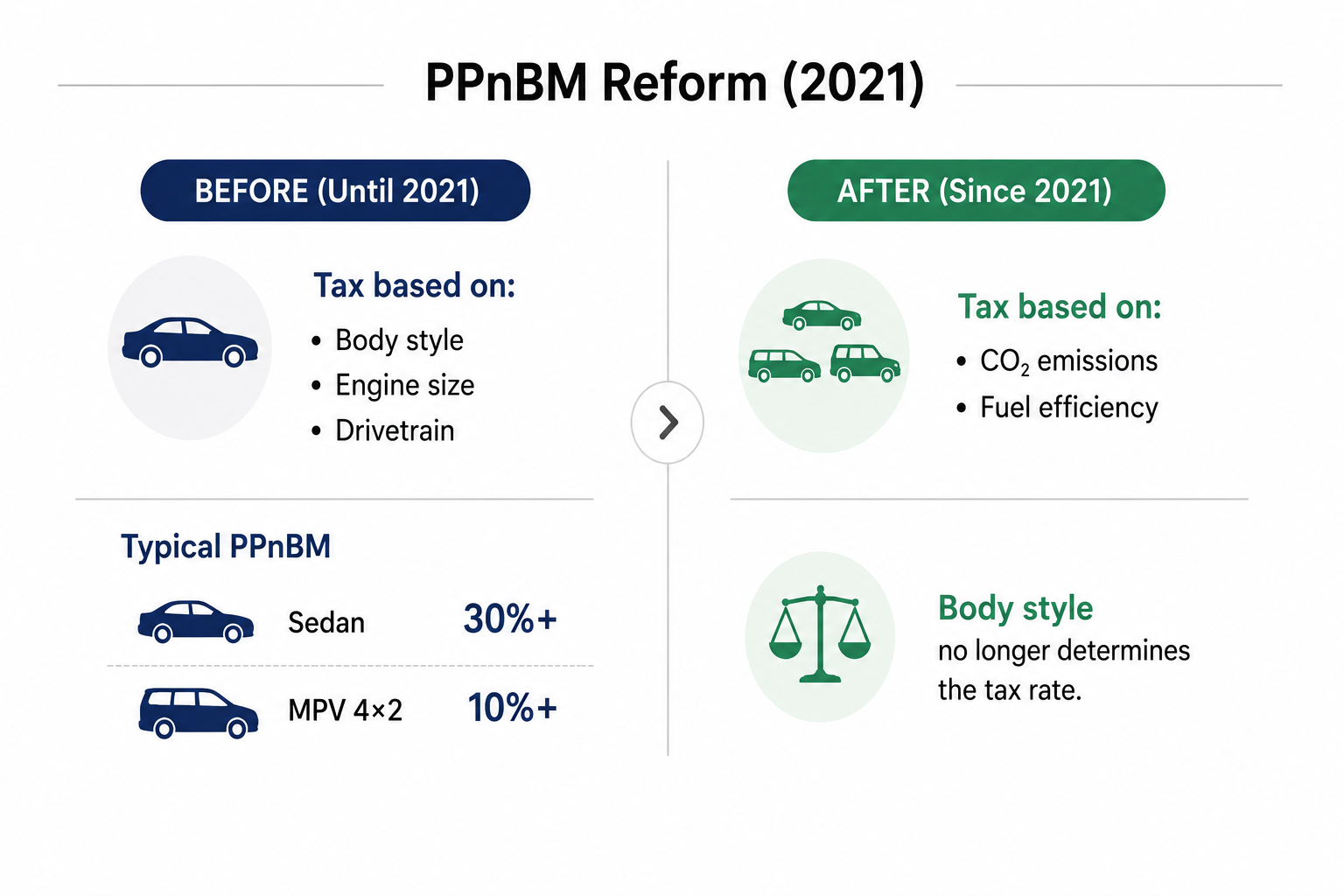
Conventional sedans generally faced PPnBM rates starting from 30%, while many comparable non sedan passenger vehicles, such as 4×2 MPVs, started from 10%. This pricing difference made sedans relatively more expensive than other vehicle types.
In October 2021, however, the government fundamentally reformed the system. PPnBM shifted to a scheme based primarily on carbon dioxide (CO₂) emissions and fuel efficiency, rather than simply the vehicle’s body style.
In theory, this created a more level playing field, as sedans were no longer automatically taxed more heavily simply because they were sedans.
Yet the market showed little sign of reversing course.
By 2024, only 10,015 sedans were sold in Indonesia, accounting for around 1.16% of all new vehicle sales. The figures suggest that while taxation may have contributed to the sedan’s earlier decline, changing consumer demand and the growing dominance of MPVs and SUVs had become far more significant factors.
Manufacturers Shifted Their Priorities
The shrinking sedan market is also reflected in the vehicles manufacturers choose to sell.
Take Honda Indonesia as an example. Its lineup is now dominated by SUVs, MPVs, and crossovers, while only a handful of sedan models remain available.
A similar trend can be seen across other manufacturers, including Toyota. As demand has shifted toward SUVs and MPVs, automakers have increasingly prioritized those segments, leaving sedans with a much smaller presence in their product portfolios.
Rather than expanding their sedan offerings, manufacturers have concentrated on the vehicle categories where consumer demand continues to grow.
A Different Automotive Market
The decline of the sedan in Indonesia was not the result of a single policy, a single manufacturer, or a single year. It was the outcome of a gradual market transformation that unfolded over more than a decade.
Today, a vehicle type that once represented one of Indonesia's most recognizable passenger car segments accounts for just over one percent of annual new car sales.
The sedan has not disappeared from Indonesia, but it is no longer one of the country's mainstream cars.