


As digital nomads increasingly look beyond crowded hotspots in search of calmer, more sustainable lifestyles, Bandar Seri Begawan (BSB) is quietly emerging as one of Southeast Asia's most intriguing alternatives. Brunei's capital may not yet appear on every remote worker's map, but its combination of safety, tax advantages, reliable infrastructure, and pristine natural surroundings is attracting professionals who value focus over frenzy. Rather than competing with Bali or Bangkok, Bandar Seri Begawan offers something distinctly different: a slower rhythm of life where productivity and well-being coexist.
A Capital Designed for Peace of Mind
For many remote workers, the biggest luxury is not beachfront nightlife but peace and security.
Bandar Seri Begawan consistently ranks among the safest cities in Asia, with exceptionally low crime rates, minimal traffic congestion, and a relaxed pace of life. Without the distractions of overtourism, digital nomads often describe the city as an ideal place to concentrate on creative projects, remote work, or entrepreneurship.
"I came for a month and stayed much longer because life here feels incredibly balanced," says British digital nomad James Clark, who has worked remotely from Brunei. "You can spend an entire day working without interruptions and finish it watching the sunset by the river."
This tranquil environment has become increasingly attractive as remote professionals seek healthier work-life balances following the global shift toward flexible employment.
Tax Benefits Meet Financial Stability
Brunei's economic environment offers another compelling advantage.
The Sultanate does not impose personal income tax, making it particularly attractive for expatriates employed by local organizations or entrepreneurs establishing businesses in the country. Meanwhile, the Brunei Dollar (BND) remains pegged at a one-to-one exchange rate with the Singapore Dollar, providing exceptional monetary stability compared with many regional currencies.
Combined with modern banking services and a high standard of public infrastructure, these factors provide financial predictability that appeals to long-term expatriates and international professionals.
Brunei also continued to see tourism recover strongly after the pandemic, welcoming approximately 678,000 international visitors in 2024, while air arrivals more than doubled compared with the previous year, reflecting renewed international confidence in the destination.
Where Ancient Rainforests Meet Modern Connectivity
One of Bandar Seri Begawan's greatest strengths lies just beyond the city limits.
Within minutes, residents can leave urban cafés and enter some of Borneo's best-preserved tropical rainforests, home to hornbills, proboscis monkeys, mangrove ecosystems, and remarkable biodiversity. Nature becomes part of everyday life rather than an occasional weekend escape.
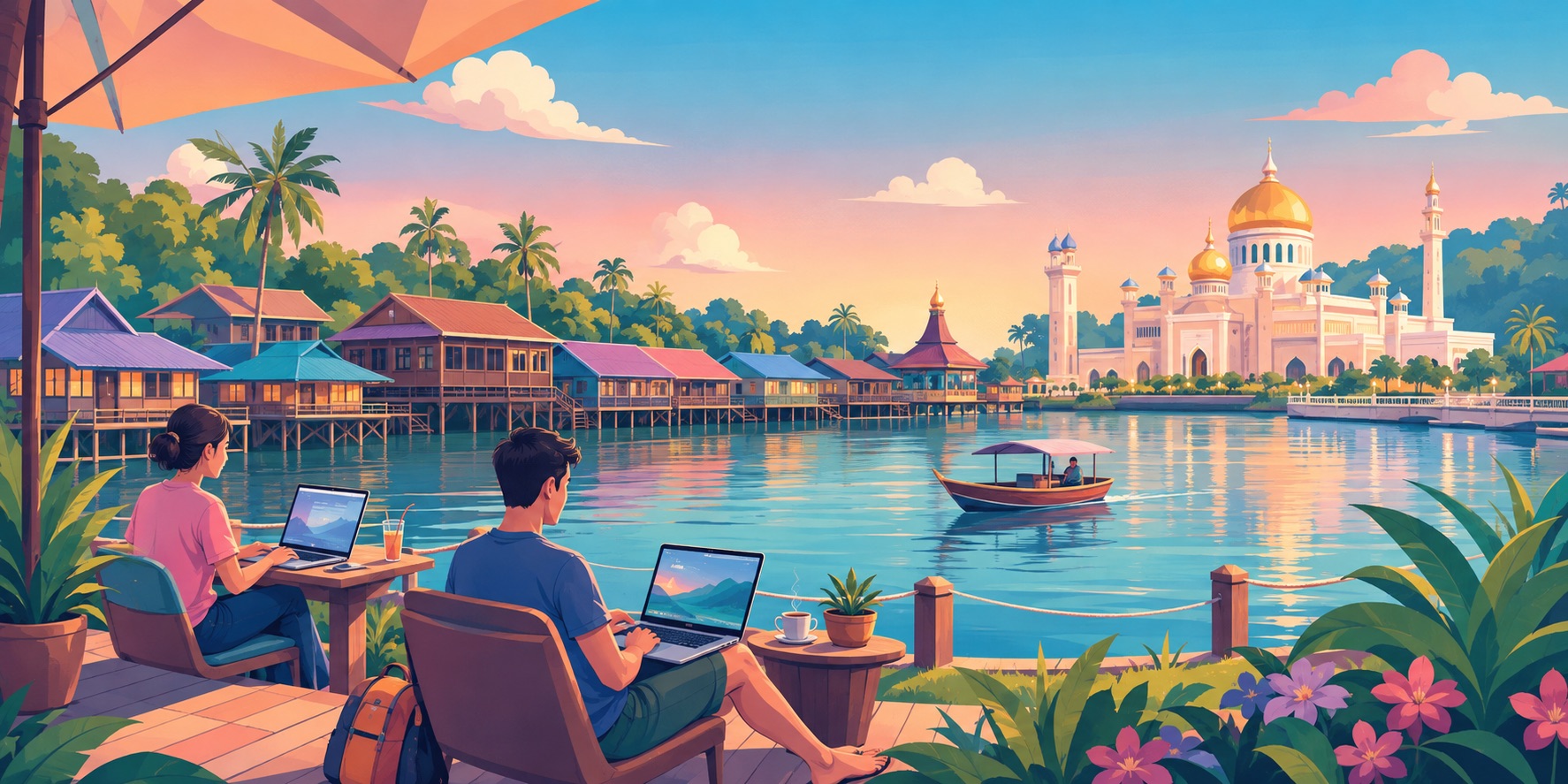
Equally captivating is Kampong Ayer, the world's largest traditional water village. Built on wooden stilts above the Brunei River, the centuries-old settlement seamlessly blends heritage with modern amenities, including electricity, schools, healthcare facilities, and internet connectivity.
"Brunei proves that modernization doesn't require sacrificing heritage," observed Dato Seri Setia Dr. Awang Haji Abdul Manaf Haji Metussin, Brunei's Minister of Primary Resources and Tourism, when highlighting the country's commitment to developing high-value, sustainable tourism while preserving its cultural and natural assets.
Understanding Brunei's Unique Lifestyle
Life in Brunei also requires embracing a distinct cultural environment.
As a nation guided by the philosophy of Melayu Islam Beraja (Malay Islamic Monarchy), public life emphasizes modesty, respect, and community values. Alcohol is not sold commercially, and nightlife revolves less around bars and clubs than cafés, family restaurants, riverside gatherings, and vibrant evening food markets.
For many expatriates, this cultural setting becomes part of Brunei's appeal rather than a limitation.
Australian consultant Emma Roberts, who previously worked in Bandar Seri Begawan, reflected: "Brunei taught me that a fulfilling social life isn't always about nightlife. Coffee shops, nature walks, and community events became my daily routine."
Small City, Regional Connectivity
Although compact, Bandar Seri Begawan remains well connected to the region.
Growing café districts such as Gadong and Kiulap provide reliable fiber-optic internet, comfortable workspaces, and an expanding café culture that increasingly serves freelancers and entrepreneurs. At the same time, Royal Brunei Airlines offers convenient direct connections to Singapore, Kuala Lumpur, Jakarta, Manila, and several regional destinations, allowing professionals to combine a quiet home base with easy business travel across Asia.
A Different Vision of Remote Living
Bandar Seri Begawan may never rival the scale of Southeast Asia's famous digital nomad hubs, and that is precisely its strength.
For remote professionals seeking security, financial stability, cultural authenticity, and immediate access to one of the world's oldest rainforests, Brunei's capital offers a refreshing alternative to the region's fast-paced destinations. As digital work continues to reshape where people choose to live, Bandar Seri Begawan is steadily carving out its own niche—not as Southeast Asia's busiest nomad hub, but as one of its most peaceful and rewarding places to call home.


