


Museums have long been recognized as guardians of history, culture, and identity. Increasingly, however, they are also being called upon to help shape the future. On 15 July 2026, this evolving role took center stage in Jakarta as Musee ID, in collaboration with the United Nations Information Centre (UNIC) Indonesia, the Jakarta Provincial Government, and AMIDA Paramita Jaya, officially launched the Mainstreaming SDGs in Museum (MSDG) program.
Held at Grha Ali Sadikin, Jakarta City Hall, the initiative marked the beginning of a five-month program running from July to November 2026 that aims to integrate the Sustainable Development Goals (SDGs) into museum governance, exhibitions, educational programming, public engagement, and institutional operations. More than simply preserving history, the program envisions museums as active partners in building a more inclusive, resilient, and sustainable future.
The launch began on a distinctly local note with a lively performance of the traditional Enjot-Enjotan Dance, a Betawi social dance rooted in the Betawi Mask tradition. Created in the 1930s by artist Kisam Jiun and his wife Kinang, the dance features energetic paired movements inspired by Betawi martial arts while blending dance, music, vocals, and poetic rhymes. Recognized as part of Indonesia's Intangible Cultural Heritage, the performance symbolized the event's message that cultural heritage remains deeply relevant in addressing contemporary global challenges.
Museums and the SDGs: Connecting Heritage with the Future
Adopted unanimously by all 193 United Nations Member States in 2015, the Sustainable Development Goals comprise 17 interconnected global goals designed to eradicate poverty, protect the planet, and promote peace and prosperity for all by 2030. Built around the guiding principle of "Leave No One Behind," the SDGs encompass social development, economic growth, environmental sustainability, and good governance through 169 measurable targets.
While the goals are often associated with governments and international organizations, the launch emphasized that achieving them requires participation from every sector—including museums.
Rather than treating sustainability as a separate theme, the MSDG program encourages museums to embed SDG principles throughout their institutions—from strategic planning and collection management to visitor services, educational activities, building operations, partnerships, and impact evaluation. The approach reflects a growing international consensus that museums can contribute directly to goals such as Quality Education (SDG 4), Sustainable Cities and Communities (SDG 11), Climate Action (SDG 13), Reduced Inequalities (SDG 10), Responsible Consumption and Production (SDG 12), and Partnerships for the Goals (SDG 17).
Museums as Catalysts for Social Transformation
Unable to attend the launch due to an overseas mission in Europe, Miklos Gaspar, Director of the United Nations Information Centre (UNIC) Indonesia, addressed participants through a recorded video message. He was represented in person by Siska Widyawati, Deputy Director of UNIC Indonesia.
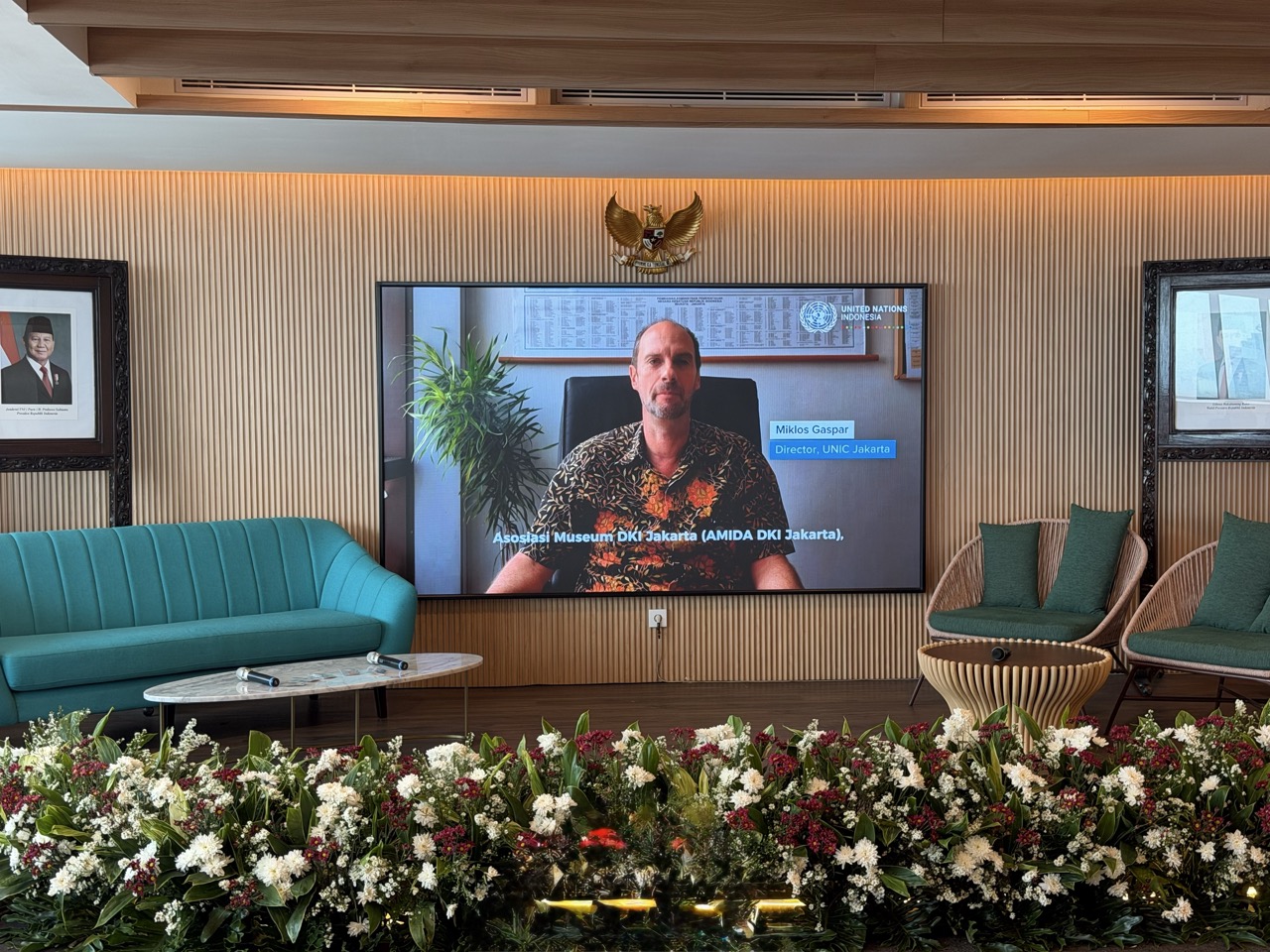
In his message, Gaspar underscored that museums are uniquely positioned to translate global aspirations into meaningful local action.
"Museums have enormous potential to inspire communities and transform knowledge into action. The Sustainable Development Goals require participation from every sector, and museums can play a vital role in connecting people with these global ambitions."
Representing Musee ID, Nofa Farida Lestari, Executive Director of Musee ID and Board Director of ICOM CECA, emphasized that museums today must move beyond their traditional roles.
"Museums are no longer simply places to preserve collections. They are spaces for dialogue, innovation, collaboration, and community empowerment. By mainstreaming the SDGs, museums can become agents of change that help shape a more sustainable society."
Throughout the discussions, speakers highlighted an important paradigm shift in museology—from institutions centered primarily on collections toward institutions centered on communities. While preserving collections remains fundamental, museums today are increasingly expected to connect history with contemporary issues, encourage dialogue rather than one-way communication, and invite communities to become active participants rather than passive visitors.
Building Sustainable Museums from the Inside Out
The keynote presentation by Yiyok T. Herlambang, Chairman of AMIDA Jakarta Paramita Jaya, explored how museums can embed sustainability throughout their institutional ecosystems.
He explained that mainstreaming the SDGs means integrating sustainable development principles into museum policies, collections, exhibitions, visitor services, operational management, partnerships, and evaluation frameworks rather than limiting sustainability to temporary exhibitions or awareness campaigns.
Yiyok also outlined practical transformation strategies, encouraging museums to identify their institutional strengths, map community needs, determine the most relevant SDGs, integrate them into programs and operations, build partnerships across sectors, and measure long-term social impact.
According to his presentation, museums contribute not only by preserving heritage but also by fostering public understanding, encouraging behavioral change, and generating positive environmental and social outcomes.
He further emphasized that museums possess several unique assets that position them as strategic contributors to sustainable development: trusted public spaces, rich collections and knowledge, compelling storytelling, extensive community networks, and the ability to inspire participation through cultural experiences.
Learning from Museum Bahari's SDGs Corner
One of the strongest examples highlighted during the launch was Museum Bahari in North Jakarta, which has already begun integrating sustainability into its programming through the SDGs Corner, developed in partnership with UNIC Indonesia.
Earlier this year, Musee ID and Museum Bahari transformed part of the museum into a collaborative learning space dedicated to the Sustainable Development Goals. Rather than serving merely as an exhibition area, the SDGs Corner functions as an interactive educational hub where visitors can explore environmental stewardship, maritime heritage, sustainable tourism, community participation, and climate resilience through exhibitions, workshops, discussions, and public activities.
The initiative demonstrates how museums can localize global goals by connecting them directly to Indonesia's own cultural heritage and community experiences. It also illustrates how museum buildings themselves can reflect sustainability through inclusive programming, environmentally responsible operations, and partnerships that generate lasting community impact.
The Museum Bahari model aligns closely with the implementation framework presented during the MSDG launch, which encourages museums to identify the SDGs most relevant to their collections, develop inclusive programs with local communities, adopt environmentally responsible operational practices, and collaborate across sectors to expand their social impact.
From Preservation to Participation
Speakers throughout the event stressed that museums are increasingly expected to become active civic spaces where heritage meets contemporary issues.
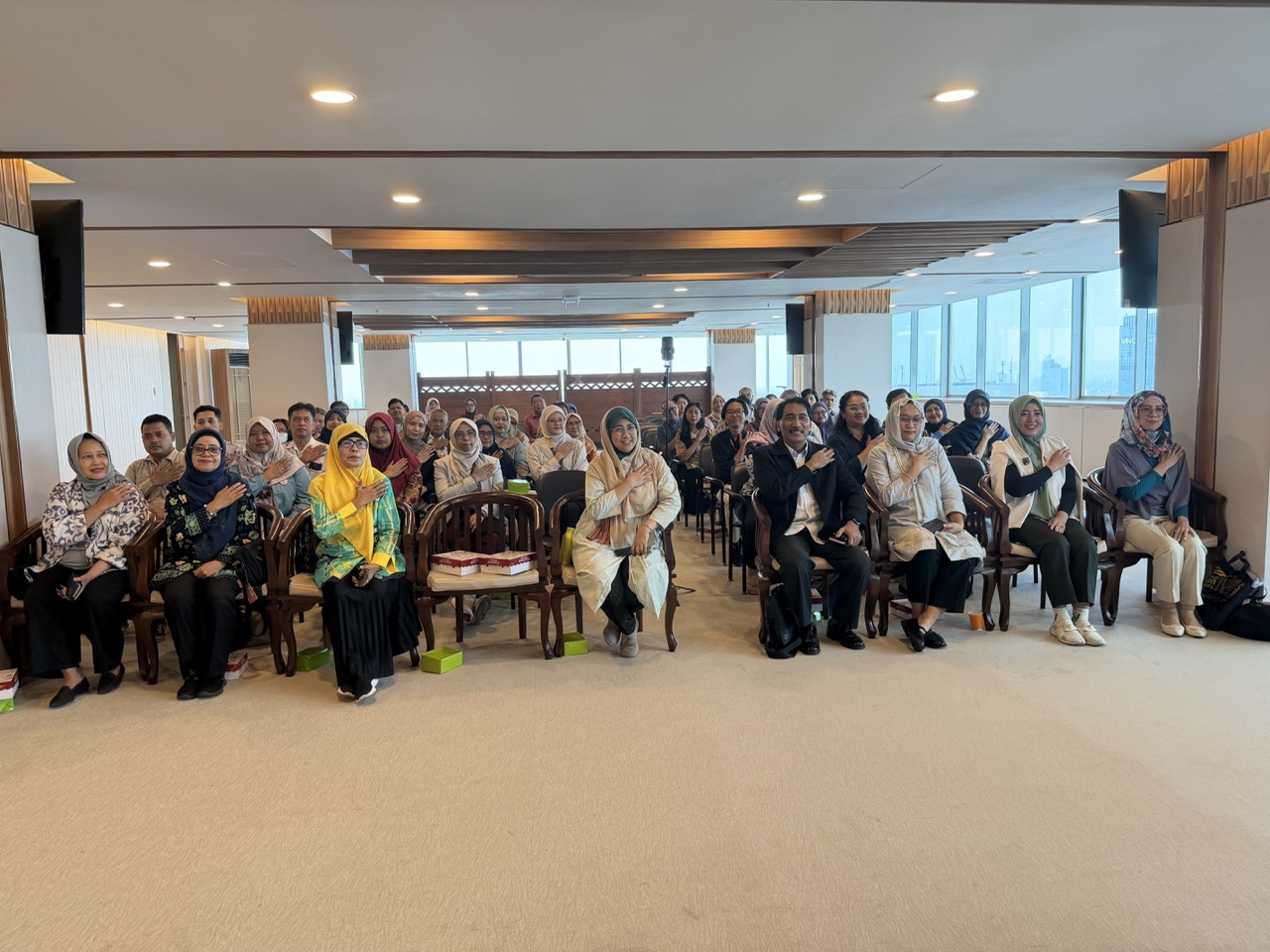
Examples shared during the discussions included museums supporting lifelong learning, promoting climate literacy, providing safe spaces for marginalized communities, encouraging sustainable tourism, strengthening local creative economies, facilitating interdisciplinary research, and implementing environmentally responsible management practices. International museum frameworks were also presented as practical references for museums embarking on this transformation.
Participants agreed that museums are uniquely positioned to make complex global challenges accessible to local audiences by connecting historical narratives with present-day realities and future aspirations.
Recognizing Shared Commitment
The event concluded with a symbolic pinning ceremony led by Siska Widyawati, who presented SDG pins to each speaker in recognition of their commitment to advancing sustainable development through Indonesia's museum sector.
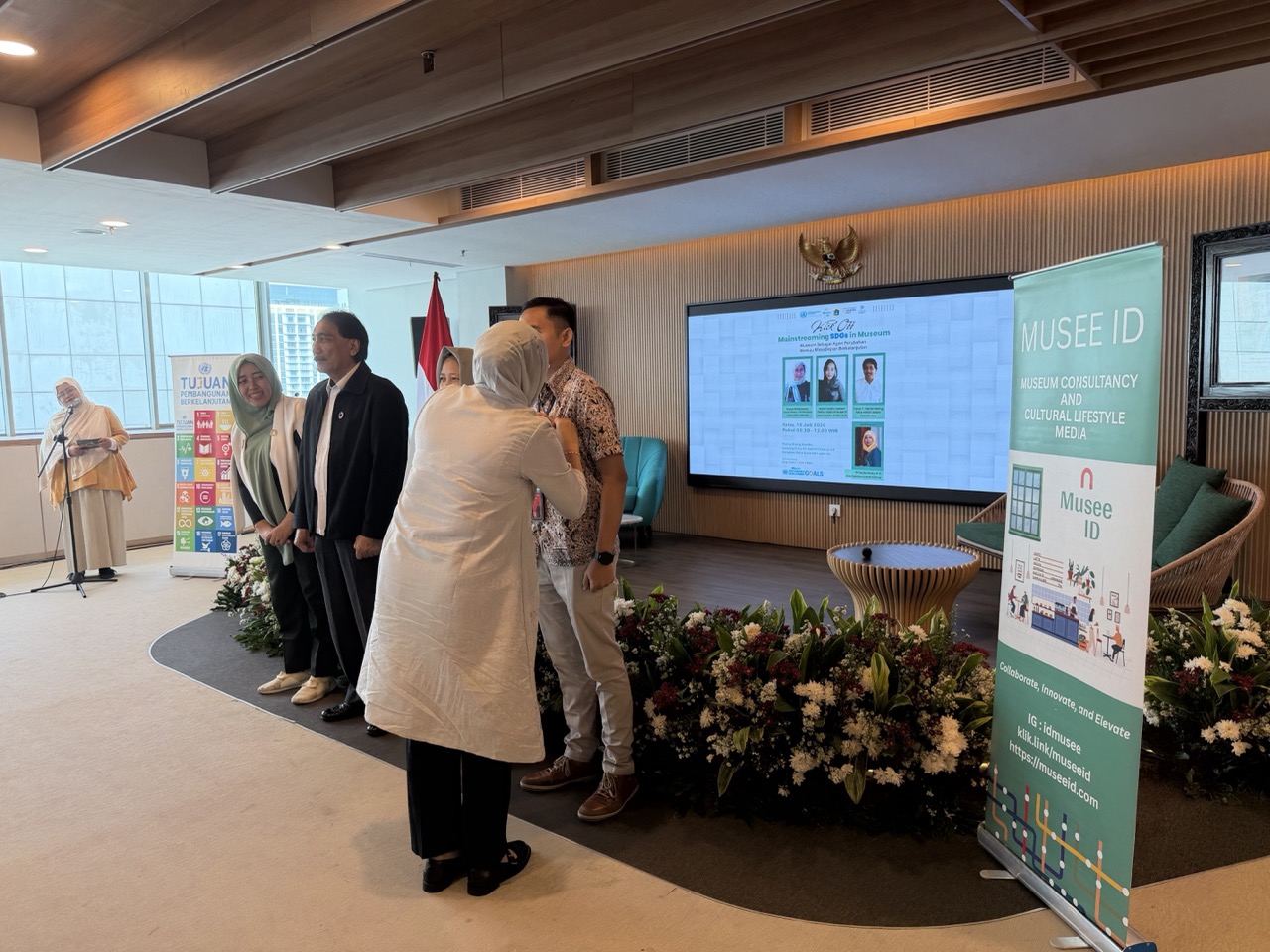
The ceremony reflected the collaborative spirit that defines the MSDG program. By bringing together international organizations, museum professionals, government agencies, educators, and civil society, the initiative seeks to build a stronger museum ecosystem capable of contributing meaningfully to Indonesia's sustainable development agenda.
As the Mainstreaming SDGs in Museum program continues through the remainder of 2026, it offers a compelling vision of museums that not only preserve the nation's past but also help communities understand today's challenges and inspire collective action for tomorrow. In doing so, Indonesia's museums are redefining themselves—not simply as keepers of history, but as active agents of sustainable change.


