


As Southeast Asia continues to attract a growing community of digital nomads, Cambodia has quietly emerged as one of the region's most appealing destinations for remote professionals seeking affordability, flexibility, and cultural richness. While neighboring countries have introduced stricter visa policies, Cambodia has embraced long-term visitors through accessible visa options, a low cost of living, and an increasingly vibrant creative economy. From the energetic streets of Phnom Penh to the timeless temples of Siem Reap and the riverside tranquility of Kampot, the Kingdom is offering a lifestyle that blends productivity with exploration.
Phnom Penh: Southeast Asia's Rising Urban Workspace
Cambodia's capital has transformed into a dynamic business and innovation hub. Along the banks of the Tonlé Sap and Mekong rivers, restored French colonial buildings stand alongside modern office towers, luxury condominiums, and an expanding collection of co-working spaces and specialty cafés.
Areas such as BKK1, Toul Kork, and Factory Phnom Penh have become magnets for entrepreneurs, freelancers, and startup founders seeking reliable fiber-optic internet and an increasingly international business environment. International schools, healthcare facilities, and growing foreign investment have also made Phnom Penh an attractive base for long-term expatriates.
Tourism has rebounded strongly as Cambodia welcomed more than 6.7 million international visitors in 2025, approaching pre-pandemic levels and contributing significantly to the country's economic recovery.
As Cambodian Prime Minister Hun Manet remarked while promoting investment and innovation:
"Cambodia is committed to creating an open, competitive, and investor-friendly environment that welcomes talent, innovation, and sustainable economic growth."
Siem Reap: Where Creativity Meets Ancient Heritage
If Phnom Penh represents Cambodia's business heart, Siem Reap has become its creative soul.
Long known as the gateway to the UNESCO World Heritage-listed Angkor Archaeological Park, the city has evolved into a flourishing destination for artists, photographers, writers, filmmakers, and remote professionals looking for a slower pace of life.
Stylish cafés overlooking tropical gardens, boutique hotels converted into co-working spaces, wellness studios, cycling routes, and thriving artisan markets have reshaped Siem Reap beyond its traditional tourism identity. After finishing work, residents can explore centuries-old Khmer temples, attend Apsara dance performances, or browse galleries showcasing Cambodia's contemporary art scene.
British travel writer and long-term Cambodia resident Nick Ray once described Siem Reap as:
"A place where ancient history and modern creativity comfortably exist side by side."
That balance continues to attract remote workers searching for inspiration as much as connectivity.
Kampot: Slow Living Along Cambodia's Southern Coast
Further south, Kampot offers a completely different lifestyle.
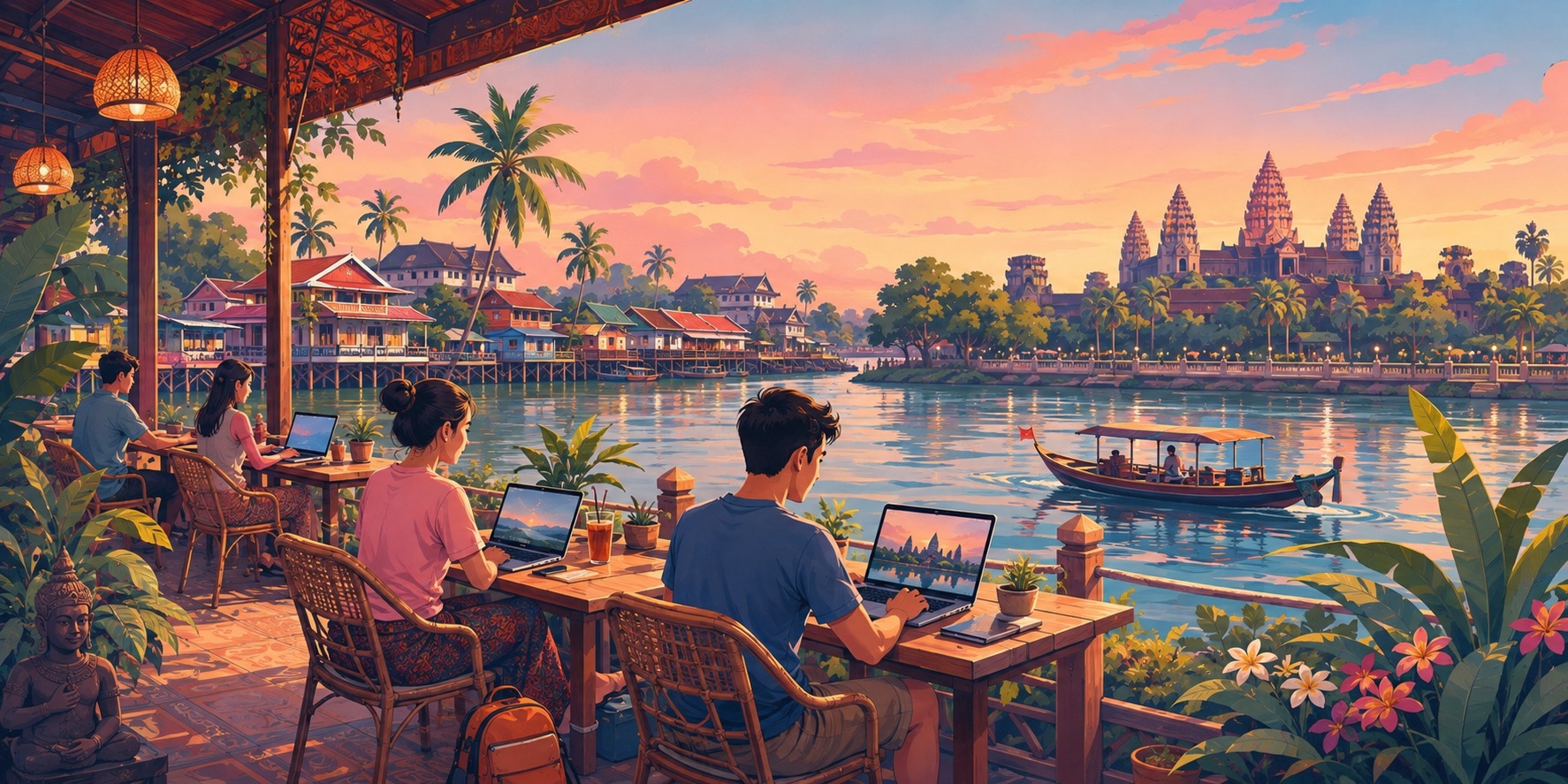
Nestled beside the Praek Tuek Chhu River and overlooked by the Elephant Mountains, the town has become one of Cambodia's fastest-growing slow-travel destinations. Restored colonial shop houses, riverside cafés, eco-lodges, and world-famous Kampot pepper plantations have created a welcoming environment for freelancers who value nature over nightlife.
Reliable Wi-Fi now reaches many cafés, guesthouses, and riverside accommodations, allowing digital professionals to spend mornings working before kayaking, hiking through Bokor National Park, or exploring nearby salt fields and coastal villages.
Its relaxed atmosphere has helped Kampot develop a close-knit international community while preserving its distinctly Cambodian character.
Easy Visas, Affordable Living, and Everyday Convenience
One of Cambodia's greatest advantages remains its accessibility.
The country's Ordinary (E-Class) Visa allows foreigners to extend their stay for months or even a full year without the complex sponsorship requirements common elsewhere in the region. Combined with Cambodia's dual-currency system—where both the Cambodian Riel and the US Dollar are widely accepted—daily life becomes remarkably straightforward for international residents.
Compared with many regional capitals, accommodation, dining, transportation, and co-working memberships remain highly affordable, enabling freelancers and entrepreneurs to enjoy a comfortable lifestyle while keeping business expenses low.
Frequent international flights connecting Phnom Penh and Siem Reap with Bangkok, Singapore, Kuala Lumpur, Ho Chi Minh City, and other regional hubs further enhance Cambodia's appeal as a base for mobile professionals.
A New Chapter for Cambodia's Global Community
Cambodia's appeal extends beyond affordable living. It offers remote workers an opportunity to immerse themselves in one of Southeast Asia's richest cultural landscapes while enjoying modern conveniences, welcoming communities, and increasing international connectivity.
Whether building a startup in Phnom Penh, finding creative inspiration beneath the shadows of Angkor Wat in Siem Reap, or embracing riverside slow living in Kampot, digital nomads are discovering that Cambodia is quietly becoming one of Southeast Asia's most rewarding destinations for living, working, and exploring.


