


For many digital nomads, Southeast Asia is synonymous with affordable beach towns and laid-back island living. Singapore offers a different proposition altogether. Here, productivity comes first, supported by world-class infrastructure, exceptional safety, and one of the world's most competitive business environments. While it is considerably more expensive than many neighboring destinations, Singapore continues to attract entrepreneurs, technology founders, investors, consultants, and remote executives who value efficiency over low living costs.
From the gleaming skyline of the Downtown Core to the charming streets of Tiong Bahru and the heritage-rich neighborhoods of Katong and Joo Chiat, Singapore demonstrates that remote work can be both professionally rewarding and culturally enriching.
Downtown Core: Asia's Business Command Center
Few places in Asia embody modern business quite like Singapore's Downtown Core.
Surrounded by Marina Bay Sands, Raffles Place, and the Central Business District, the area is home to multinational corporations, venture capital firms, fintech companies, and regional headquarters serving markets across Asia-Pacific.
For remote professionals, premium coworking brands such as The Great Room, JustCo, and WeWork provide more than office space. They function as networking ecosystems where entrepreneurs, investors, and executives regularly connect over business events, startup showcases, and innovation forums.
Singapore consistently ranks among the world's fastest countries for fixed broadband speeds, while nationwide 5G coverage and one of the globe's most efficient public transport systems allow professionals to work virtually anywhere without interruption.
Technology investor and entrepreneur Naval Ravikant once described Singapore as "one of the best-run places in the world." That reputation continues to resonate with global professionals seeking stability, predictability, and opportunity.
Tiong Bahru: Where Creativity Finds Its Space
Just minutes from the financial district lies an entirely different side of Singapore.
Tiong Bahru, one of the city's oldest residential neighborhoods, has transformed into a creative enclave while preserving its distinctive Art Deco architecture dating back to the 1930s.
Independent cafés, boutique bookstores, artisan bakeries, galleries, and leafy streets have made the district especially attractive to writers, designers, architects, photographers, and entrepreneurs looking for a slower pace without sacrificing urban convenience.
The famous Tiong Bahru Market offers another reminder that Singapore's celebrated hawker culture remains an integral part of everyday life, allowing remote workers to enjoy Michelin-recognized local dishes at surprisingly affordable prices.
Katong: Heritage Meets Coastal Living
On Singapore's eastern coastline, Katong and neighboring Joo Chiat present yet another lifestyle.
Known for their beautifully restored Peranakan shophouses painted in vibrant pastel colors, the neighborhoods blend rich cultural heritage with modern cafés, boutique hotels, creative studios, and independent restaurants.
Remote workers often spend mornings working from laptop-friendly cafés before cycling or jogging along nearby East Coast Park, one of Singapore's most beloved recreational spaces stretching beside the sea.
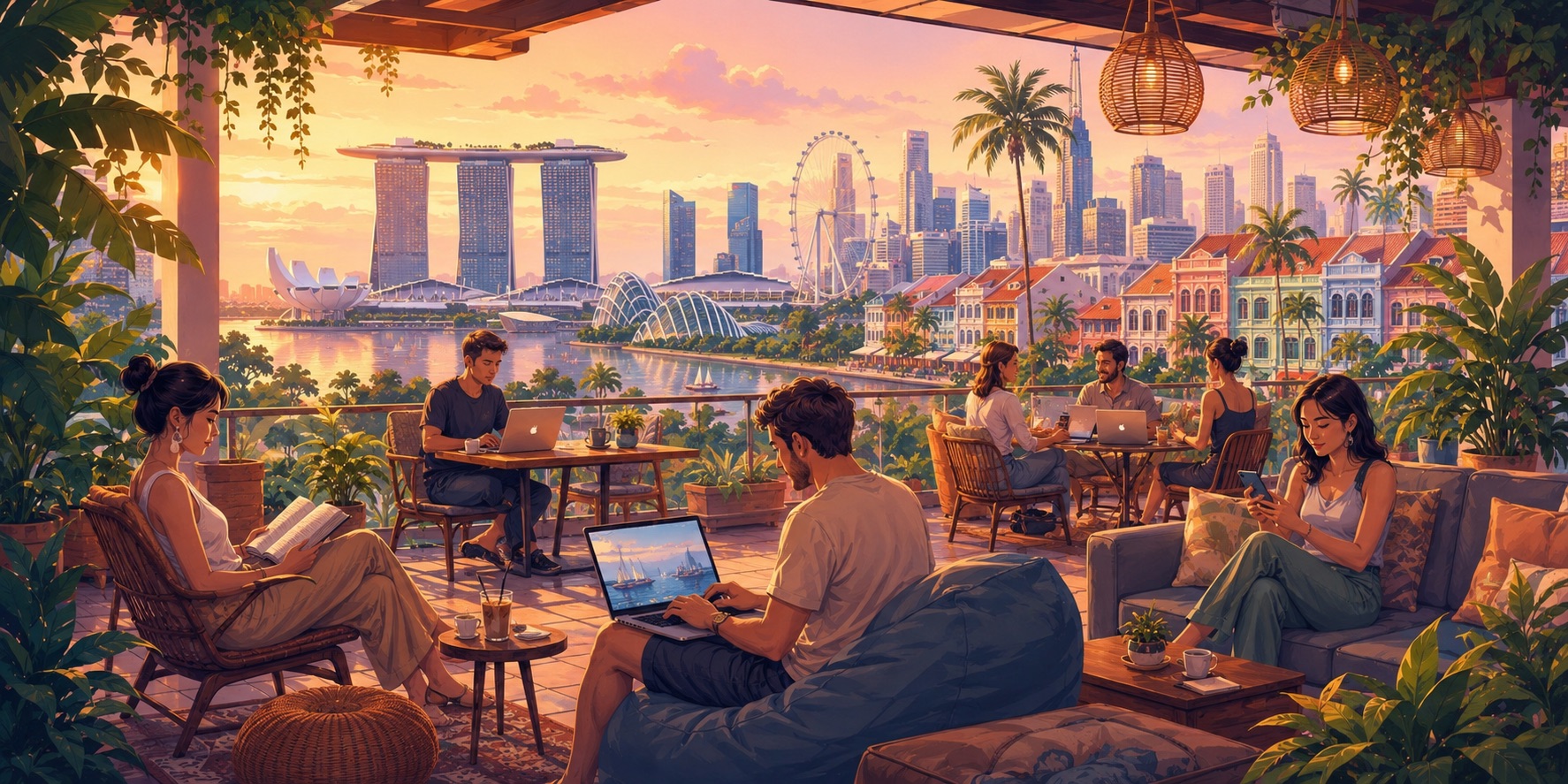
Katong has become particularly popular among expatriate families and professionals seeking a stronger sense of community while remaining only a short MRT journey from the city center.
Built for Global Professionals
Singapore's greatest competitive advantage lies in how effortlessly daily life functions.
English serves as the primary language of business, education, and government, making everything from opening bank accounts to signing apartment leases remarkably straightforward for newcomers.
For highly skilled foreign professionals, immigration pathways such as the Employment Pass and the Overseas Networks & Expertise (ONE) Pass provide opportunities for longer-term residence and employment. While Singapore does not currently offer a dedicated digital nomad visa, many entrepreneurs and executives legally establish themselves through these professional immigration routes.
The city's extensive MRT network connects Downtown, Tiong Bahru, and Katong within minutes, allowing residents to enjoy distinctly different neighborhoods without lengthy commutes.
A Global City That Continues to Grow
Singapore's international appeal remains exceptionally strong. The Singapore Tourism Board reported 16.5 million international visitor arrivals in 2024, generating approximately S$29.8 billion in tourism receipts as the city-state continued its robust post-pandemic recovery.
At the same time, Singapore remains one of Asia's largest expatriate destinations. According to official statistics, nearly 1.9 million non-residents live and work in the country, reflecting its position as a global center for finance, technology, biomedical sciences, logistics, and innovation.
Minister for Sustainability and the Environment Grace Fu has frequently emphasized that Singapore's continued success depends on remaining "a city that is connected to the world and open to global talent." That openness continues to strengthen the country's appeal among internationally mobile professionals.
The Cost of Excellence
Singapore's premium lifestyle naturally comes with higher costs. Housing, dining, transportation, and office space generally exceed prices found elsewhere in Southeast Asia.
Yet many remote professionals view those expenses as investments rather than compromises. Reliable infrastructure, outstanding healthcare, political stability, personal safety, clean public spaces, and exceptional international connectivity allow them to focus entirely on work and quality of life.
Weekend escapes to neighboring Malaysia, Indonesia, Thailand, Vietnam, or the Philippines further reinforce Singapore's position as an ideal regional base for professionals working across Asia.
A Different Kind of Digital Nomad Destination
Singapore was never designed to be Southeast Asia's cheapest destination. Instead, it has become one of its most sophisticated.
Here, remote work unfolds amid futuristic skylines, heritage neighborhoods, Michelin-recognized hawker centers, lush urban parks, and one of the world's most efficient transport systems. It is a city where business opportunities, cultural diversity, and everyday convenience intersect seamlessly.
For digital nomads seeking a premium lifestyle supported by world-class infrastructure and limitless regional connections, Singapore continues to set the benchmark—not only for Asia, but for the future of remote work itself.


