Active volcanoes are naturally dangerous zones due to unpredictable eruptions and toxic gas emissions. People generally avoid climbing to the top of an erupting mountain for safety reasons.
Mount Bromo shows a different pattern. This active volcano sits around the border area of Probolinggo and Pasuruan regencies in East Java Province.
The smoking crater serves as the regular venue for a massive annual religious pilgrimage. Worshipers from the Tenggerese community travel to the summit every year.
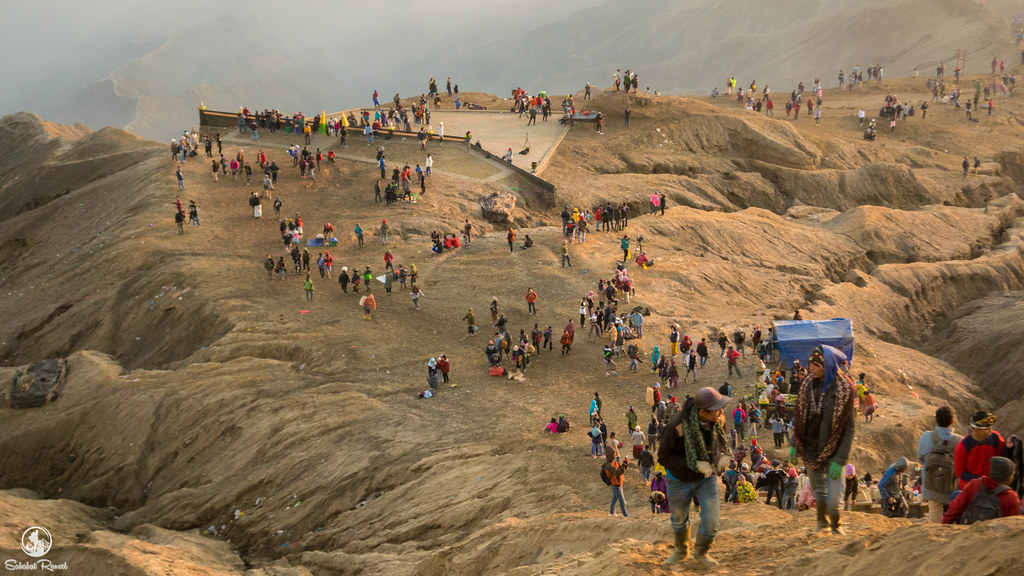
Tenggerese locals belong to an indigenous Hindu religious ethnic group. The community lives in the isolated highlands surrounding the mountain area.
The pilgrims do not stand at a safe distance at the mountain base. Worshippers gather directly on the narrow and slippery crater rim.
People walk right up the volcanic edge during the traditional ceremony called Yadnya Kasada. They stand amidst thick sulfur smoke to pray and deliver offerings inside the open abyss.
A Centuries-Old Promise to the Mountain
The ritual takes place every year on the 14th day of the Kasada month according to the traditional Tenggerese calendar. This sacred peak night usually falls around June or July during a full moon.
Historical roots of Yadnya Kasada date back to the 15th century during the fall of the Majapahit Empire. Ancestors of the Tenggerese people fled to the isolated mountains of East Java to preserve their culture.
A childless royal couple named Roro Anteng and Joko Seger ruled the mountain community during that period. The rulers climbed the volcanic heights to plead with the mountain gods for offspring.
Spiritual entities granted the royal request under one strict condition. The couple received twenty-five children but had to sacrifice their last child to the crater.
Tenggerese descendants carry on the tradition today as a mandatory ancestral debt. The ritual reinforces their identity and connection to the sacred highlands.
Hurling Livestock into the Volcanic Wind
Highland farmers spend days preparing specific goods from their agricultural plots around the Bromo region. Worshippers do not buy commercial items for the ritual.
Onions, cabbages, and potatoes are bundled neatly into organic baskets. Families also bring valuable livestock including goats and live chickens up the steep path.
The entire procession moves toward the smoking summit in the middle of the night. Pilgrims pitch their goods directly into the roaring, heated depths.
Paper money is thrown alongside the fresh produce into the volcanic wind. The action represents a literal return of wealth to the earth that sustains the mountain farmers.
Catching Blessings on Precarious Ledges
An unusual human dynamic occurs along the steep interior walls of the crater. A separate group of residents from nearby villages stands inside the smoking slope.
Local net catchers balance on precarious ledges while holding large handmade nets. The net owners spend the entire night attempting to catch the falling items before they hit the bottom.
The activity appears highly dangerous to outside spectators watching from the rim. The internal group does not see the practice as a reckless stunt.
Tenggerese pilgrims view the act of throwing as a necessary spiritual sacrifice. The net catchers consider the retrieved food and cash as a practical blessing for their households.
During the rituals, the Bromo Tengger Semeru National Park management closes off the entire volcanic area from tourists completely for four days during the peak of Yadnya Kasada.
The temporary shutdown honors the sacred tradition and gives the Tenggerese community full space to pray. They also clean up the mountain area from the remnants of the ceremony activities.