Istanbul is world-famous for its grand historical landmarks, most notably the ancient Hagia Sophia. Yet beyond its majestic architecture, the city also offers a surprisingly charming attraction on its streets. It is the extraordinary friendliness toward street cats.
Istanbul is home to an estimated population of 250,000 street cats in 2025. Such a visible presence in public spaces has earned Istanbul the affectionate global moniker, Catstanbul.
For locals and visitors alike, the cats are not treated as pests or unwanted strays, but as recognized members of everyday urban life.
A Cat-Friendly City
Interactions between residents and cats can be seen in almost every corner of Istanbul. Cats freely roam and rest on a car, inside restaurants, train stations, cafes, and historic sites.
Locals communally provide food bowls, fresh water, and makeshift shelters in front of their homes and businesses. Such communal care is driven by empathy that has become second nature to the residents.
The Istanbul Metropolitan Municipality (İstanbul Büyükşehir Belediyesi) responds to the cat population through systematic physical infrastructure. City authorities provide a network of kedi evi, or small wooden cat houses. Such shelters are officially installed in public parks, mosque courtyards, and pedestrian zones.
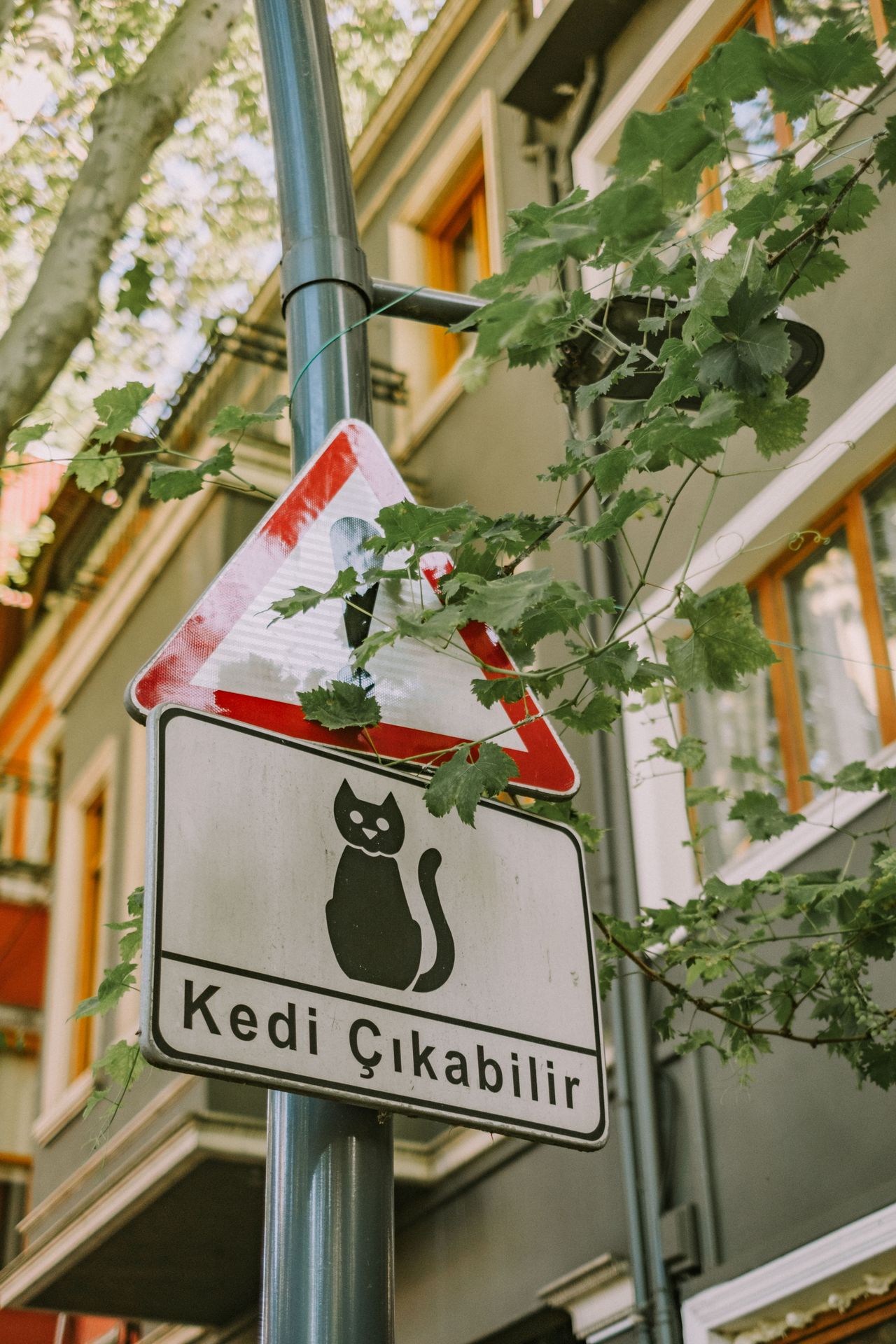
The integration of cats into the urban layout is also evident on the streets. Several districts, such as Kadıköy and coastal areas, have installed special traffic signs. Featuring a cat silhouette, the signs warn drivers to reduce speed.
Protected by Law
Support for street cats is backed by Turkey’s national legal framework through the Animal Protection Law (Animal Protection Law No. 5199). The regulation prohibits the arbitrary killing, abuse, or relocation of street animals without medical justification.
National law mandates local governments to implement a trap-neuter-vaccinate-return (TNVR) program in original street habitats.
In Istanbul, the law effectively turns public streets into protected living spaces for cats. At the neighborhood level, the residents can closely track city veterinary workers during sterilization rounds. If a cat is taken for vaccination, they can make sure the city veterinary workers bring the animal back to its original street.
An Intangible Cultural Heritage
The attitude of Istanbul's residents toward cats has deep historical and cultural roots.
In a 2019 study published in the journal History and Anthropology, researcher Kimberly Hart explains that the daily practice of feeding and caring for street cats represents a form of intangible cultural heritage.
Such care functions as an embodied memory passed down since the Ottoman era, which began when the empire established its capital in Istanbul in the 15th century.
Residents known as hayvan sevenler (animal lovers) care for cat colonies as an established social tradition of compassion.
Since the Islamic-influenced Ottoman rule, cats were valued for protecting wooden residential quarters and library manuscript collections from rodents. Cats also hold a special status as ritually clean animals, which necis or impurity does not apply to them.
The religious and intangible culture allows cats to be welcomed into public spaces, heritage sites like Hagia Sophia, and places of worship like mosques.
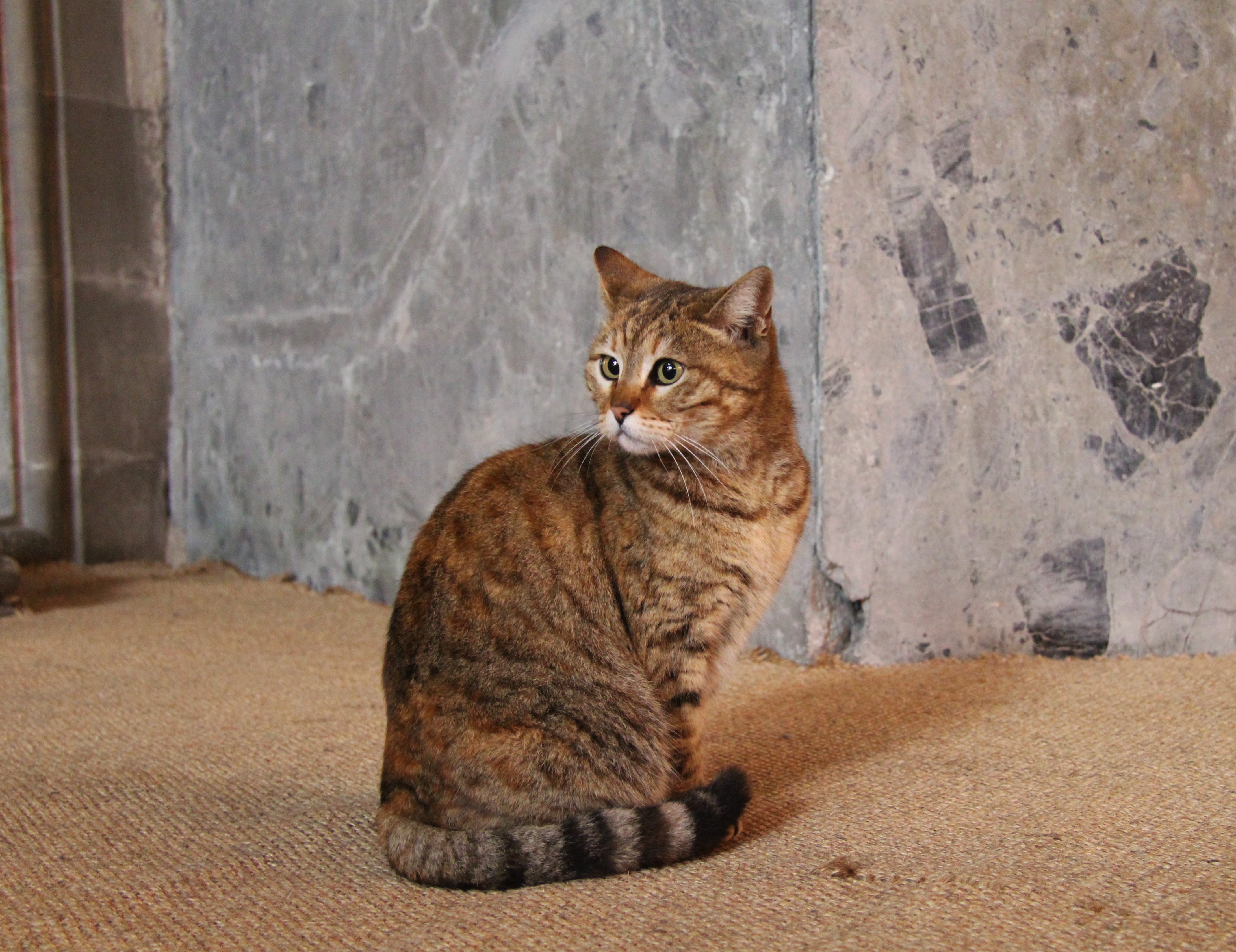
The most famous example was Gli, the cross-eyed cat who made Hagia Sophia her home for years. She gained widespread attention during official international visits to the site and remained a fixture there until her death on November 7, 2020.
Reference:
Hart, K. (2019). Feeding street cats and dogs in Istanbul: Intangible cultural heritage and the embodiment of compassion. History and Anthropology, 30(5), 576–589. https://doi.org/10.1080/02757206.2019.1612809