


After more than a decade of silence, the control room of Indonesia’s TRIGA 2000 research reactor is active again.
The National Research and Innovation Agency’s decision to restart the historic Bandung facility after roughly 14 years marks more than the return of a laboratory. It reflects a wider regional shift as Southeast Asian governments reconsider nuclear technology for medical research, industrial development, energy security, and eventually, low-carbon electricity.
Bandung Restarts a Scientific Legacy
Commissioned under President Sukarno in 1965, the Bandung reactor is one of Indonesia’s three research reactors, alongside the Kartini reactor in Yogyakarta and the RSG G.A. Siwabessy multipurpose reactor in Serpong.
Although known as TRIGA 2000 because of its upgraded design capacity, the Bandung facility is currently licensed by Indonesia’s Nuclear Energy Regulatory Agency (BAPETEN) to operate at up to 1,000 kilowatts. Its refurbishment covered the reactor building, cooling system, secondary pumps, cooling tower, ventilation system, and other safety-related components.
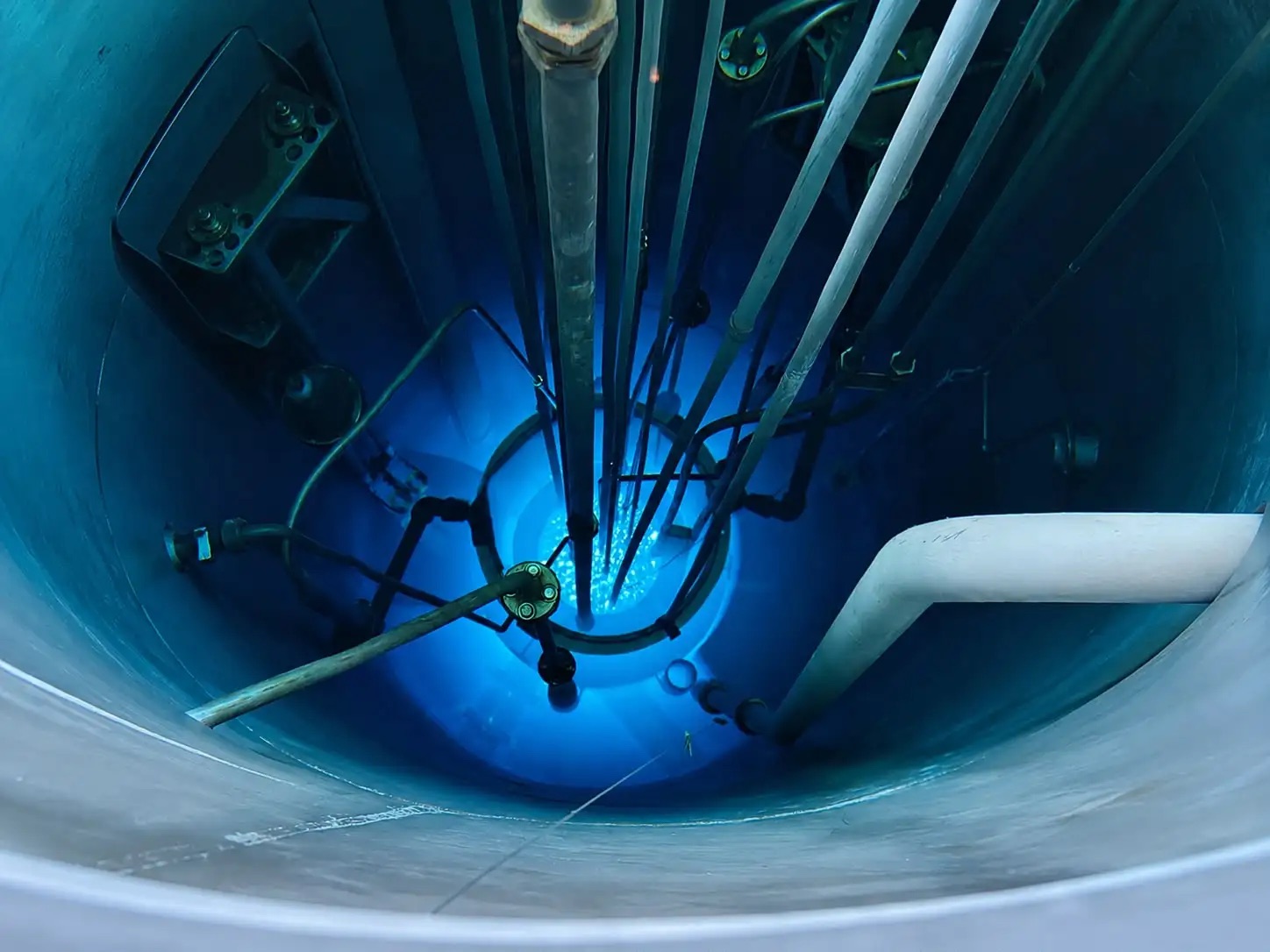
“The refurbishment covered various structures, systems and components, including the reactor building, cooling system, secondary pumps, cooling tower and ventilation system,” said Abdul Rohim Iso Suwarso, Head of BRIN’s TRIGA Reactor Installation Management Team.
Its renewed role is firmly civilian. Researchers can use neutron irradiation for material analysis, radioisotope and radiopharmaceutical development, reactor engineering, education, and professional training. Such applications can support cancer diagnosis and treatment, environmental monitoring, food safety, and the study of industrial materials.
BRIN researcher Diah Dwiana Lestiani explained that neutron activation analysis works through neutron capture by atomic nuclei, producing radionuclides whose characteristic gamma rays allow scientists to identify elements and measure their concentrations. She said the reactor’s return should accelerate analytical research and expand domestic and international scientific cooperation.
Research Before Electricity
Indonesia has not yet built a commercial nuclear power station, but it is not beginning from zero. Its research reactors, laboratories, universities, and regulatory institutions have developed nuclear expertise for more than six decades.
That distinction is important. Restarting TRIGA 2000 does not mean that a commercial plant is about to appear outside Bandung. Instead, it strengthens the human and institutional foundations required before any power reactor can be designed, licensed, constructed, and operated safely.
Research reactors provide engineers and technicians with experience in reactor physics, radiation protection, instrumentation, maintenance, emergency procedures, and safety culture. They also help universities train the scientists who may later work for operators, regulators, hospitals, and research institutions.
Indonesia is considering nuclear power as part of its longer-term energy transition, with official planning discussions pointing toward an initial commercial introduction in the early 2030s. BRIN has projected that at least 200 additional nuclear researchers will be required to support preparations for a possible first plant around 2032. Yet the timeline will ultimately depend on legislation, regulatory readiness, financing, technology selection, site approval, and public confidence.
Why ASEAN Is Looking Again
Southeast Asia’s renewed interest in nuclear energy is driven by a simple equation: electricity demand is growing rapidly while governments face mounting pressure to reduce dependence on fossil fuels.
The ASEAN Centre for Energy projects that regional electricity demand could increase from around 1,200 terawatt-hours in 2022 to approximately 4,300 terawatt-hours by 2050. Nuclear energy and Small Modular Reactors (SMRs) are therefore being examined as potential complements to solar, wind, hydropower, battery storage, and stronger regional power grids.
No ASEAN member currently operates a commercial nuclear power plant. The region’s experience remains concentrated in research reactors, medical applications, radiation technologies, regulation, and academic training.
That is beginning to change. Civilian nuclear energy has been incorporated into the ASEAN Plan of Action for Energy Cooperation 2026–2030, with member states focusing on legal frameworks, institutional readiness, safety, security, human resources, and public engagement.
Vietnam Moves Toward Construction
Among ASEAN members, Vietnam has taken one of the clearest steps toward commercial nuclear power.
In March 2026, Vietnam and Russia signed an intergovernmental agreement supporting cooperation on the proposed Ninh Thuan 1 Nuclear Power Plant. Vietnam’s strategy for peaceful atomic energy development aims to complete Ninh Thuan 1 and Ninh Thuan 2 by 2035, while also pursuing at least one Small Modular Reactor project. Nuclear energy could contribute between six and eight percent of the country’s electricity generation by 2050.
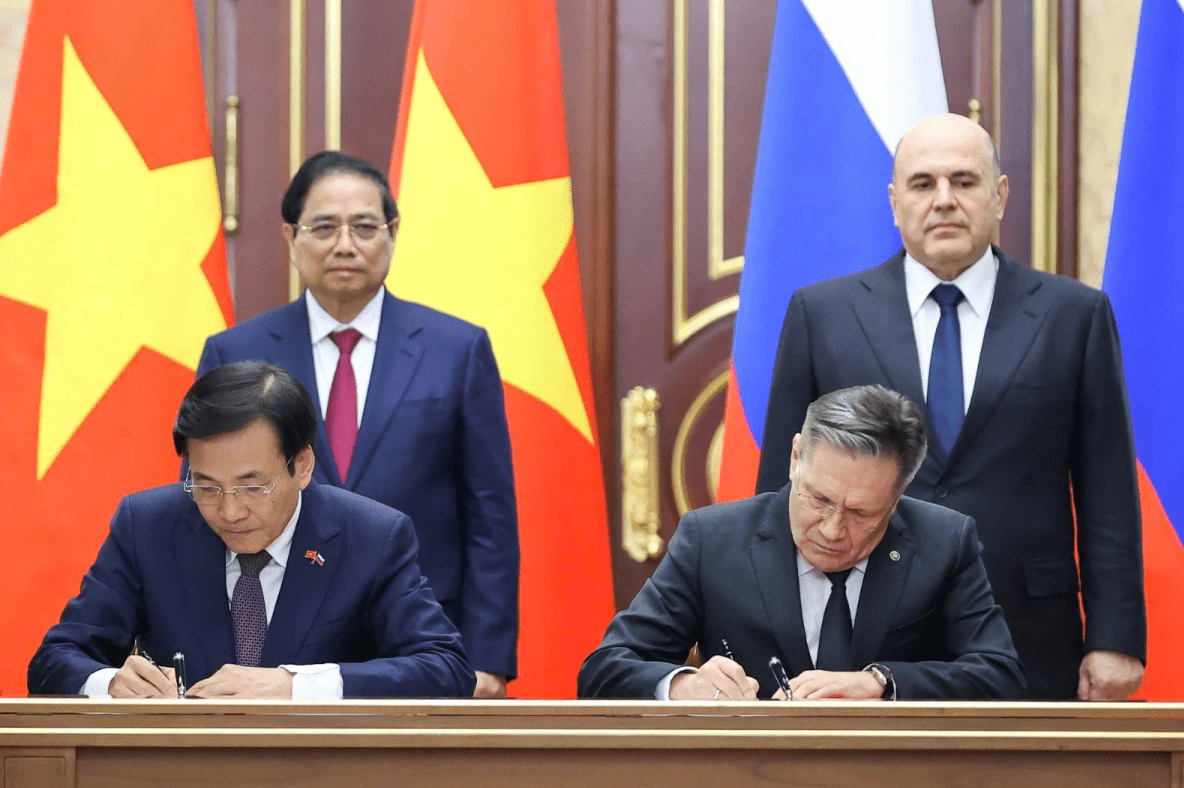
The strategy extends beyond electricity. Vietnam also plans to expand radiotherapy, nuclear medicine, medical imaging, and domestic radiopharmaceutical production. Like Indonesia, Vietnam sees research, healthcare, and human resource development as essential foundations before large-scale power generation.
Vietnam’s challenge will be translating political commitment into successful construction while developing thousands of skilled engineers, establishing long-term financing, and maintaining an independent regulatory system.
The Philippines Builds the Rulebook
The Philippines is advancing through a different approach by strengthening its legal and licensing framework before selecting specific projects.
The government has finalized a seven-phase licensing and permitting roadmap designed to prepare agencies for future nuclear power applications. The Philippine Energy Plan targets an initial 1,200 megawatts of nuclear capacity by 2032, increasing to 2,400 megawatts by 2035 and 4,800 megawatts by 2050.
The creation of the Philippine Atomic Energy Regulatory Authority (PhilAtom) is intended to separate regulatory oversight from nuclear promotion and operation. Manila is also working closely with the International Atomic Energy Agency (IAEA) to strengthen infrastructure, safety, safeguards, emergency planning, waste management, financing, and public engagement.
Debate continues over whether the country should rehabilitate the long-idle Bataan Nuclear Power Plant, construct conventional reactors, or pursue newer modular technologies. Regardless of the final choice, the Philippines demonstrates that governance must come before technology.
Small Reactors, Large Expectations
Across Southeast Asia, Small Modular Reactors have generated significant interest because they promise lower individual capacity, factory-based production, and greater flexibility than conventional nuclear plants.
For archipelagic countries such as Indonesia and the Philippines, smaller reactors could provide electricity for isolated grids, industrial estates, mining regions, or remote islands where gigawatt-scale facilities would be impractical. Singapore is studying advanced nuclear technologies because its limited land area makes conventional nuclear stations difficult to accommodate, while Thailand and Malaysia continue evaluating how SMRs could complement future electricity systems.
However, most SMR technologies remain commercially immature. Questions surrounding construction costs, waste management, fuel supply, emergency planning, and long-term economics remain unresolved. Southeast Asian governments therefore face the challenge of distinguishing promising innovation from technologies that still require extensive demonstration.
Partnerships Without Dependency
The region’s nuclear future is increasingly shaped by international partnerships.
Russia, the United States, China, Japan, and South Korea are offering combinations of reactor technology, feasibility studies, financing, regulatory support, and university training. ASEAN countries are deliberately engaging multiple partners rather than relying on a single supplier.
This diversified approach provides greater flexibility but also demands careful decision-making. Nuclear projects establish partnerships that often last for decades through construction, operation, fuel supply, maintenance, waste management, and eventual decommissioning.
Future agreements will need to safeguard national interests while preserving regulatory independence and avoiding excessive technological or financial dependence.
Safety Must Set the Pace
Nuclear power can provide reliable, low-carbon electricity, but its success depends entirely on strong institutions and public trust.
Southeast Asia is one of the world's most geologically active regions, with exposure to earthquakes, volcanic activity, tsunamis, flooding, and extreme weather. Site selection must therefore rely on rigorous scientific assessment rather than political convenience.
Governments must also establish transparent systems for radioactive waste management, emergency preparedness, physical security, and long-term environmental monitoring.
Public confidence will be equally important. Communities are unlikely to support nuclear facilities based solely on promises of clean energy. Trust must be earned through transparency, independent oversight, and meaningful public participation throughout every stage of development.
The International Atomic Energy Agency’s milestone approach reflects this reality. Launching a nuclear power program is not merely an engineering project—it requires an entire national ecosystem capable of safely managing nuclear technology for generations.
A Reactor Reawakens, a Region Prepares
The restart of TRIGA 2000 will not immediately place nuclear-generated electricity on Indonesia’s grid. Its significance lies in restoring an important scientific facility, expanding medical and industrial research, and preparing a new generation of Indonesian nuclear professionals.
Across Southeast Asia, the conversation is moving beyond theoretical discussions toward structured preparation. Vietnam is advancing commercial projects, the Philippines is strengthening its regulatory framework, Indonesia is reinforcing research capacity, while several other ASEAN members continue evaluating advanced nuclear technologies.
The next chapter of Southeast Asia’s nuclear journey will not be defined simply by who commissions the first reactor. It will be determined by who develops the strongest scientific talent, builds the most trusted regulatory institutions, and earns lasting public confidence in one of the world's most sophisticated energy technologies.


