Thailand has long been known as the "Detroit of Asia."
The country has established itself as Southeast Asia's largest automotive production hub and one of the world's most important manufacturing bases for pickup trucks, with global automakers including Toyota, Isuzu, Ford, Mitsubishi, Nissan, and Mazda operating large production facilities there.
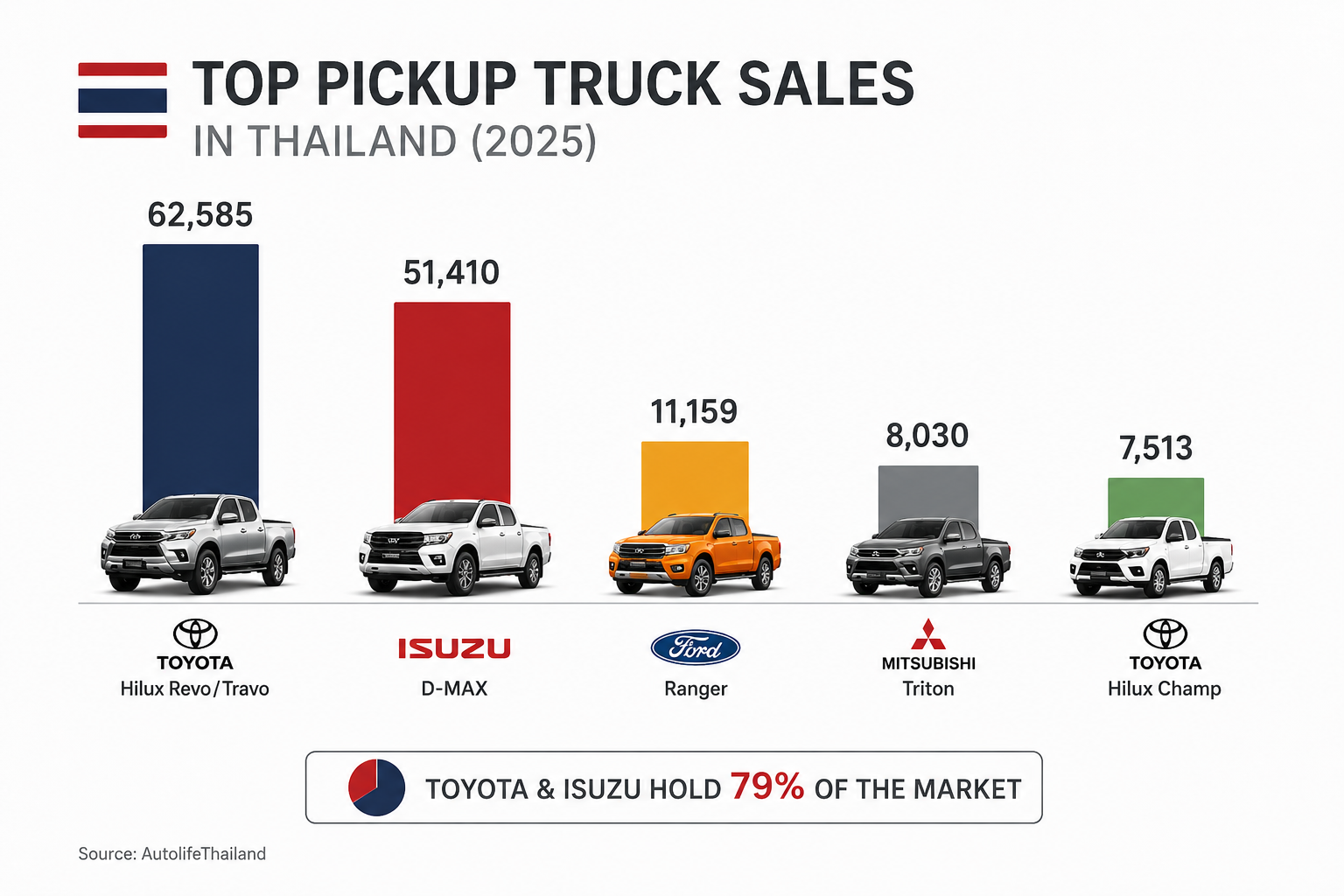
Production statistics released by the Federation of Thai Industries (FTI) show that Thailand manufactured 1,455,569 vehicles in 2025.
Of that total, 893,921 were one ton pickup trucks, meaning pickups accounted for 61.4% of all vehicles produced in the country. The largest segment was the double-cab pickup, with 571,903 units produced during the year.
Most Thai Pickup Trucks Are Built for Export
Thailand's pickup industry extends far beyond its domestic market.
According to the Federation of Thai Industries, 728,219 one ton pickup trucks produced in 2025 were exported, representing 81.46% of Thailand's total pickup production. Thai built models including the Toyota Hilux, Isuzu D-Max, Ford Ranger, Mitsubishi Triton, and Nissan Navara are shipped to markets across Asia, Oceania, the Middle East, Africa, Europe, and Latin America.
Thailand has also become an export base for electric pickup trucks. According to Reuters, Isuzu selected Thailand as the production location for the battery electric D-Max EV, with exports planned for Europe and other overseas markets before domestic sales.
Government Policy Helped Build the Pickup Industry
Thailand's pickup dominance was shaped in part by long-term government industrial policy.
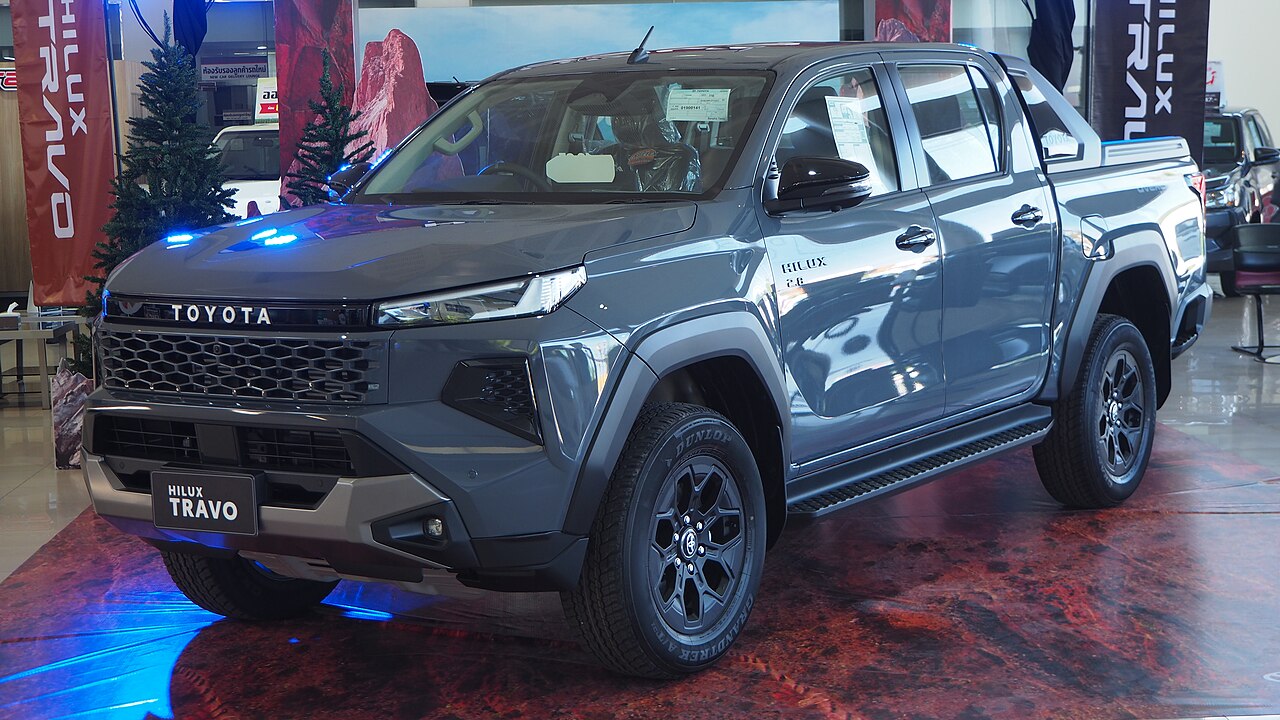
According to Krungsri Research, the Thai government designated the one ton pickup truck as the country's first "Product Champion" under its automotive development strategy between 1997 and 2008. The policy aimed to attract global manufacturers to establish production bases in Thailand while strengthening the domestic automotive industry.
Krungsri Research also notes that the government maintained lower diesel prices than gasoline and applied a 3% excise tax to one ton pickup trucks, compared with 30-50% for many passenger cars under the tax structure at the time. These incentives reduced purchase costs for consumers while encouraging manufacturers to expand local production.
The Department of International Trade Promotion (DITP) under Thailand's Ministry of Commerce likewise states that one ton pickups accounted for around half of Thailand's domestic vehicle sales for many years. The agency attributes the segment's growth to reduced excise taxes, strong demand from the agricultural sector, and Thailand's position as a regional manufacturing hub.
Pickup Trucks Also Serve as Family Vehicles
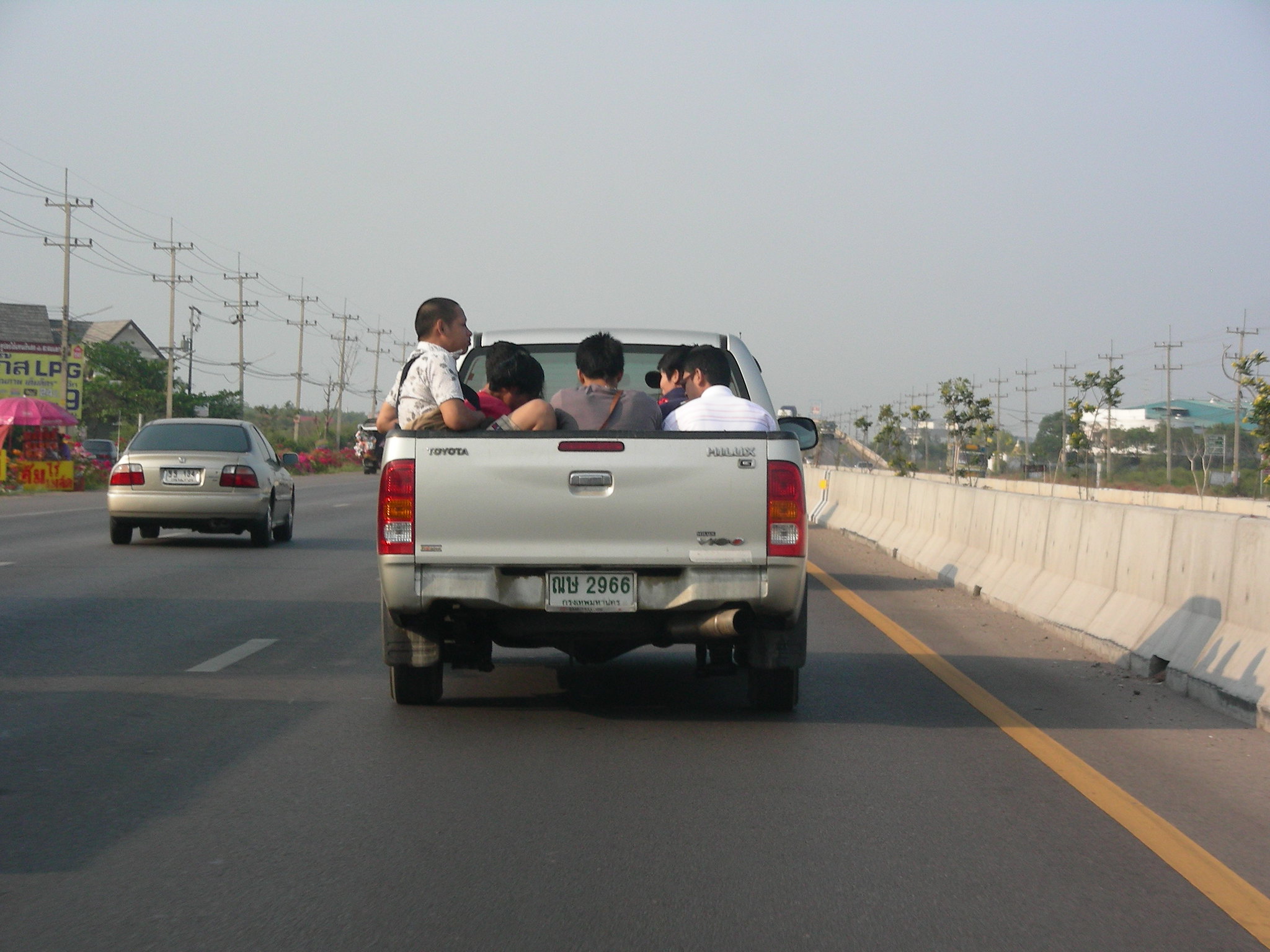
Pickup trucks in Thailand are used for more than commercial work.
Modern double-cab pickups combine four passenger doors with an open cargo bed, allowing them to function as both family vehicles and work vehicles. This versatility has contributed to the popularity of models such as the Toyota Hilux, Isuzu D-Max, Ford Ranger, and Mitsubishi Triton across the country.
The Industry Is Evolving
Pickup trucks remain Thailand's largest vehicle segment, although the industry has faced new challenges in recent years.
Higher household debt and tighter auto lending standards have weakened domestic pickup sales. In response, the Thai government introduced a loan guarantee program in 2025 to support pickup purchases and help stimulate the automotive sector.
At the same time, Thailand continues expanding production of electrified pickup trucks. Reuters reported that the government has introduced new tax incentives to encourage hybrid and electric vehicle manufacturing while maintaining the country's position as a global automotive production hub.
Today, according to the Federation of Thai Industries, more than six out of every ten vehicles produced in Thailand are pickup trucks, while more than eight out of every ten Thai-built pickups are exported overseas.
These figures make Thailand one of the world's largest pickup truck nations, serving both domestic consumers and international markets.