On 18 July 2026, Skyroot Aerospace successfully launched Vikram-1 from the Satish Dhawan Space Centre in Sriharikota. The mission, named Aagaman, placed multiple payloads into low Earth orbit at an altitude of around 450 kilometers, making Skyroot the first private Indian company to complete an orbital launch.
According to the Indian Space Research Organisation (ISRO), the mission also marked the first time a privately developed Indian orbital rocket had successfully deployed satellites into orbit. Skyroot Aerospace’s Vikram-1 orbital mission marked a milestone that followed six years of policy reforms, startup growth, and public-private collaboration in India’s space sector.
Skyroot's Path to Orbit
Skyroot Aerospace was founded in 2018 by former ISRO engineers Pawan Kumar Chandana and Naga Bharath Daka.
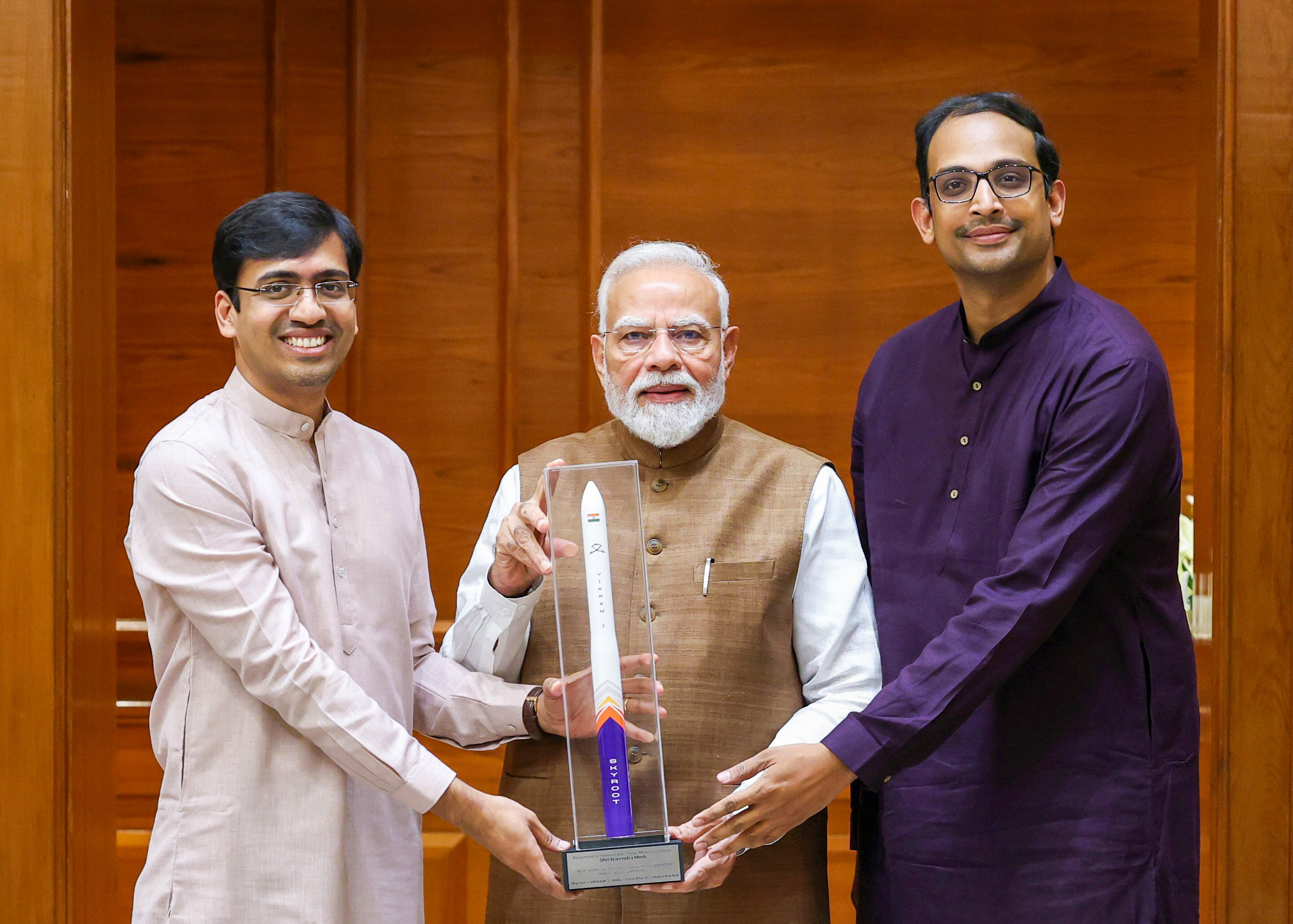
The company’s first major milestone came in November 2022, when Vikram-S became the first privately developed rocket launched from India. Although the mission was suborbital, Skyroot stated that approximately 80 percent of the technologies later used in Vikram-1 had already been demonstrated during that flight.
The rocket stands approximately 22 meters tall and is designed to carry payloads of up to 350 kilograms to low Earth orbit. Its structure uses carbon composite materials, while its upper stage incorporates a 3D printed liquid rocket engine. The first three stages use solid propulsion.
Vikram-1’s spectacular liftoff captured in slow motion 🚀
— Skyroot Aerospace (@SkyrootA) July 28, 2026
The instant Vikram-1 cleared the First Launch Pad at Sriharikota — over in a blink at full speed, here frame by frame.
Ignition. Plume ballooning off the deck. The first few feet of a rocket bound for orbit.
🎥… pic.twitter.com/ESNEy0Gh9H
Four years later, Vikram-1 completed the company’s first orbital mission.
A Sector That Changed After 2020
India’s private space industry was almost nonexistent only a few years earlier.
Until 2020, most launch activities, launch infrastructure, and satellite missions were carried out by ISRO, the country’s national space agency. In June 2020, the Indian government introduced major reforms that opened the space sector to private participation.
As part of the reforms, India established the Indian National Space Promotion and Authorization Centre (IN-SPACe), an independent regulator responsible for authorizing and facilitating non-governmental space activities. Private companies were also granted access to ISRO’s launch sites, testing facilities, tracking infrastructure, and technical expertise.
These reforms were later reinforced through the Indian Space Policy 2023, which defined the roles of ISRO, IN-SPACe, and NewSpace India Limited (NSIL) while expanding commercial participation across the country’s space industry.
According to ISRO, Vikram-1 is one of the first major outcomes of this policy shift.
From One Startup to More than 400
The reforms coincided with rapid growth in India’s commercial space ecosystem.
According to India’s Press Information Bureau, the country had only one space startup in 2014. By 2026, that number had grown to more than 400 companies working across launch vehicles, satellites, propulsion systems, Earth observation, communications, and in-orbit technologies.
Several companies have emerged as leading players, including Skyroot Aerospace, Agnikul Cosmos, Pixxel, Bellatrix Aerospace, and Dhruva Space.
Rather than focusing solely on government missions, these companies have developed products and services for commercial customers, research institutions, and international partners.
India’s Growing Space Economy
The expansion of India’s private launch capability comes as the country’s broader space economy continues to grow.
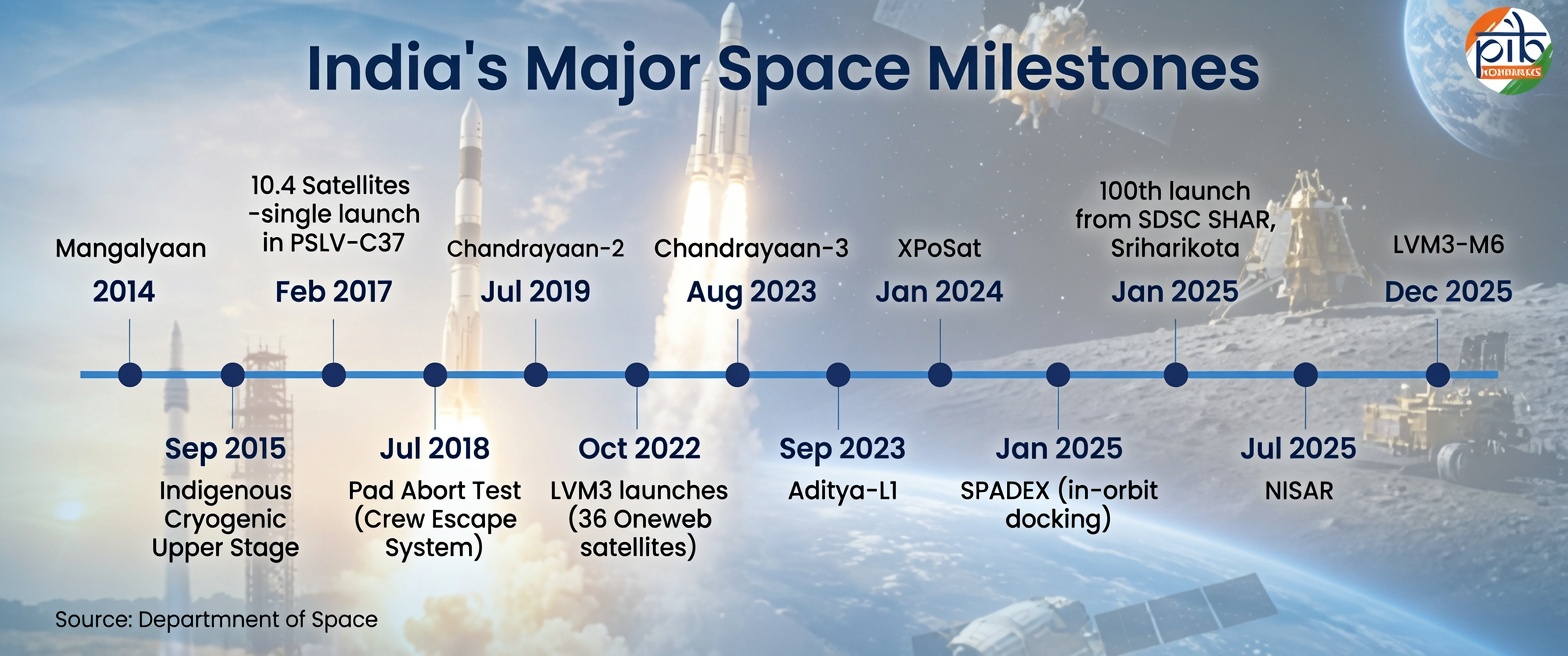
Government estimates place the current value of India’s space sector at around US$8.4 billion. India aims to increase that figure to US$40-45 billion over the coming decade while expanding its share of the global commercial space market.
Launch services represent only one part of this strategy. Satellite manufacturing, Earth observation, communications, downstream applications, and in-space technologies are also expected to contribute to future growth.
According to the Indian government, opening the sector to private participation is intended to accelerate innovation while allowing ISRO to focus on advanced scientific missions, planetary exploration, and national strategic programmes.
A New Chapter for Private Launch Capability in Asia
India's progress also reflects a broader transformation across Asia, where governments have increasingly opened their space sectors to commercial companies while encouraging private investment in launch services and satellite technologies.
China began opening parts of its commercial launch sector earlier in the 2010s, leading to the emergence of private launch companies such as LandSpace, Galactic Energy, iSpace, and Space Pioneer.
India followed a different approach. Rather than developing a commercial launch industry alongside its national programme, it first built decades of launch experience through ISRO before introducing reforms that enabled private participation in 2020.
The success of Vikram-1 not only demonstrated the maturity of those reforms but also signaled that India's private space industry has evolved from an emerging startup ecosystem into one capable of independently reaching orbit.
With the mission, India joined the United States and China as the only countries whose private companies have successfully developed and launched orbital rockets, marking a new chapter for the country's commercial space sector.