Nasi Kerabu is a rice dish native to the East Coast of Peninsular Malaysia, which is primarily centered in the states of Kelantan and Terengganu. The dish consists of blue-tinted rice served with shredded raw herbs, toasted coconut, and regional side dishes.
Nasi Kerabu is traditionally associated with morning and midday dining across the northeastern states of Peninsular Malaysia.
The word "kerabu" in Malay refers to a type of salad made from raw vegetables, herbs, and seasonings. The name describes the structure of the dish, where cooked rice is mixed directly with finely sliced botanicals before eating.
Natural Pigment from Butterfly Pea Flower
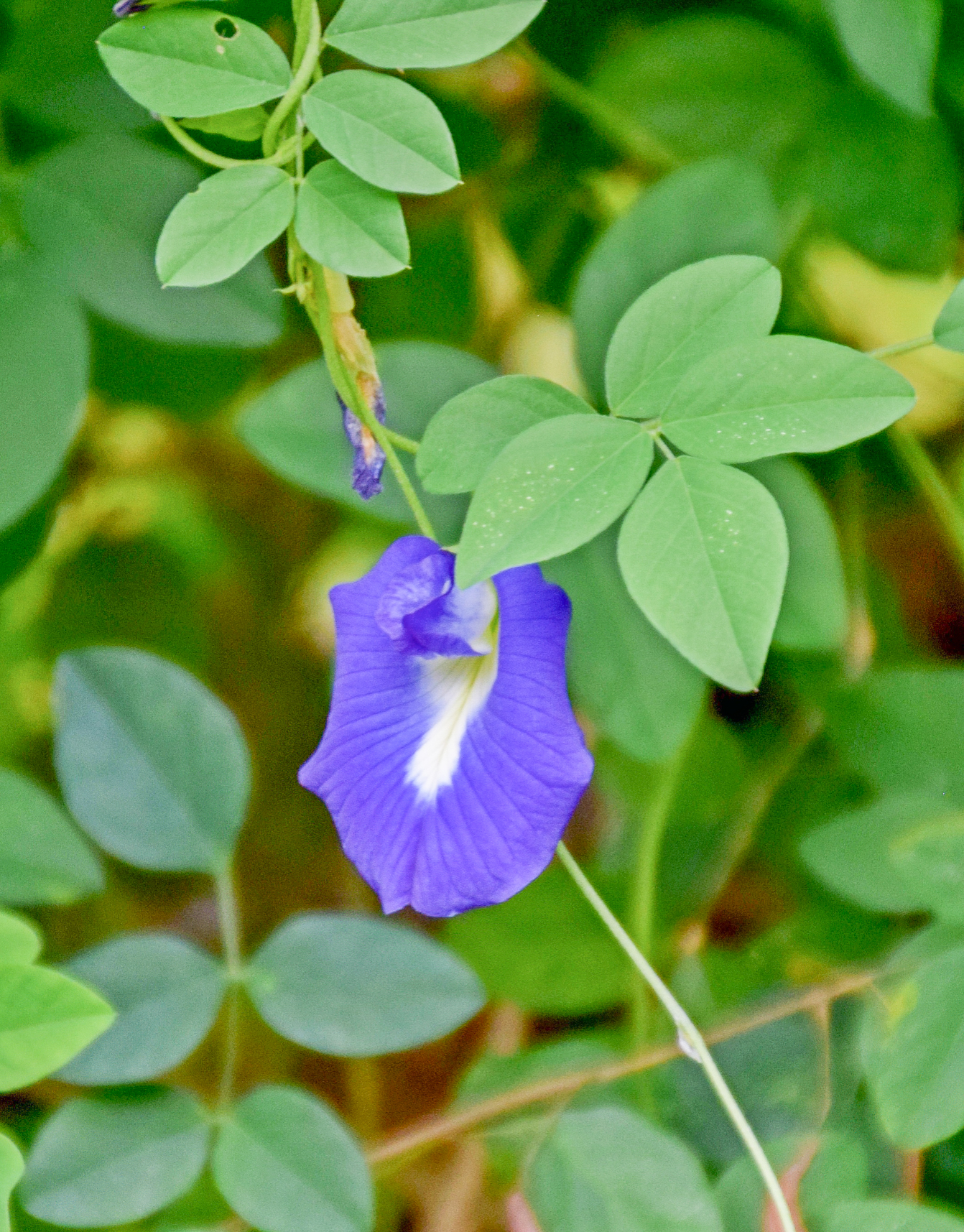
The blue coloration of the rice originates entirely from a natural botanical source. The process uses the petals of the butterfly pea flower, known locally as bunga telang or scientifically as Clitoria ternatea.
Soaking fresh or dried flowers in warm water extracts the deep blue pigment. This floral liquid then replaces plain water when boiling the rice grains.
The butterfly pea flower is naturally flavorless and does not alter the taste of the rice. The grains absorb the vibrant blue hue while maintaining their natural texture and aroma.
No synthetic food dyes or artificial colorings are involved in the traditional preparation. The extraction technique relies strictly on the natural water-soluble compounds within the petals.
Ensemble of Fresh Herbs and Sides
The core component of Nasi Kerabu relies on a specific combination of raw herbs, known as ulam. Finely slicing these leaves into thin strips ensures an even distribution of flavor throughout the rice.
The herb mixture typically includes torch ginger bud, wild betel leaf, Vietnamese coriander, long beans, and bean sprouts. Historically, the high proportion of ulam made the dish a fiber-rich meal with a higher ratio of fresh botanicals than rice.
A primary seasoning element is kerisik, a dry condiment made from toasted grated coconut pounded together with flaked fish meat, shallots, and lemongrass.
Another vital component is budu, a traditional liquid sauce made from fermented anchovies, salt, and dried tamarind (Garcinia atroviridis). The budu provides a distinct salty and savory base for the entire dish.
Protein options served alongside the meal vary by region. Common side dishes include solok lada, a green chili stuffed with spiced fish paste and coconut, as well as salted duck eggs, fried fish, and grilled ayam percik.
Regional Variants Across Southern Borders
Nasi Kerabu shares strong cultural and culinary ties with neighboring regions across the Malaysian border. A similar variation exists in Southern Thailand under the name Khao Yam.
The Thai version also utilizes butterfly pea flowers for blue rice or turmeric for yellow rice. It incorporates southern Thai seasonings, including formulations of fermented fish sauce.
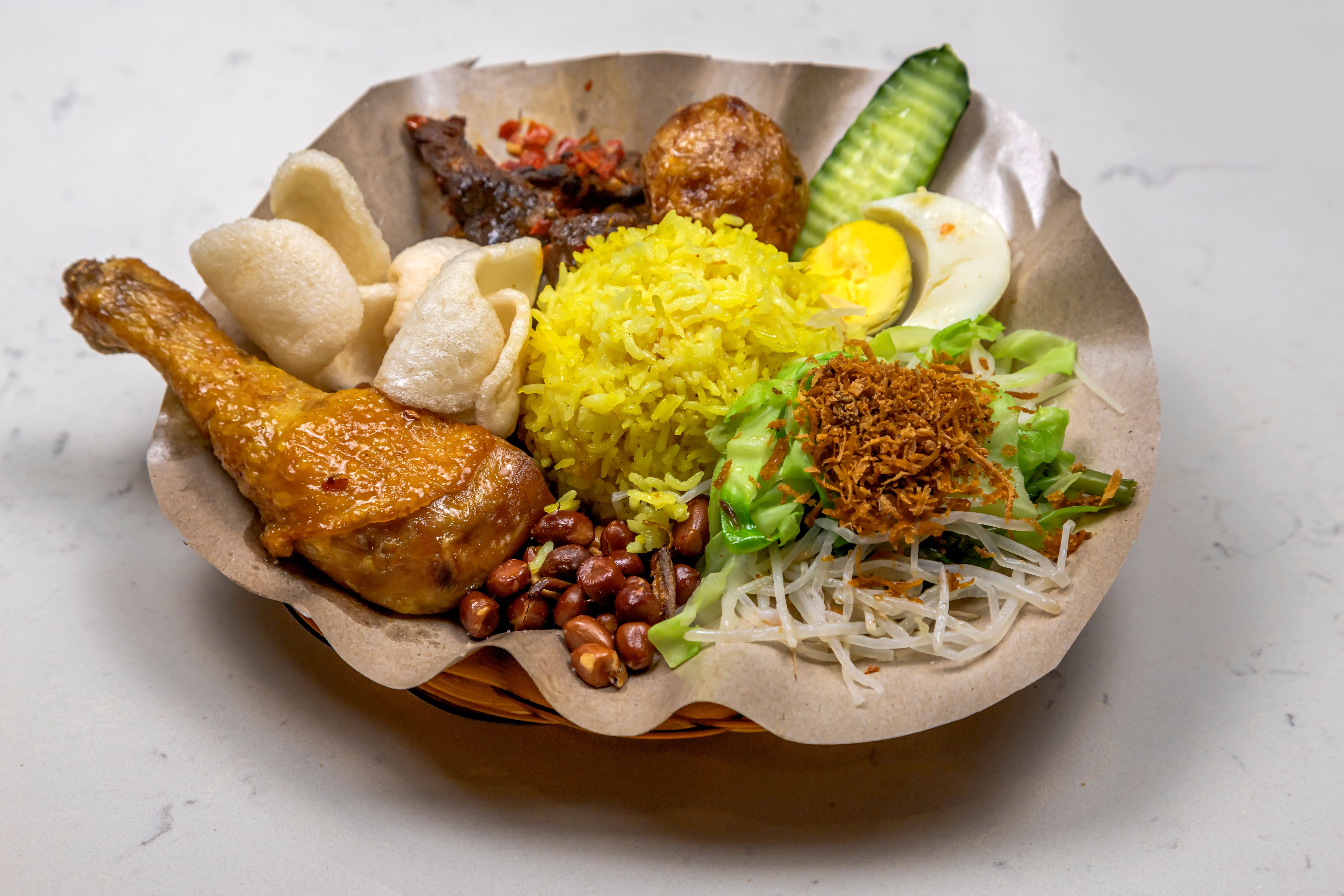
Within Malaysia, variations of the dish extend beyond the iconic blue version. Regions across Kelantan also prepare Nasi Kerabu Kuning, which uses turmeric for yellow coloring, and Nasi Kerabu Putih, which leaves the rice uncolored.
Each variant retains the fundamental combination of fresh herbs, toasted coconut, and fermented anchovy sauce. However, the blue version still remains the most recognized representation of Nasi Kerabu.
Banana leaves or greaseproof paper commonly function as traditional wrapping materials for takeaway portions. Wrapping the rice tightly preserves the moisture content of the fresh herbs and rice prior to eating.