If you look at an address in the Philippines, you’ll find the word “barangay” almost everywhere.
As of December 2025, the country had 42,011 barangays, according to the Philippine Statistics Authority. Each barangay forms part of a city or municipality and serves as the Philippines’ basic political unit.
But the word is much older than the government system that uses it today.
Before It Was a Government Unit
In the 16th century, Spanish chroniclers recorded communities in the Philippines that were organized around local leaders known as datus.
National Commission for Culture and the Arts material on precolonial Philippine society describes the datu as a village or community leader, with political authority exercised at the local level.
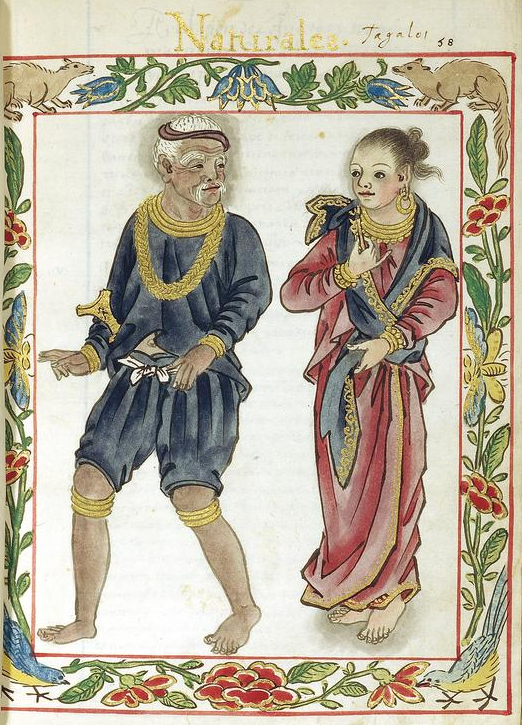
Historian William Henry Scott, in his book Barangay: Sixteenth-Century Philippine Culture and Society, traces the word barangay, or balangay, through early Philippine languages and Spanish records. In the sources he examined, the term referred to both a community or political group and a traditional boat.
The connection between barangay and balangay is therefore part of the historical record, although the exact development of the term has been discussed by historians and should not be reduced to the simple claim that every barangay was literally named after a boat.
Spain Changed the System
Communities that had previously operated as separate local units were incorporated into the colonial system. Local leaders continued to play a role, but their position changed. The title Cabeza de barangay became part of the Spanish colonial administration.
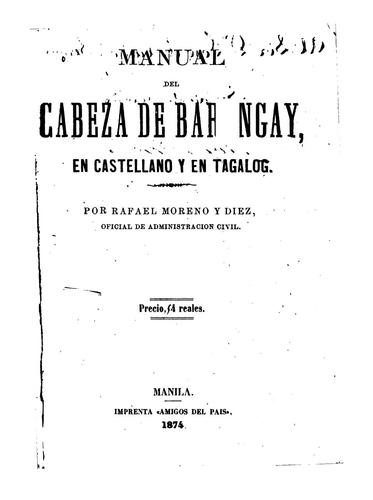
The barangay therefore survived as a term even as its political function changed.
Over time, Spanish and later American administration increasingly used other terms, including barrio, for local subdivisions. The word barangay nevertheless remained part of Philippine political and social vocabulary.
How “Barangay” Became a Government Unit
Spanish rule changed how these communities were governed. Local leaders remained involved, but their role was brought into the colonial administration under the title cabeza de barangay. Records from the National Historical Commission of the Philippines show Filipinos such as Claro Caluya and Vito Belarmino serving in the position during the Spanish period.
The term itself survived, even as its administrative meaning changed. Spanish and later American authorities increasingly used barrio for local subdivisions, but barangay remained part of Philippine political vocabulary.
The name returned to official use in the 20th century. A 1981 presidential decree designated the barangay as the smallest political unit of government.
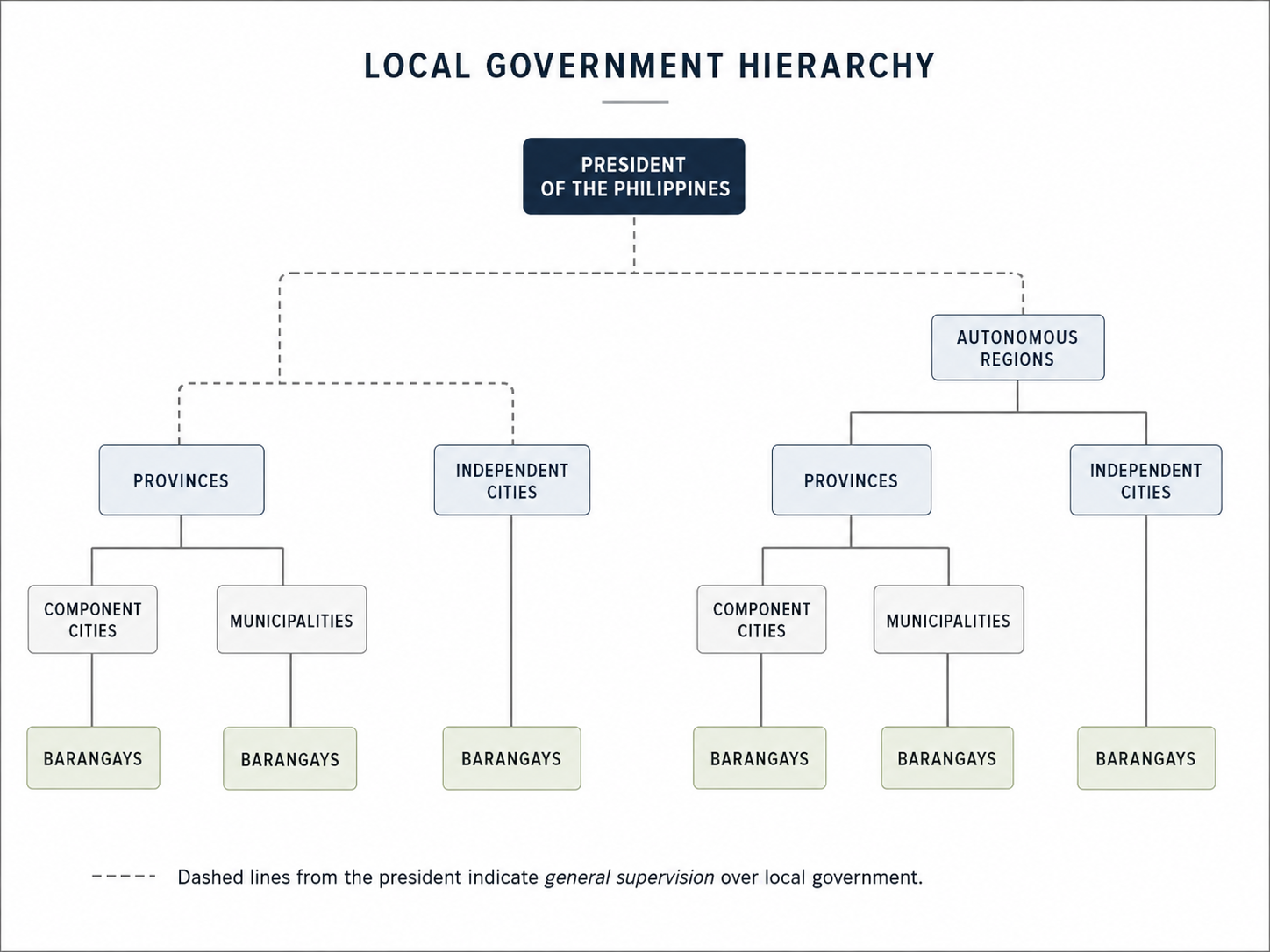
The Local Government Code of 1991 later established the barangay as the country's basic political unit. It also assigned barangays responsibilities in local planning, government programmes, community participation and dispute settlement.
A term that once described a precolonial community had therefore moved through several forms of government before becoming an official unit of the modern Philippine state.
42,011 Barangays Today
The scale of the system is now national.
According to the Philippine Statistics Authority, the Philippines had 42,011 barangays across 18 regions, 82 provinces, 1493 municipalities and 149 cities as of 31 December 2025. They range from densely populated urban districts to rural communities. Some are home to tens of thousands of people, while others have populations measured in the hundreds.
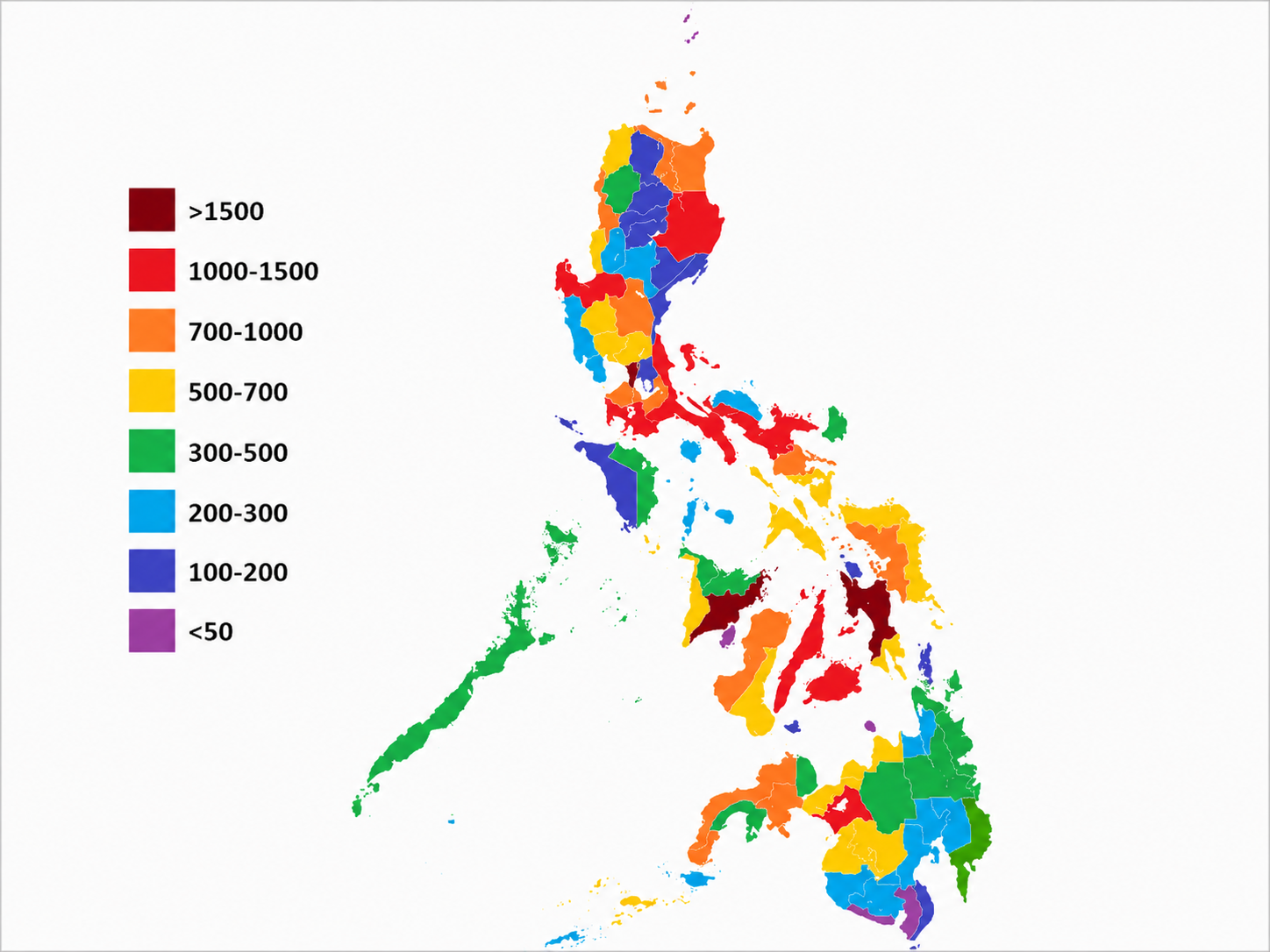
Their responsibilities are also practical. Barangays are involved in local services, community facilities and dispute settlement, making them the level of government closest to residents under the country's local government structure.
The name has passed through several political systems, from precolonial communities led by datus, to Spanish era administration, and finally to the modern Philippine local government system.
Number of local government units in the Philippines
| Type (English) | Filipino equivalent | Head of administration | Filipino equivalent | Number |
| Province | Lalawigan/Probinsya | Governor | Punong lalawigan/Gobernador | 82 |
| City | Lungsod/Siyudad | Mayor | Punong lungsod/Alkalde | 149 |
| Municipality | Bayan/Munisipalidad | Mayor | Punong bayan/Alkalde | 1,493 |
| Barangay | Barangay | barangay captain | Punong barangay | 42,011 |