Singapore is one of the few countries in the world where the country and the city essentially share the same geographic space.
This Southeast Asian nation is a city-state, meaning its territory functions as both a sovereign state and a single urban entity. The country's Ministry of Foreign Affairs officially describes Singapore as a “city-state” and states that it covers an area of approximately 710 square kilometres.
This means Singapore does not have a separate capital territory comparable to Indonesia’s Jakarta or Malaysia’s Kuala Lumpur. Instead, the same territory encompasses the country, its urban area and the institutions of its national government.
Singapore is a City-State
Singapore's constitutional framework defines the country as a sovereign republic.
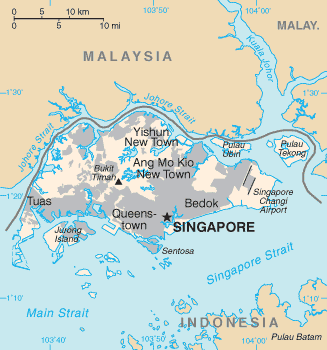
Article 3 of the Constitution of the Republic of Singapore states that "Singapore shall be a sovereign republic to be known as the Republic of Singapore." The Constitution, as consolidated on the Singapore Statutes Online website maintained by the Attorney-General's Chambers, contains provisions governing the Republic, the Government, Parliament and the Judiciary, but does not establish a separate capital district.
Singapore became an independent state on 9 August 1965, following its separation from Malaysia. Since then, the entire territory of the Republic of Singapore has formed the country's sovereign territory.
The city-state structure means that Singapore does not have another major city or territorial unit that requires a separate capital to serve as the seat of national government.
The country's urban area and sovereign territory overlap to an extent that makes the conventional distinction between a country and its capital different from that of larger states.
One Government for the Entire Country
Singapore's government performs both national and local functions within the same city-state, reflecting the country's status as a city-state in its official statistical framework.
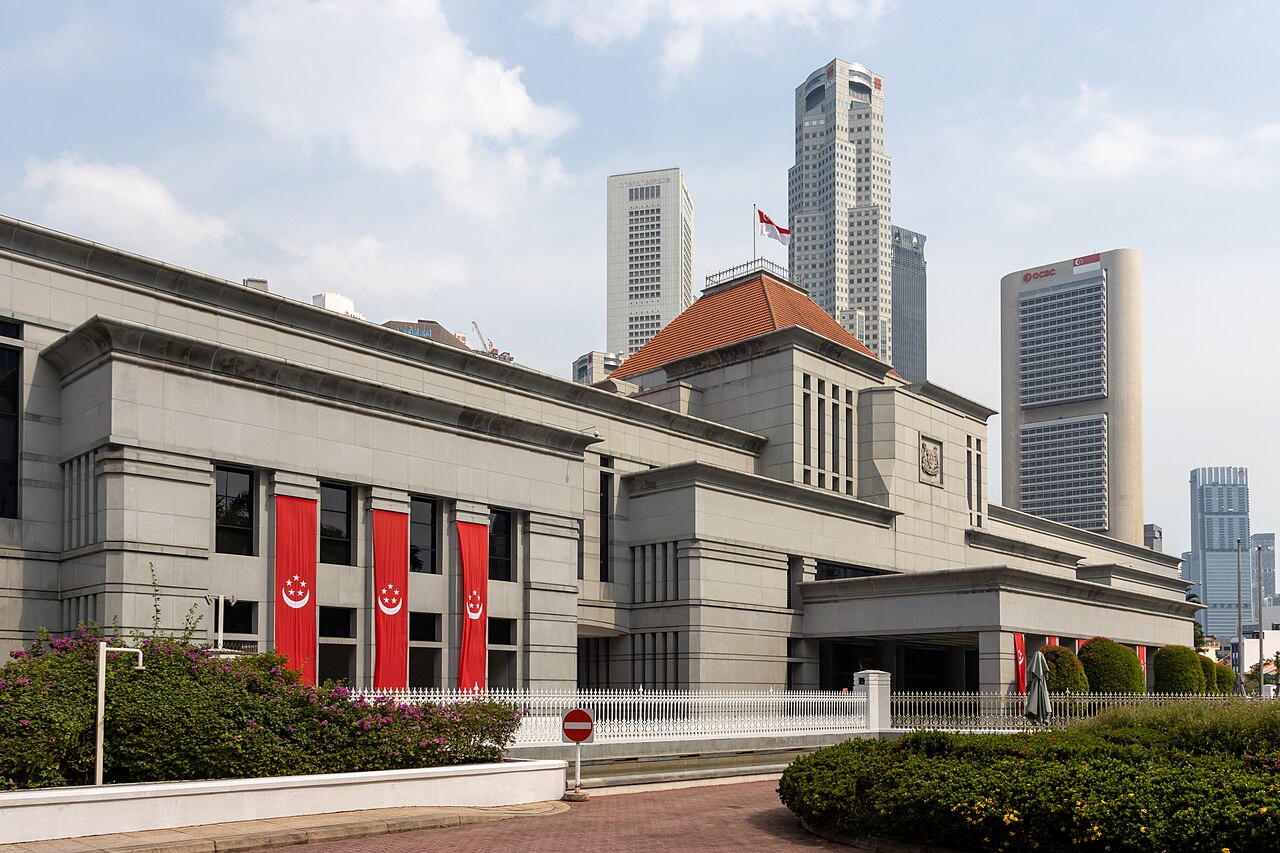
The Constitution establishes the country's national institutions, including the President, Cabinet, Parliament and Judiciary. These institutions exercise authority over the Republic of Singapore as a whole rather than operating from a separately constituted capital territory.
This is different from countries where the capital has its own administrative status. Washington, D.C., for example, is a federal district separate from the 50 U.S. states, while Kuala Lumpur is a federal territory within Malaysia. Singapore has no equivalent territorial division between a capital and the rest of the country.
So, What is Singapore's Capital?
Singapore is commonly identified as the capital of Singapore because the city-state itself is Singapore. There is no separate city inside the country designated to serve as the national capital.
The distinction can therefore be expressed through two uses of the same name. "Singapore" refers to the Republic of Singapore, the sovereign state, while "Singapore" also refers to the country's principal urban area.
According to the Ministry of Foreign Affairs, Singapore is a "city-state" and a sovereign, independent nation.
Singapore's lack of a separate capital district is consequently a product of its city-state structure. Rather than having a capital located within a larger national territory, the city-state itself contains the country's national government and institutions.
In conventional country capital terms, Singapore can therefore be described as both the country and its capital, without requiring a separate capital territory or district.