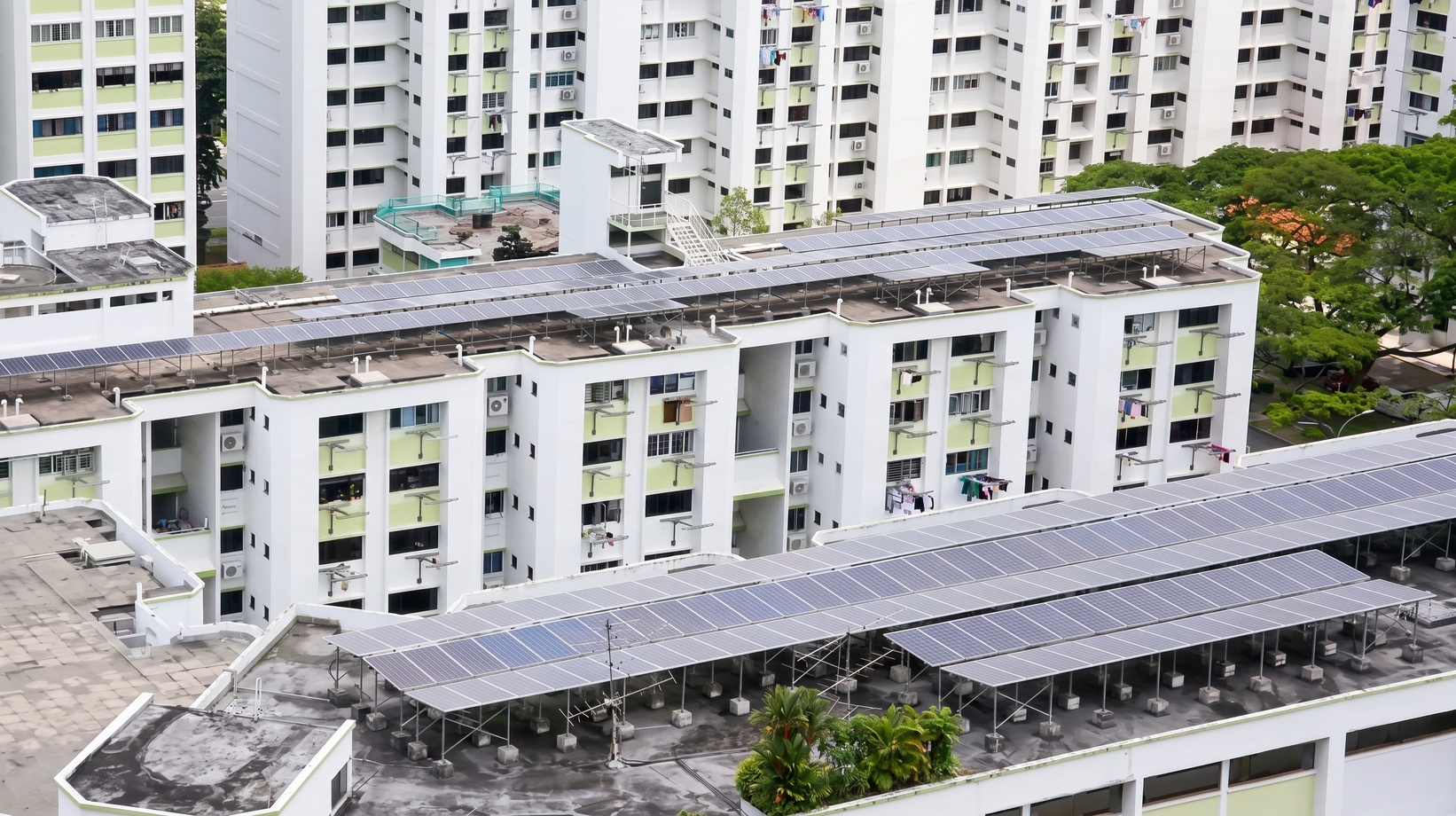
Singapore has spent years covering rooftops with solar panels, but available rooftop space is becoming increasingly limited. With land in short supply, researchers and government agencies are looking at building facades as another source of solar power.
According to Singapore’s Energy Market Authority (EMA), Singapore reached 2 GWp of installed solar capacity in 2025, five years ahead of its original 2030 target. The government subsequently raised the target to 3 GWp by 2030.
EMA estimates that rooftop solar currently accounts for more than 80% of Singapore’s total installed solar capacity. According to the Solar Energy Research Institute of Singapore (SERIS) at NUS, Singapore’s grid connected solar capacity increased from 429 MWp in 2020 to 1.64 GWp in the second quarter of 2025.
SERIS estimates that Singapore has 8.6 GWp of techno economic solar potential, with building façades accounting for about 13.98 square kilometres, or roughly 38% of the total potential.
Rooftops Aren't Enough
Rooftops are still Singapore's main source of solar power, but there's a limit to how much space they can offer.
SERIS estimates Singapore has 8.6 GWp of techno economic solar potential across suitable surfaces. Building walls alone could provide close to 14 square kilometres of usable space about 38% of that total potential.
Walls also have an advantage, rooftops are often crowded with air conditioning units, antennas, and other equipment, and more buildings are turning roof space into gardens instead. That's why researchers see building facades as the next best opportunity after rooftops.
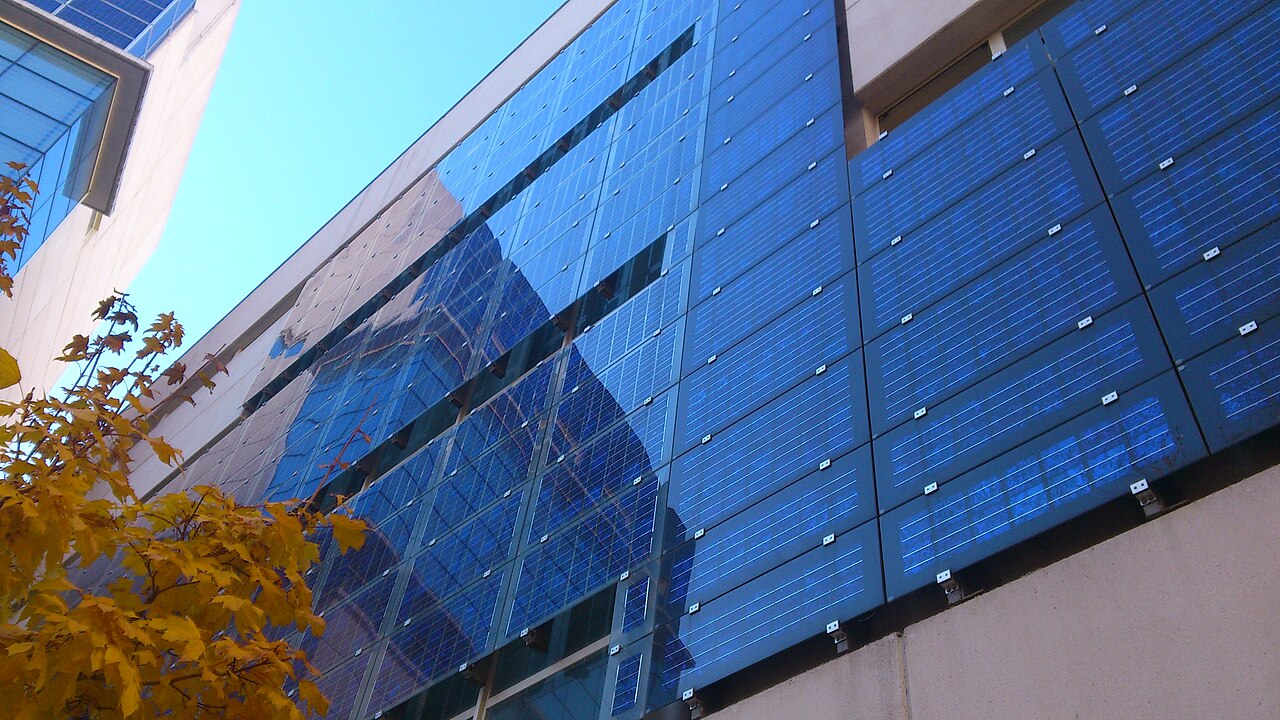
This is where Building Integrated Photovoltaics (BIPV) comes in. Instead of bolting solar panels onto a rooftop, BIPV builds the solar cells directly into a building's walls, window shades, railings, and other architectural features, so the wall itself generates power.
Singapore Is Testing It Out
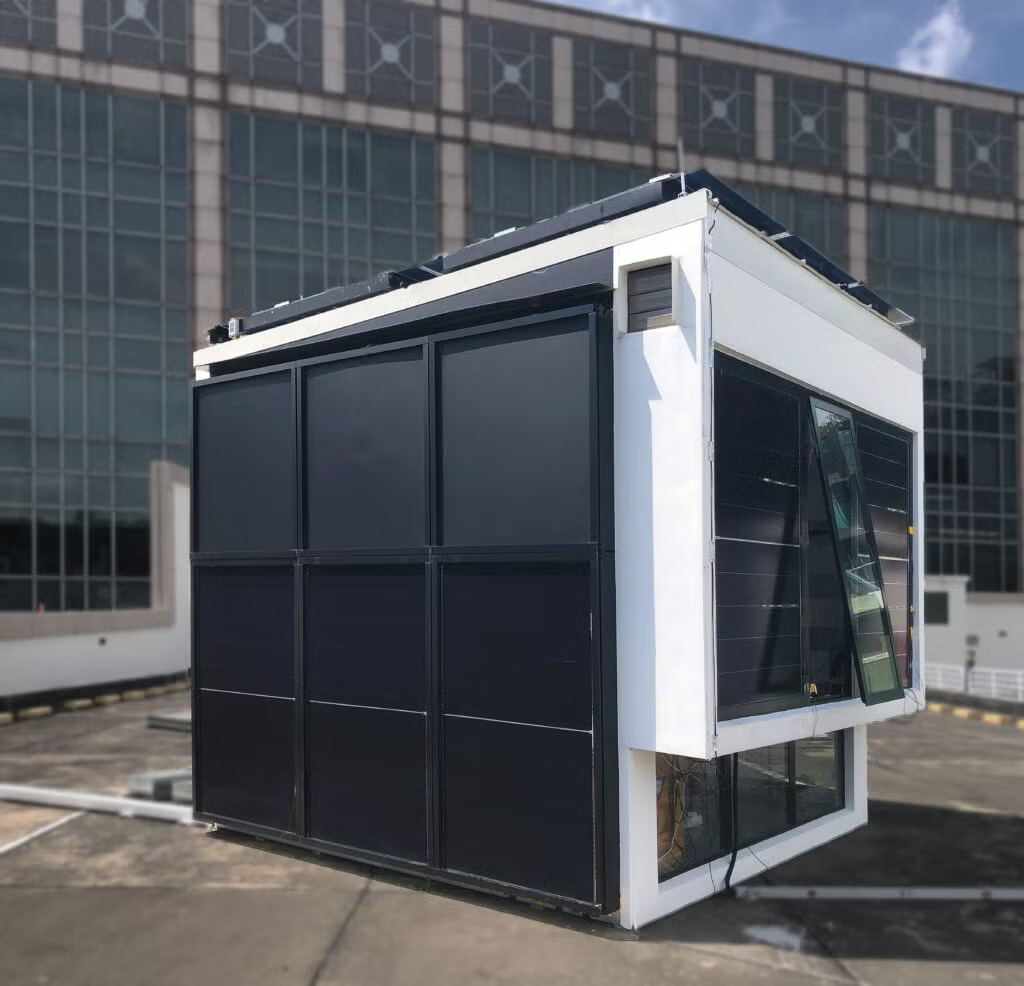
SERIS has built an outdoor testing site where they try out different solar wall designs. It includes two solar walls, each 5 metres by 2 metres, facing all four directions, so researchers can measure how much power each design generates and how well it holds up under real weather.
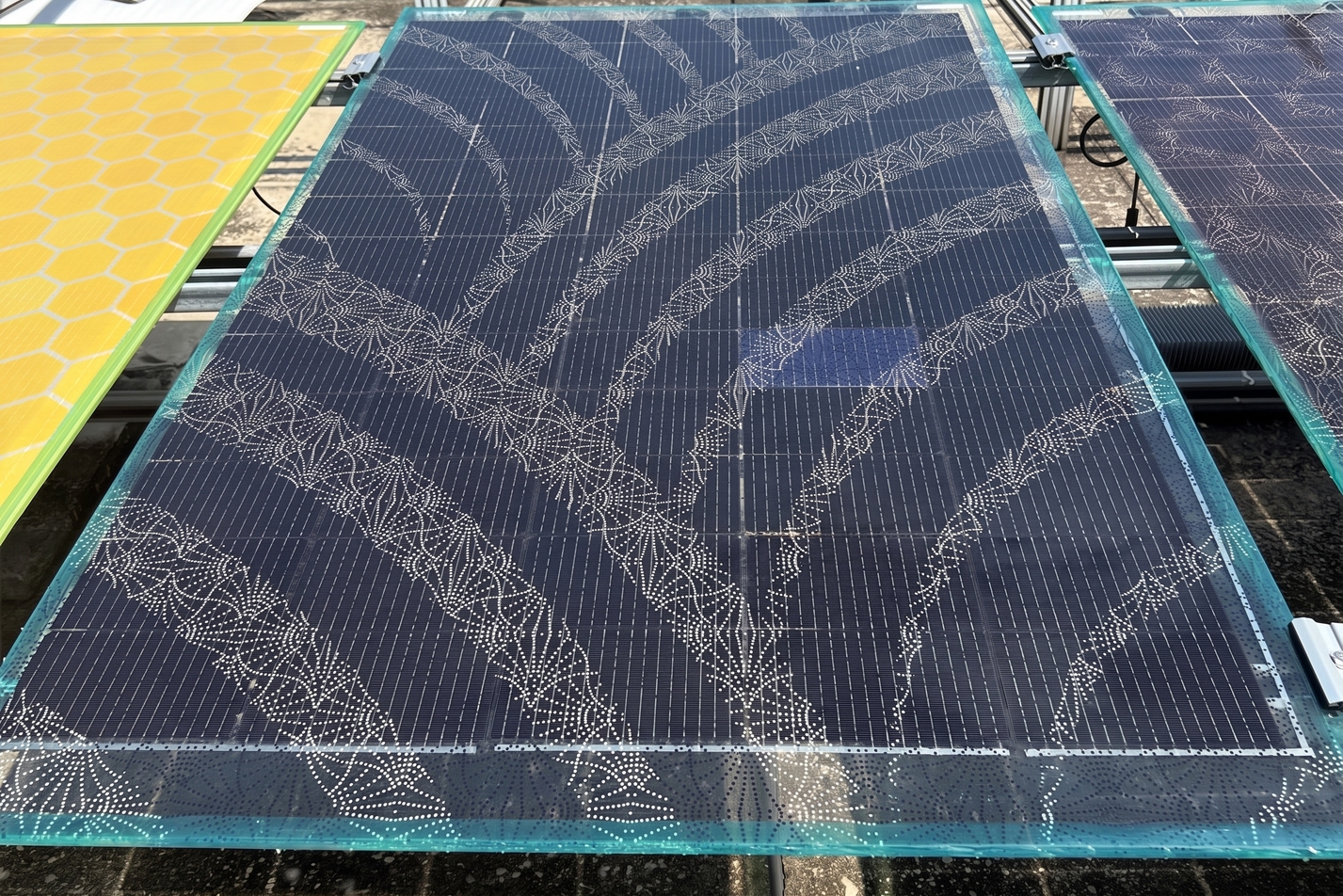
One challenge with solar walls is that they don't always look great, plain black panels clash with a building's design. To fix this, a SERIS spin off company called Power Facade has developed coloured photovoltaic modules designed to resemble materials including marble and terracotta.
The government has also identified facade installations as part of Singapore's efforts to expand solar deployment. In 2025, Singapore's Energy Market Authority said it's exploring solar walls and solar canopies as ways to expand beyond rooftops.
Squeezing More Power Out of a Small City
Singapore gets a lot of sun, about 1,580 kilowatt hours of solar energy per square metre each year. But even if the country used every possible surface for solar power, it would only cover around 10% of Singapore's projected electricity needs by 2050.
That's why the government is pushing forward on every front.
Rooftops, land, water, and now walls to squeeze as much solar power as possible out of a tiny country. With the target now at 3 gigawatts by 2030, building walls could become one more piece of that puzzle.