


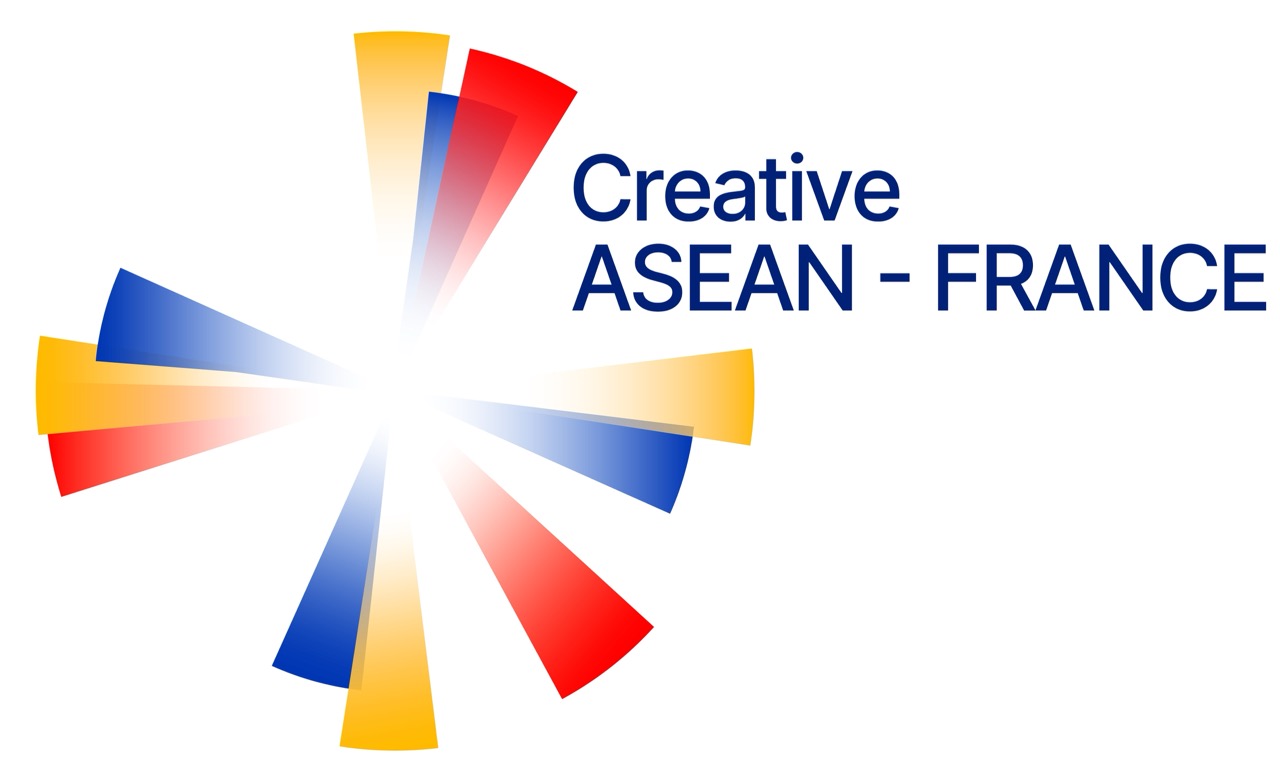
Eleven colourful forms radiating from a shared centre define the visual identity of Creative ASEAN-France. Each represents an ASEAN Member State, while their shared centre reflects the ambition behind the new initiative: connecting Southeast Asia’s diverse creative communities with France through one regional platform for artistic mobility, professional development and collaborative creation.
From Bilateral Cooperation to a Regional Vision
France and ASEAN officially launched Creative ASEAN at the French Residence in Jakarta on September 10, 2026. Supported by the ASEAN-France Fund and implemented under the stewardship of the ASEAN Senior Officials Meeting on Culture and Arts, the initiative will connect artists, cultural institutions and creative professionals through residencies, workshops, professional exchanges and cross-border projects.
French Ambassador to Indonesia, Timor-Leste and ASEAN Fabien Penone described the launch as an important milestone in a partnership that has gained considerable momentum. “Creative ASEAN is not a new cultural program. It is the implementation of a political ambition,” he said.

France and ASEAN have been Development Partners since 2020, cooperating across the regional bloc’s political-security, economic and socio-cultural pillars. Their relationship expanded further through the ASEAN-France Fund, established in 2024 to finance regional initiatives responding to shared priorities.
Political support for Creative ASEAN developed throughout 2025. French Minister for Europe and Foreign Affairs Jean-Noël Barrot discussed greater cooperation in culture and the creative industries with ASEAN Secretary-General Kao Kim Hourn in March. President Emmanuel Macron subsequently presented the initiative’s objectives to Kao at the ASEAN Secretariat in Jakarta during his visit in May.
Creativity Enters the Regional Partnership
Creative ASEAN aligns with the ASEAN Creative Economy Sustainability Framework adopted at the 46th ASEAN Summit in Kuala Lumpur in May 2025. The framework calls for a more integrated, inclusive and sustainable creative economy supported by cooperation among governments, creative professionals and other stakeholders.
Although Kao was unable to attend the Jakarta launch, he expressed his support through a video message. “Creative ASEAN represents our sustained efforts towards building a strategic partnership,” he said, connecting Southeast Asia’s dynamic creative landscape with France’s artistic expertise.
The Philippine delegation also highlighted the initiative’s potential to combine France’s intellectual, historical and artisanal strengths with Southeast Asia’s distinctive yet interconnected traditions. This combination positions cultural cooperation not only as a celebration of identity but also as a source of innovation, employment and economic growth.
Eleven Countries, Eleven Flagship Programmes
Every ASEAN Member State will host at least one programme under the Creative ASEAN label, resulting in a minimum of 11 new flagship initiatives. Each country may organize a research or creation-based artistic residency, professional exchange or capacity-building workshop involving artists, curators, cultural managers, entrepreneurs, researchers and policymakers from ASEAN and France.
Priority sectors include film and audiovisual production, design and fashion, music and the performing arts, gaming and animation, immersive technology, literature, creative entrepreneurship and cultural policy. The broad scope recognizes the creative economy as an interconnected ecosystem in which a filmmaker, textile designer, musician, curator or game developer can benefit from stronger regional networks and access to international expertise.
France already supports numerous programmes through its embassies, Instituts français and Alliances françaises across Southeast Asia. Creative ASEAN will connect these experiences more systematically, increase their regional visibility and make cooperation less dependent on separate bilateral initiatives.
Existing Connections Create a Strong Foundation
Several programmes already demonstrate the potential of this regional approach. The Indonesia-France Film Lab, developed through the JAFF Market in Yogyakarta, has connected filmmakers with French expertise and a wider Asian professional network. The market attracted participants from more than 14 countries.
Film workshops were also organized in Da Nang, Manila and Bangkok between July and September 2026, preparing Southeast Asian professionals for a co-production meeting in Paris. Meanwhile, the Asian Film Alliance Network is strengthening relationships among national film institutions across Asia.

In music, the AXEAN Festival provides a platform for regional circulation and professional networking. The Route des Résidences, connecting photography, visual arts and literature initiatives in Thailand, Vietnam and Cambodia, demonstrates how artistic mobility can evolve from a journey between two countries into a network of people, places and ideas.
As Penone observed, young Southeast Asians already experience the region through music, films, fashion, food, travel and digital culture. Creative ASEAN aims to give these existing connections greater coherence, visibility and scale.
Creative Journeys Across Borders
Creative ASEAN is designed to move beyond traditional residencies based in one location. An artist could begin researching a project in one ASEAN country, continue creating it in another and complete or present the work in France.
An Indonesian filmmaker, for example, could collaborate with producers elsewhere in Southeast Asia before joining a professional exchange in France. A French designer could work with traditional artisans in several ASEAN communities, provided that the collaboration respects cultural ownership and delivers meaningful benefits to local participants.
Across its initial cycle, Creative ASEAN is expected to directly support approximately 15 to 20 participants in artistic residencies and another 25 to 40 professionals through exchanges and workshops. The broader network will involve festivals, galleries, universities, cultural centres, industry associations, investors, policymakers and private-sector partners.
Gender balance, geographical diversity, youth participation and the inclusion of underrepresented communities will guide the programme. Environmental responsibility will also be integrated into the design and delivery of residencies, travel and cultural activities.
Indonesia Highlights the Value of Creative Collaboration
Indonesia’s position at the centre of the launch carries particular significance. As the host of the ASEAN Secretariat and one of Southeast Asia’s largest creative economies, the country possesses a diverse cultural landscape extending from film, music and literature to fashion, crafts, animation, gaming and digital content.
Indonesia’s Deputy Minister of Culture Giring Ganesha attended the dinner reception following the launch. He emphasized the importance of creative collaboration at a time when Indonesia’s cultural and creative industries are expanding alongside the wider creative economy of Southeast Asia.
Giring also highlighted how the initiative reflects the strengthening of both France-Indonesia and France-ASEAN relations. By connecting national creative development with a wider regional platform, Creative ASEAN can help Indonesian artists gain international exposure while bringing new knowledge, professional networks and collaborative opportunities into the country.
Jakarta provides an institutional meeting point, but the initiative’s potential reaches far beyond the capital. Partnerships with universities, festivals, local governments and independent cultural spaces could ensure that future programmes connect regional diplomacy with the everyday realities of creative professionals throughout Indonesia.
A Digital Gateway for Regional Talent
A regional digital platform will serve as Creative ASEAN’s operational and networking hub. It is expected to feature an interactive cultural map, directories of creative organizations, calls for applications, interviews with participating artists, case studies, sector research and tools supporting professional collaboration.

For an emerging animator in Manila, a festival organizer in Dili or a young curator in Jakarta, the platform could make previously scattered opportunities easier to discover. French institutions could also use it to identify partners beyond Southeast Asia’s most internationally visible cultural centres.
Its long-term value will depend on whether it develops into an active network rather than remaining a static directory. Regular opportunities, accessible information and stories from participants could strengthen the sense of belonging to a connected ASEAN creative ecosystem.
From Eleven Creative Sparks to One Network
The Creative ASEAN-France logo captures the programme’s central message: 11 countries, each with its own identity and creative strengths, connected through a shared regional framework. The forms retain their individual colours and directions while creating one symbol of collective movement.
Creative ASEAN begins with residencies, workshops and professional exchanges, but its greater promise lies in the relationships that continue after those programmes end. By linking artists, institutions and markets across borders, the initiative can turn separate cultural encounters into a lasting France-ASEAN network—giving Southeast Asian creativity greater mobility, visibility and influence while strengthening a partnership built on diversity, dialogue and shared creation.


