Singapore and Spain are more than 11,000 km apart in a straight line.
One is a small island at the bottom of Southeast Asia, the other sits at Europe's southwestern edge. But there's no ocean between them, and in theory you could get from one to the other entirely on land.
That's because Singapore isn't as cut off as it looks. It's connected to the Eurasian mainland.
The link is the Johor Causeway, a crossing of just over one km to Johor Bahru in Malaysia that opened in 1924. The Second Link adds another road connection. From there, the land just keeps going.
The Land Route Out of Singapore
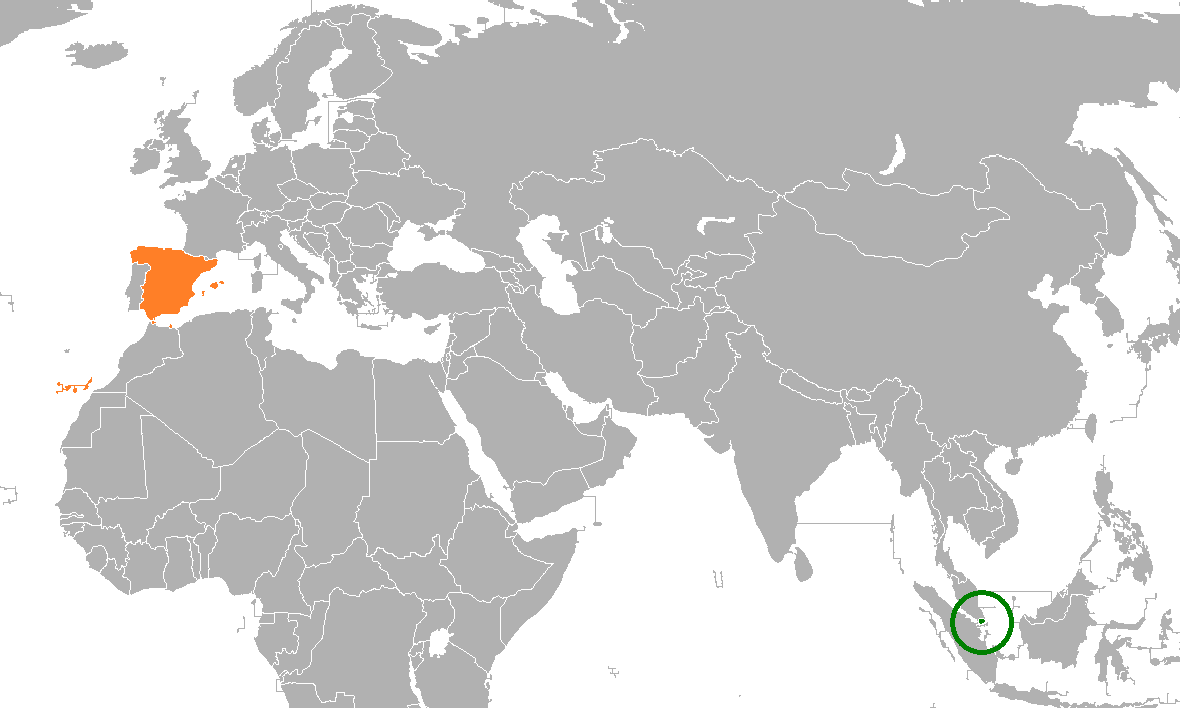
Singapore may look like a maritime city-state, but geographically it sits at the southern tip of the Malay Peninsula, at the end of a huge landmass.
According to Singapore's Immigration and Checkpoints Authority, as early as the 1920s Singapore was envisioned as the starting point of a rail network stretching west to Calais in France and north to Hankou in China, connecting onward to the Trans-Siberian network.
Those lines never became one continuous railway, but the geography they were built around is still there.
Cross the Causeway, head north through Malaysia and Thailand, and you're on your way across mainland Asia. One possible overland route continues through Laos and China, then across Central Asia and Russia into Europe, before turning west toward Spain.
That is only one possible path. The exact route would depend on which roads, rail links and border crossings are open and accessible at the time.
Along the way, Thailand and Laos are joined by several bridges over the Mekong, including the First Thai-Lao Friendship Bridge, which opened in 1994 and carries both road and rail traffic between Nong Khai and Vientiane.
But Can You Actually Do It?
Of course, land connected doesn't mean walkable.
Somewhere between Malaysia and Spain you'd need a visa for Russia, a border that happens to be open, and a road that isn't a highway. In 2026 alone, Russia suspended seven railway crossings into Finland, Estonia and Latvia, and Kazakhstan shut all its road checkpoints with China for a day during the Qingming holiday.
So who would actually try? probably the kind of person who has already walked around the world.
Take Tom Turcich, who walked around the world for seven years, about 45,000 km, with a dog named Savannah, averaging 29 to 38 km a day. He became the 10th person on record to finish.
Then there's Karl Bushby, who set off from Chile in 1998 and, after nearly three decades and a lot of border paperwork, is aiming to reach his home in Hull, England, by November.
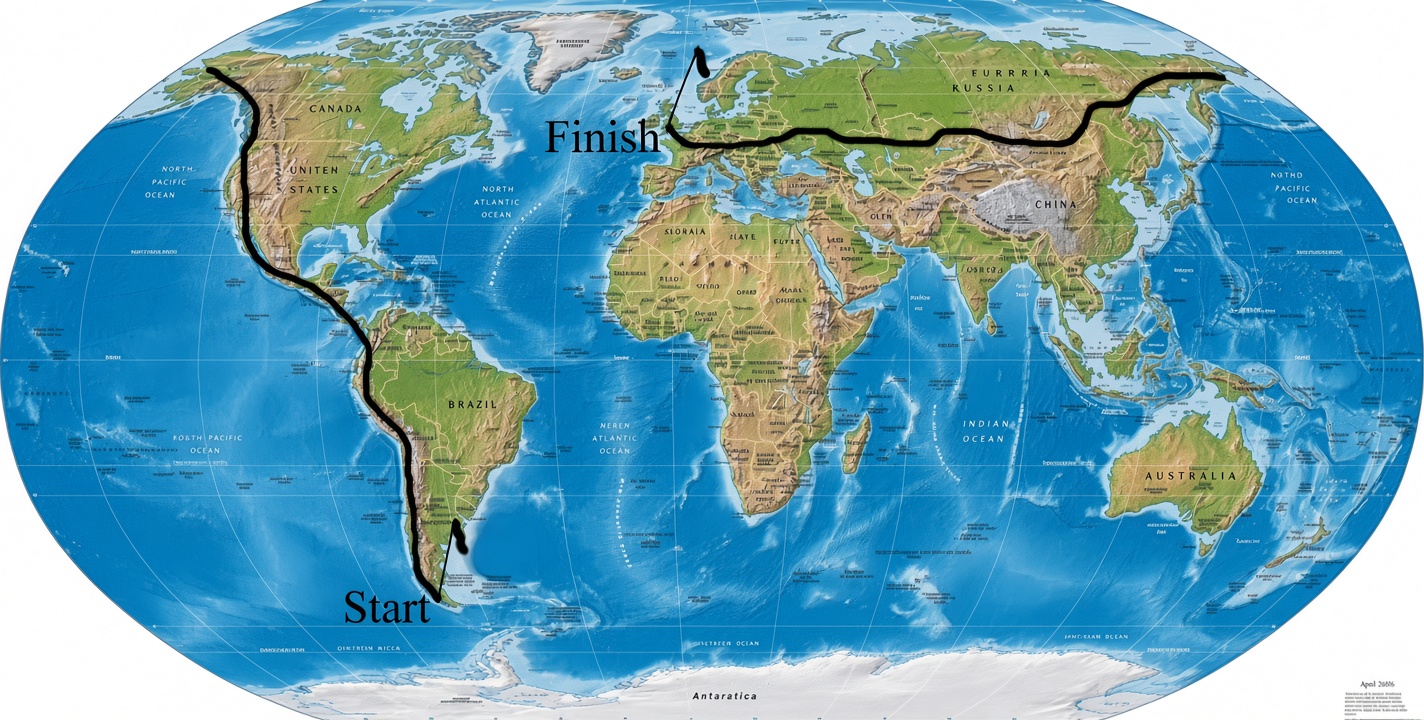
Next to that, Singapore to Spain is the short version.
More Than 16,000 KM by Road
Drive the route from Singapore to Madrid and the odometer would read roughly 16,000 km, depending on the path. The straight line distance is about 11,400 km, but roads bend around mountains, coastlines and borders, and they only go where infrastructure already exists.
On foot, the numbers get harsher.
At 30 km a day, about the pace Tom Turcich kept up for seven years, the trip takes roughly 533 days. That's nearly a year and a half of walking, and it doesn't count rest days, detours, border delays, weather or visa problems.
So, what do you think? Tempted to follow in the footsteps of Tom Turcich and Karl Bushby? Ready to take on the walk from Singapore to Spain?