


In Nueva Ecija, the journey from an onion field to a restaurant kitchen illustrates a larger economic possibility: small farmers becoming dependable commercial partners. As the Philippines leads ASEAN in 2026, inclusive business is bringing that possibility into a regional conversation about who participates in growth—and who benefits.
Opening Markets to More People
The Philippines brought inclusive business onto ASEAN’s regional agenda during its 2017 chairmanship. The approach encourages commercially viable enterprises to integrate low-income communities into their operations as suppliers, distributors, employees or customers. Its defining feature is that inclusion forms part of how the business operates and earns revenue.
The September 2026 agenda for the ninth ASEAN Inclusive Business Forum in Pasay City placed these connections at the centre of discussions. Organisers also announced an OECD report, From Margins to Markets: Powering ASEAN’s Economy Through Inclusive Business, examining the economic contributions of inclusive enterprises.
Ahead of the forum, Philippine Trade Undersecretary Ceferino Rodolfo described ASEAN’s “commitment to sustaining growth and ensuring that economic development remains inclusive and people-centered.” Translating that commitment into everyday business requires buyers, lenders and governments to address the barriers that keep smaller producers outside established markets.
Growing Partnerships from the Ground Up
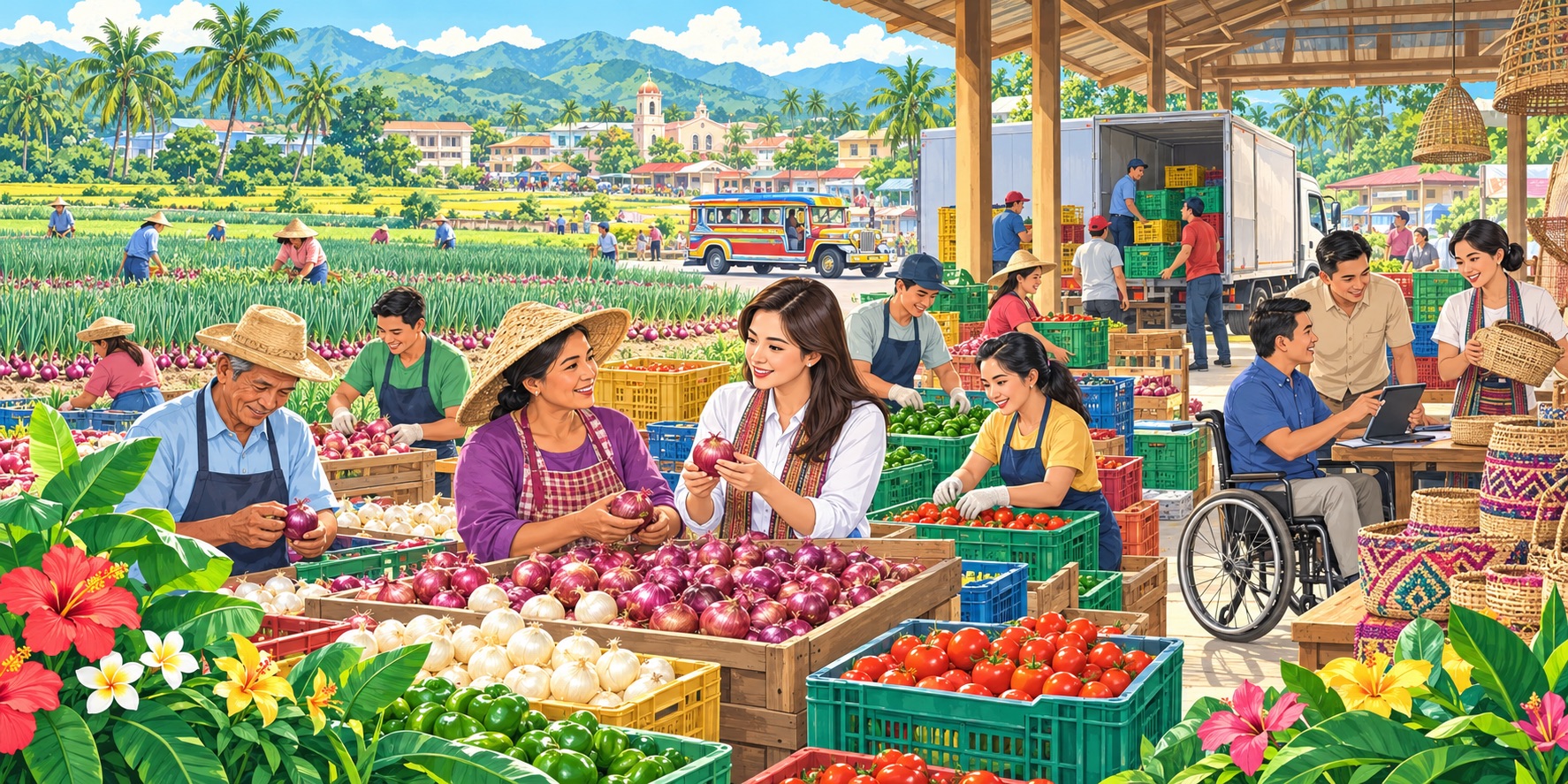
The Kalasag Multipurpose Cooperative in San Jose, Nueva Ecija, offers a concrete example. Through the Jollibee Group Foundation’s Farmer Entrepreneurship Program, farmers received support with business planning, production standards and access to institutional buyers.
In July 2025, Jollibee reported that 34 farmer groups participating in the programme had cumulatively delivered 13 million kilograms of produce, generating PHP703 million in sales. These are company-reported sales figures, rather than a measure of farmers’ net earnings, but they demonstrate the scale that organised smallholder supply can reach.
“Through the FEP, we are affirming that empowering farmers is not just a social responsibility, but a business imperative,” said Gisela Tiongson, president of the Jollibee Group Foundation. The programme combines farmer organisation and training with procurement, linking community development directly to the company’s supply needs.
For such partnerships to endure, commercial access must come with workable delivery requirements, transparent pricing and timely payment. Otherwise, participation can expose small suppliers to costs and risks they cannot comfortably absorb.
Building a Regional Support System
Philippine policy helped establish an early precedent. ESCAP documents that registered inclusive business models in agribusiness and tourism became eligible for Philippine tax incentives in 2017. This was a targeted policy approach; support should not be assumed to apply automatically to every enterprise describing itself as inclusive.
Other countries have developed their own systems. Cambodia introduced inclusive business accreditation in 2021, followed by Vietnam in 2022. ASEAN subsequently endorsed its 2023–2027 promotion plan and a regional model accreditation framework in 2024. These instruments provide a basis for recognising credible businesses and coordinating support across different national settings.
Cambodia’s Amru Rice illustrates the commercial opportunity. In May 2025, ESCAP reported that the company sourced organic rice from 30,000 farmers, offering premium prices and training. Alongside the Philippine example, it shows how agricultural partnerships can connect dispersed producers with larger markets.
Measuring Progress Where It Counts
The next challenge is to measure outcomes beyond accreditation certificates and supplier totals. Useful indicators include producers’ earnings after expenses, income stability, payment delays, workplace accessibility and opportunities to raise complaints.
Regional cooperation could make that work more practical through common reporting principles and technical assistance suited to smaller enterprises. Affordable finance and business training also need to reach suppliers themselves. Inclusion cannot be demonstrated solely through the growth of the company purchasing their products.
The Philippines’ strongest contribution would be to help ASEAN turn recognition into durable commercial opportunity. Success will be visible when farmers, workers and small entrepreneurs gain both a place in regional markets and a fairer return from participating in them.


