Before ASEAN had a name, its founders had to learn to trust each other, and part of that happened over golf.
In August 1967, five ministers from Southeast Asia met at a beach resort in Bang Saen, Thailand, to finalize plans for a new regional group. Some of those countries had been locked in feuds only a few years earlier.
They did not spend all their time at the conference table. They also played golf and hung out, which TIME magazine called "sports-shirt diplomacy". The informal setting gave the ministers a chance to get to know each other before formal negotiations began.
On August 8, they signed the Bangkok Declaration, creating the Association of Southeast Asian Nations, or ASEAN.
A Region Still Feuding
Southeast Asia in the mid-1960s was not an easy place to start a regional group. Two earlier attempts had already stalled.
The Association of Southeast Asia (ASA) was formed in 1961 by Malaya, the Philippines, and Thailand. MAPHILINDO, a short lived grouping of Malaya, the Philippines, and Indonesia, followed in 1963.
Both stalled over the creation of Malaysia that year. Indonesia's President Sukarno opposed the new country and launched a campaign called Confrontation, which brought armed clashes along the Borneo border. The Philippines, which claimed Sabah, also fell out with Malaysia.
Read here to learn more: ASA and Maphilindo: The Forgotten Alliances That Shaped ASEAN
Thailand helped break the deadlock. Foreign Minister Thanat Khoman helped mediate between the neighboring countries and offered Bangkok as a meeting place.
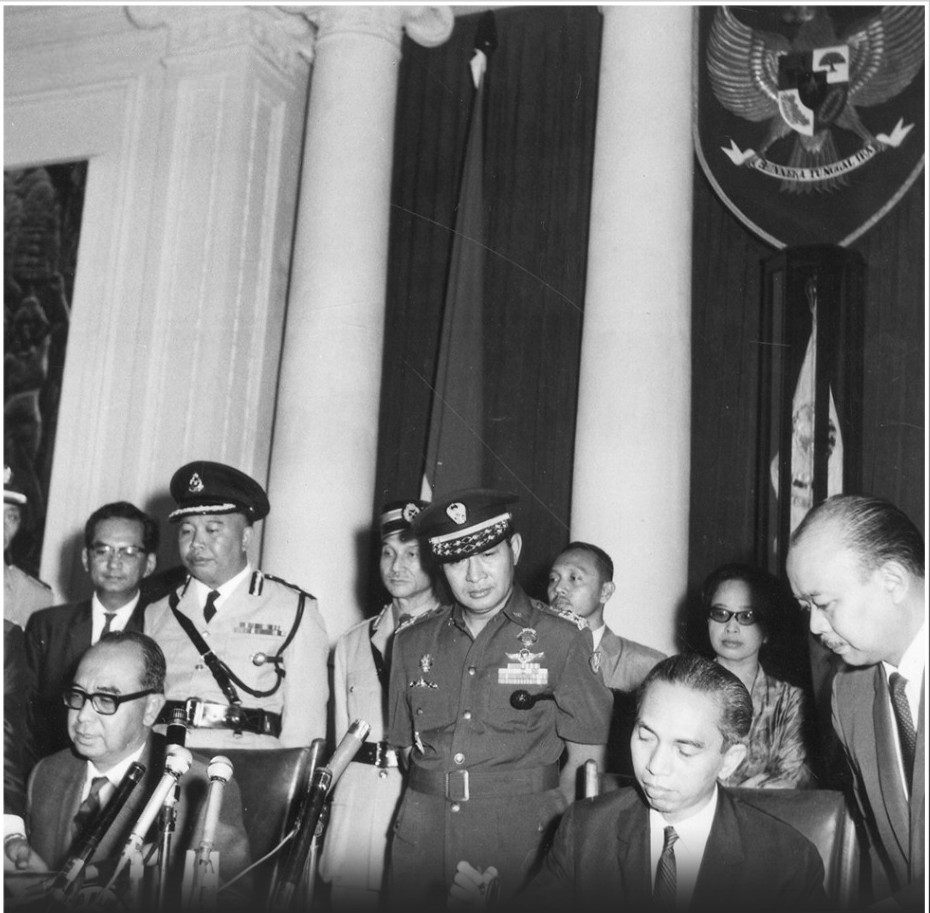
Indonesia and Malaysia reached a peace deal in 1966, negotiated in Bangkok and signed in Jakarta in August. So when the five ministers met in early August 1967, that deal was less than a year old.
Four Days in Bang Saen
The five ministers who met at Bang Saen were Adam Malik of Indonesia, Tun Abdul Razak of Malaysia, Narciso R. Ramos of the Philippines, S. Rajaratnam of Singapore, and Thanat Khoman of Thailand.
Four were foreign ministers, while Tun Abdul Razak was Malaysia's deputy prime minister. Thanat hosted the others at the Thai prime minister's seaside residence. According to ASEAN's official history, they stayed four days, holding talks on the proposed organization.
TIME reported on the gathering in an August 18, 1967 story titled "Sports-Shirt Diplomacy". The magazine wrote that Thanat took the ministers to the resort for two days of golf and socializing before the formal talks began. By the time the ministers sat down, they had spent so much time lobbying one another in private that a consensus had already emerged.
One delegate said they had been pressing their own ideas on each other for so long that it was hard to tell whose idea was whose. This gave ministers from countries that had recently been feuding a chance to build rapport before negotiating terms.
What the Ministers Signed
On August 8, 1967, the five ministers signed the Bangkok Declaration in Bangkok, creating ASEAN.
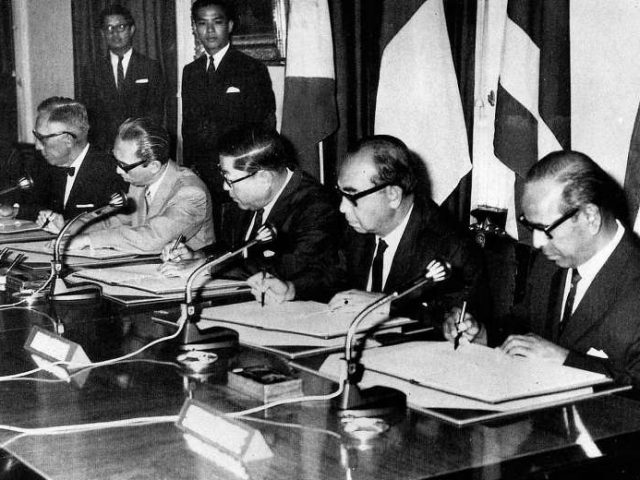
The declaration listed seven aims. The first was to speed up economic growth, social progress, and cultural development in the region. Another was to promote regional peace and stability. The rest were practical and covered training and research, agriculture, industry, trade, transport, and Southeast Asian studies.
It kept the new group's structure light. The declaration called for an annual meeting of foreign ministers, a standing committee, special committees, and a national secretariat in each member country.
No central body had power over the members, so ASEAN began as a place for sovereign states to meet and coordinate, unlike the European Union. It was also open to any other Southeast Asian country that agreed with its aims.
In practice, that gave the five countries a regular set of meetings where they could keep talking.
Did Golf Really Help Create ASEAN?
Political scientist Deepak Nair of the National University of Singapore studied golf in ASEAN diplomacy in Sociability in International Politics: Golf and ASEAN's Cold War Diplomacy, published in International Political Sociology.
He notes that ASEAN's founding governments were largely anticommunist and Western-aligned, while golf was a popular pastime among their elites. Communist governments in the region, meanwhile, generally viewed golf as a bourgeois sport.
Nair found that some meetings included an extra day for officials to play golf, giving them a more informal setting to build trust and discuss disagreements away from formal negotiations.
Nair also cites former U.S. ambassador Marshall Green, who recalled that Philippine President Ferdinand Marcos and Malaysian Prime Minister Tunku Abdul Rahman helped ease a territorial dispute in Borneo after playing a round of golf in Kuala Lumpur in the 1960s.
Golf was one part of how ASEAN came together. The agreement itself was political, but, according to Nair, some of the trust behind it was built on the course.